

Catalogue des publications
Les achats en ligne sont suspendus, sauf pour les fichiers. Veuillez contactez : ventes@ifao.egnet.net. J'ai un code promotionnel.
On line orders are suspended, except for files. Please contact : ventes@ifao.egnet.net. I have a promotional code.
Nouveautés 2026

ISBN 9782724711448
2026 IFAO
Collection: Temples Athribis 11
Langue(s): allemand
2 vol. 996 p.
127 € (6684 EGP)
Marcus Müller (éd.)
Athribis XI
Archäologie im Repit-Tempel zu Athribis 2016-2019
Als zweiter Archäologie-Band ist Athribis XI die Fortsetzung des ersten Archäologie-Bandes Athribis V. In diesem Band werden die von der Eberhard-Karls-Universität Tübingen von 2016 bis 2019 durchgeführten Ausgrabungen im Repit-Tempel Ptolemaiosʼ XII. in Athribis (Provinz Sohag) vorgestellt.
Ein großes Übersichtskapitel präsentiert die in mehrmonatigen Grabungskampagnen entdeckten wichtigsten Befunde und Funde, deren Auswertung zahlreiche neue Ergebnisse erbrachten. Einerseits wurden durch die Grabungen umfangreiche Hieroglyphentexte an den Wänden freigelegt, die in anderen Athribis-Bänden veröffentlicht wurden. Dadurch gelang auch die Vervollständigung des Tempelgrundrisses. Andererseits gewannen wir durch die Verfüllschichten zahlreiche Erkenntnisse zur spätrömischen und früh- bis hochmittelalterlichen Nutzung des Tempels nach Aufgabe des altägyptischen Tempelkults. Einzelne Studien widmen sich einzelnen Räumen mit ihrer primären und sekundären Architektur und Nachnutzung. Weitere Untersuchungen beleuchten die Tierknochen, einzelne Reliefgruppen mitsamt ihren Inschriften und ihrem späteren Schicksal, die im Tempel belegten ptolemäischen Herrscher und römischen Kaiser, die Stiftungsinschrift, Figurinen, schließlich Ausführungen zu Restaurierungsfragen und Rekonstruktionen der Tempelarchitektur.
Athribis XI est le second volume d’archéologie, après Athribis V, consacré au temple de Repit de Ptolémée XII à Athribis (province de Sohag). Il présente les fouilles menées par lʼuniversité Eberhard-Karls de Tübingen entre 2016 et 2019.
Un grand chapitre de synthèse porte sur les principaux vestiges et les découvertes réalisées au cours des campagnes de fouilles, qui ont conduit à de nombreux résultats nouveaux.
Dʼune part, les fouilles ont révélé dʼimportants textes hiéroglyphiques sur les murs du temple, qui ont été publiés dans les autres volumes de la série Athribis, et permis de compléter le plan du sanctuaire ; dʼautre part, les couches de remplissage ont fourni aux chercheurs de nombreuses connaissances sur lʼutilisation du temple à la fin de lʼépoque romaine et au haut Moyen Âge, après lʼabandon du culte égyptien ancien. Certaines études sont consacrées à des pièces spécifiques et portent sur leur architecture primaire et secondaire, ainsi que sur leur utilisation ultérieure. Dʼautres études sont consacrées aux ossements dʼanimaux, aux différents groupes de reliefs inscrits et au destin qu’ils connurent, aux souverains ptolémaïques et empereurs romains attestés dans le temple, mais aussi à lʼinscription dédicatoire et aux figurines qui ont pu être découvertes ; elles apportent des explications sur les questions de restauration et celles relatives à la reconstruction du temple.
As the second archaeology volume, Athribis XI is the sequel to the first archaeology volume Athribis V. This volume presents the excavations carried out by the Eberhard Karls University of Tübingen from 2016 to 2019 at the Repit Temple of Ptolemy XII in Athribis (Sohag province).
A large overview chapter presents the most important features and artefacts discovered in excavation campaigns lasting several months, the analysis of which yielded numerous new results. On the one hand, the excavations uncovered extensive hieroglyphic texts on the walls, which were published in other Athribis volumes. This also made it possible to complete the ground plan of the temple. On the other hand, the backfill layers provided us with numerous insights into the Late Roman and Early and High Medieval use of the temple following the abandonment of the ancient Egyptian temple cult. Individual studies are dedicated to individual rooms with their primary and secondary architecture and subsequent use. Further studies examine the animal bones, individual relief groups together with their inscriptions and their later fate, the Ptolemaic rulers and Roman emperors documented in the temple, the dedication inscription, figurines, and finally explanations of restoration issues and reconstructions of the temple architecture.
يُعدّ « أتريبس الحادي عشر »، المجلد الأثري الثاني بعد « أتريبس الخامس »، وقد خُصِّص لدراسة معبد رِﭘﯿﺖ الخاص ببطليموس الثاني عشر في أتريبس بحافظة سوهاج. ويعرض هذا المجلد نتائج الحفائر التي أجرَتها جامعة إبرهارد-كارل في توبنغن في الفترة بين عامي ٢٠١٦ و٢٠١٩. يضمّ هذا المجلد فصلًا تحليليًا مطوّلًا يتناول أبرز الآثار والاكتشافات التي تمّت خلال حملات التنقيب، والتي أسفرت عن العديد من النتائج الجديدة. فمن ناحية، كشفت الحفائر عن نصوص هيروغليفية مهمة على جدران المعبد، نُشرت في أجزاء أخرى من سلسلة « أتريبس »، كما أتاحت استكمال تخطيط المعبد. ومن ناحية أخرى، قدّمت طبقات الردم للباحثين معطيات غنية حول استخدام المعبد في أواخر العصر الروماني وفي العصور الوسطى المبكرة، بعد التخلي عن العبادة المصرية القديمة. تُخصص بعض الدراسات لقطع بعينها، متناولةً عمارتها الأصلية والثانوية، إضافةً إلى استخداماتها اللاحقة. كما تتناول دراسات أخرى عظام الحيوانات، ومجموعات النقوش المختلفة وما تحمله من كتابات والمصير الذي آلت إليه، فضلًا عن الملوك البطالمة والأباطرة الرومان الذين تمّ الاستدلال عليهم في المعبد، إلى جانب النص الإهدائي والتماثيل الصغيرة المكتشفة، مقدّمةً في الوقت نفسه شروحًا تتعلق بترميم المعبد وإعادة بنائه.
- Marcus Müller (
 : 135351383)
Marcus Müller studied Egyptology, Pre- and Early History, and Political Science in Tübingen and Liverpool. He works as Field Director of the Athribis Project at the University of Tübingen. Apart from Egypt he gained archaeological experience in Germany, Georgia, Syria, Turkey, Dubai, and Kuwait.allemande de Saruq al-Hadid.
- Vous pouvez acquérir ce(s) fichier(s) PDF issu(s) de cet ouvrage en cliquant sur le nom du fichier puis 'Ajouter au panier'.
- You can buy theses PDF files extracted from this book by clicking on the file name then 'Add to cart'.
ISBN 9782724711615
2026 IFAO
Collection: Temples Dendara 10.1
Langue(s): français
1 vol. 572 p.
gratuit - free of charge
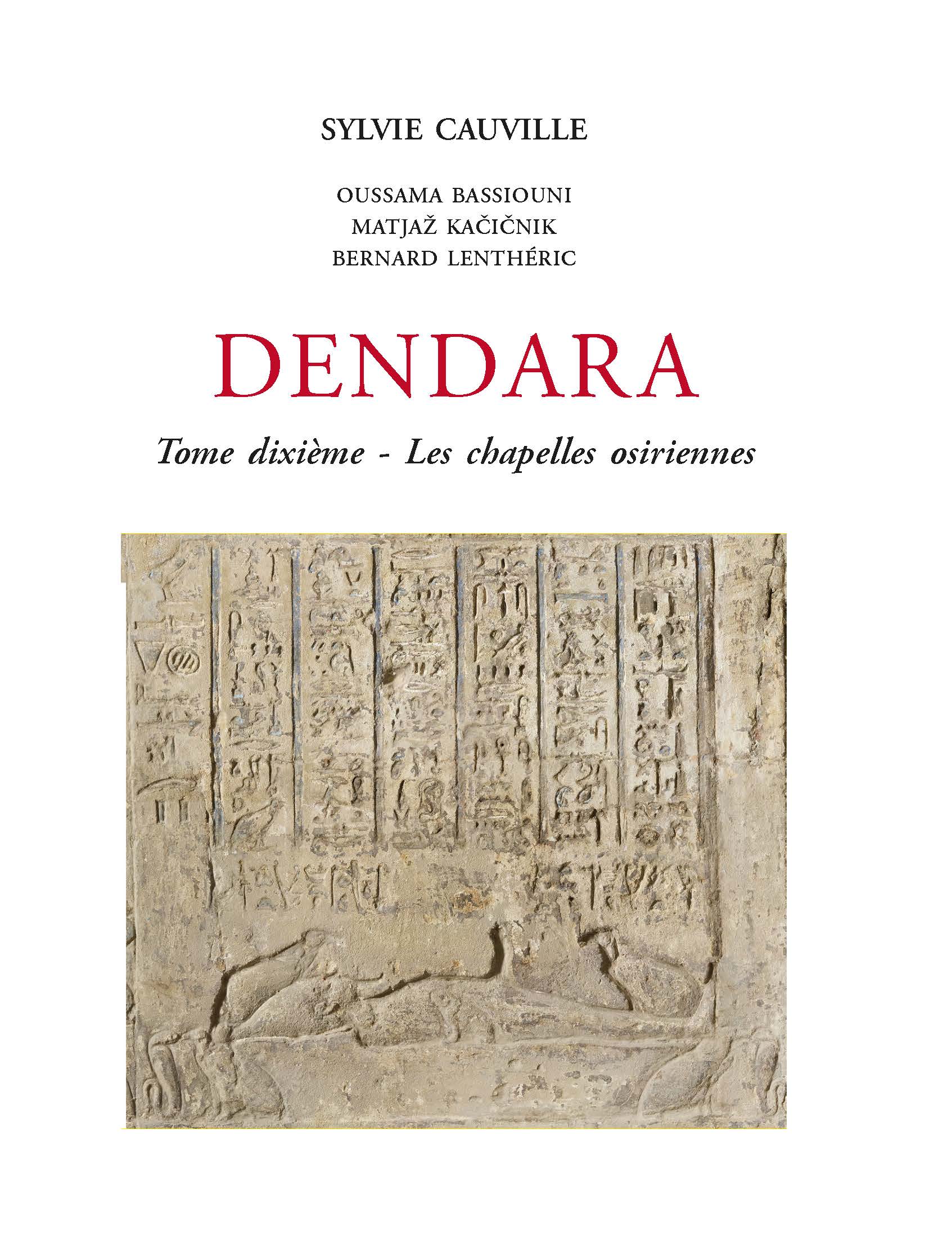
Sylvie Cauville, Oussama Bassiouni, Matjaž Kačičnik, Bernard Lenthéric
Le temple de Dendara X. Les chapelles osiriennes
Planches en couleur
Le temple d'Hathor à Dendera, admirablement conservé, est probablement la plus aboutie des réalisations architecturales de l'Égypte ptolémaïque et romaine et la richesse des compositions théologiques qui ornent ses murs est incomparable. Ses inscriptions hiéroglyphiques ont été éditées sous l’égide de l’Institut français d’archéologie orientale, d’abord par É. Chassinat puis par Fr. Daumas, et enfin par S. Cauville. Le dixième volume, paru en deux tomes en 1997, offre la publication des inscriptions, avec photos et dessins, du complexe osirien situé sur le toit du temple et composé de six chapelles, ornées notamment du fameux zodiaque et du grand texte des mystères de Khoiak.
Le présent opus présente l'intégralité des planches de Dendara X, mais en couleur, après la restauration du temple et sa nouvelle couverture photographique.
- Sylvie Cauville ( : 026773023)
Sylvie Cauville, directeur de recherches émérite au CNRS et responsable du programme de publication épigraphique du temple d’Hathor de Dendara sous l’égide de l’Ifao depuis 1986, est l’auteur d’une soixantaine d’ouvrages : publication, traduction et analyse de textes hiéroglyphiques. - Oussama Bassiouni
Photographe - Matjaž Kačičnik
Photographe - Bernard Lenthéric
Omar Jamal Mohamed Ali, Ali al-Sayyid Abdelatif
أوقاف السُّلْطان الأشْرف خليل بن قَلاوون كما وردت في الألطاف الخفيّة من السِّيرة الشَريفة السُّلطانيّة المَلَكيّة الأشرفيّة لمُحيي الدّين بن عبد الظّاهر ويليه:
النَّقش الكتابي للقُبّة الأَشْرفية مرسومان للسُّلْطان الأشرف إلى رُهبان دير سانت كاترين وثيقة ثبوت أوقاف السُّلْطان الأَشرف خليل في العَصر العثماني
يُقدم هذا الكتاب النصّ الكامل لأوقاف السُّلْطان الأشرف خليل بن قَلاوون (689-693 هـ/1290-1294 م) على مدرسته المعروفة بالمدرسة الأشرفية بالقاهرة وعلى مصالح القُبَّة المَنصورية التي أنشأها والده السُّلْطان المَنصور قَلاوون. وقد حفظ لنا هذا النصّ المؤرخ مُحيي الدِّين عبد الله بن عبد الظَّاهر (620-692 هـ/1223-1293 م) في كتابه الألطاف الخفيَّة من السِّيرة الشَّريفة السُّلْطانية المَلَكيّة الأشرفية.
وبالإضافة إلى نصوص أربعة أوقاف ومقدمة عن حياة هذا السُّلْطان المملوكي وناظر وقفه شَمس الدِّين ابن السَّلعُوس والمؤرخ مُحيي الدِّين عبد الله بن عبد الظَّاهر، يقدم الكتاب للقارئ ملاحق مهمة منها وثيقة ثبوت أوقاف السُّلْطان الأَشرف في العَصر العثماني (٩٥٤ هـ)، ومرسومان يتعلقان بحماية رهبان دير سانت كاترين بسيناء من المظالم والمغارم.
ويرسم الكِتَاب بفضل نصوص الأوقاف المنشورة صورة طبوغرافية لبعض الأماكن بمدينة القاهرة في نهاية القرن السابع الهجري/الثالث عشر الميلادي، فضلا عن وصفه القرى التي أوقفها الأشرف خليل بن قَلاوون في ساحل صور وعَكَّا بعد تحريرهما من أيدي الصَّليبيين.
Cet ouvrage présente les textes intégraux des waqf-s du sultan al-Ašraf Ḫalīl ibn Qalāwūn (689-693 H/1290-1294 J.-C.) au bénéfice de son école connue sous le nom d'al-Madrasa al-ašrafiyya, au Caire, et des services d’al-Qubba al-Manṣūriyya, fondée par son père, le sultan al-Manṣūr Qalāwūn. Ces textes ont été conservés par l'historien Muḥyī al-Dīn ʿAbdallāh ibn ʿAbd al-Zāhir (620-692 H/1223-1293 J.-C.) dans son ouvrage al-Alṭāf al-ḫafiyya min al-sīra al-šarīfa al sulṭāniyya al-malakiyya al-ašrafiyya.
Outre les textes de ces quatre waqf-s et une introduction sur la vie de ce sultan mamelouk, de l’administrateur de son waqf, Šams al-Dīn ibn al-Salʿūs, et de l'historien Muḥyī al-Dīn ʿAbdallāh ibn ʿAbd al-Zāhir, le livre comporte d’importantes annexes, dont un document datant de 954 H/1547 J.-C., attestant les waqf-s d’al-Ašraf Ḫalīl ibn Qalāwūn à l'époque ottomane, et deux décrets relatifs à la protection des moines du monastère Sainte-Catherine (Sinaï) contre les injustices.
Les textes des waqf-s publiés dans ce livre permettent de dresser une image topographique de certains lieux du Caire de la fin du VIIe siècle/XIIIe siècle. Il contient également une description de villages situés sur la côte de Tyr et d'Acre qu’al-Ašraf Ḫalil ibn Qalāwūn a donnés en waqf après l’expulsion des croisés de ces deux villes.
This work presents the complete texts of the waqf-s of Sultan al-Ašraf Ḫalīl ibn Qalāwūn (689-693 AH/1290-1294 AD) for the benefit of his school known as al-Madrasa al-ašrafiyya, in Cairo, and of the services of al-Qubba al-Manṣūriyya, founded by his father, Sultan al-Manṣūr Qalāwūn. These texts were preserved by the historian Muḥyī al-Dīn ʿAbdallāh ibn ʿAbd al-Zāhir (620-692 AH/1223-1293 AD) in his work al-Alṭāf al-ḫafiyya min al-sīra al-šarīfa al sulṭāniyya al-malakiyya al-ašrafiyya. Besides the texts of these four waqf-s and an introduction on the life of this Mamluk sultan, the administrator of his waqf, Šams al-Dīn ibn al-Salʿūs, and the historian Muḥyī al-Dīn ʿAbdallāh ibn ʿAbd al-Zāhir, the book includes important appendices, including a document dating from 954 AH/1547 AD, attesting to the waqf-s of al-Ašraf Ḫalīl ibn Qalāwūn in the Ottoman period, and two decrees relating to the protection of the monks of the Monastery of Saint Catherine (Sinai) against injustices.
The waqf-s texts published in this book allow us to create a topographical picture of certain places in Cairo at the end of the 7th/13th century. It also contains a description of villages located on the coast of Tyre and Acre that al-Ašraf Ḫalil ibn Qalāwūn donated as waqf after the expulsion of the crusaders from these two cities.
- Omar Jamal Mohamed Ali
عمر جمال محمد علي إبراهيم أستاذ التاريخ والحضارة الإسلامية بكلية الآداب بجامعة سوهاج بجمهورية مصر العربية، وأستاذ مشارك بكلية الآداب والعلوم الإنسانية بالجامعة القاسمية بدولة الإمارات العربية المتحدة، وهو متخصص في دراسة ونشر وتحقيق المجموعات الوثائقية الأرشيفية الخاصة بعصري سلاطين الأيوبيين والمماليك. - Ali al-Sayyid Abdelatif
علي السيد عبد اللطيف، باحث ومحقق في التراث الإسلامي، حاصل على ماجستير من معهد البحوث والدراسات العربية بالقاهرة، وله عدة دراسات في الفقه والتاريخ الإسلاميين.
- Vous pouvez acquérir ce(s) fichier(s) PDF issu(s) de cet ouvrage en cliquant sur le nom du fichier puis 'Ajouter au panier'.
- You can buy theses PDF files extracted from this book by clicking on the file name then 'Add to cart'.
ISBN 9782724711462
2026 IFAO
Collection: BiEtud 194
Langue(s): français
1 vol. 272 p.
70 € (3684 EGP)
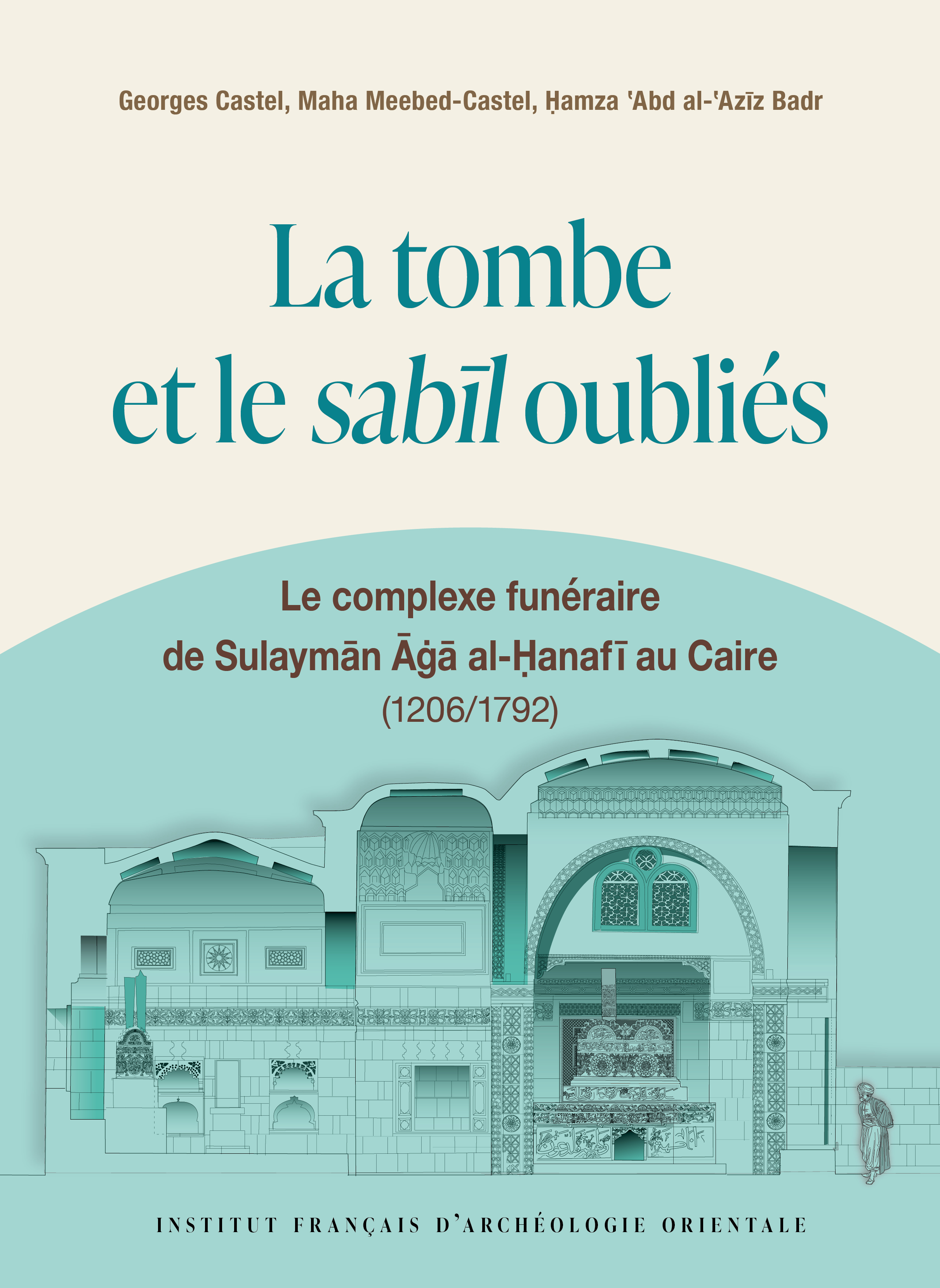
Georges Castel, Maha Meebed-Castel, Hamza Abdelaziz Badr
La tombe et le Sabīl oubliés
Le complexe funéraire de Sulaymān Aġā al-Ḥanafī au Caire (1206/1792)
Cet ouvrage à plusieurs mains est le premier travail consacré à la tombe et au sabīl de l’émir Sulaymān Āġā al-Ḥanafī, un des lieutenants d’Ibrāhīm Bāy al-Kabīr (m. 1817), le gouverneur de l’Égypte avant l’expédition française de 1798. Outre qu’il fournit une description précise de l’architecture et de la décoration de ces deux bâtiments, construits à la fin du xviiie siècle dans le cimetière d’al-Abāǧiyya au Caire, il présente l’ensemble de leurs inscriptions, en arabe et en traduction française, ainsi que l’acte légal par lequel cet ensemble funéraire a été établi en waqf et qui est publié ici également dans les deux langues.
Doté d’une riche iconographie grâce à de nombreux dessins et photographies des différentes parties des deux bâtiments et de leurs inscriptions, La tombe et le sabīl oubliés enrichit notre connaissance des monuments funéraires musulmans de l’Égypte ottomane. Il ne manquera pas d’intéresser les historiens, les philologues et les architectes mais aussi des « lecteurs profanes » qui portent un intérêt aux coutumes religieuses, à l’architecture islamique ou à la langue juridique en Égypte à l’époque moderne. Puisse-t-il, en dévoilant la richesse de l’architecture de ce monument funéraire, la qualité de sa décoration et la beauté de ses inscriptions, aider à conserver une part de l’histoire égyptienne.
This multi-authored work is the first study devoted to the tomb and sabīl of Emir Sulaymān Āġā al-Ḥanafī, one of the lieutenants of Ibrāhīm Bāy al-Kabīr (d. 1817), the governor of Egypt before Napoleon Bonaparte’s expedition. In addition to providing a detailed description of the architecture and decoration of these two buildings, constructed at the end of the 18th century in the al-Abāǧiyya cemetery in Cairo, it presents all of their inscriptions, in Arabic and French translation, as well as the legal document establishing this funerary complex as a waqf, which is also published here in both languages.
With its rich iconography, including numerous drawings and photographs of the different parts of the two buildings and their inscriptions, La tombe et le sabīl oubliés enriches our knowledge of Muslim funerary monuments in Ottoman Egypt. It will be of interest not only to historians, philologists and architects, but also to ‘lay readers’ with an interest in religious customs, Islamic architecture or legal language in Egypt in the modern era. By revealing the richness of this funerary monument’s architecture, the quality of its decoration and the beauty of its inscriptions, it may help to preserve a part of Egyptian history during the Ottoman period.
يُعدّ هذا العمل الجماعي أولَ دراسة مخصَّصة لضريح وسبيل الأمير سليمان آغا الحنفي، أحدِ أعوان إبراهيم بك الكبير، (ت. ١٨١٧م)، والي مصر قبيل الحملة الفرنسية سنة ١٧٩٨. لا يقتصر الكتاب على تقديم وصف دقيق للعمارة والزخرفة في هذين المبنييْن اللذيْن أُنشئا في أواخر القرن الثامن عشر في مجموعة مقابر الأباجية بالقاهرة، بل يعرض أيضًا مجمل نقوشهما باللغتيْن العربية والفرنسية، إضافة إلى الوثيقة القانونية التي تم بموجبها تخصيص هذه المجموعة الجنائزية للوَقْف، وقد نُشرت هي الأخرى في هذا العمل باللغتيْن.
مزودًا بثراء بصري بفضل عدد كبير من الرسوم والصور الفوتوغرافية لمختلف أجزاء المبنييْن ونقوشهما، يثري كتاب « الضريح والسبيل المنسيّان » معرفتنا بالآثار الجنائزية الإسلامية في مصر العثمانية. ومن المؤكد أنه سيجذب اهتمام المؤرخين واللغويين والمعماريين، وكذلك « القرّاء غير المتخصصين » المهتمين بالعادات الدينية، وبالعمارة الإسلامية، وبالخطاب القانوني في مصر خلال العصر الحديث. عسى أن يساهم هذا العمل في الحفاظ على جزء مهم من التاريخ المصري، من خلال إبراز غنى عمارة هذا الأثر الجنائزي وجودة زخارفه وجمال نقوشه.
- Georges Castel ( : 026771314)
Architecte de fouilles et archéologue à l’IFAO, Georges Castel a dirigé ou codirigé de nombreux programmes de fouilles en Égypte, dont la mission d’Ayn Soukhna de 2001 à 2016. - Maha Meebed-Castel
Maha Meebed-Castel, guide des monuments islamiques et pharaoniques de l’Égypte pour l’Union des Français de l’étranger (UFE) et les professeurs de l’Université américaine au Caire, 1984-2009. - Hamza Abdelaziz Badr ( : 236242164)
Hamza Abdelaziz Badr, professeur d’architecture islamique à la faculté d’archéologie de l’université de Sohag (Égypte).
- Vous pouvez acquérir ce(s) fichier(s) PDF issu(s) de cet ouvrage en cliquant sur le nom du fichier puis 'Ajouter au panier'.
- You can buy theses PDF files extracted from this book by clicking on the file name then 'Add to cart'.
ISBN 9782724710588
2026 IFAO
Collection: MIFAO 157
Langue(s): français
1 vol. 438 p.
41 € (2158 EGP)
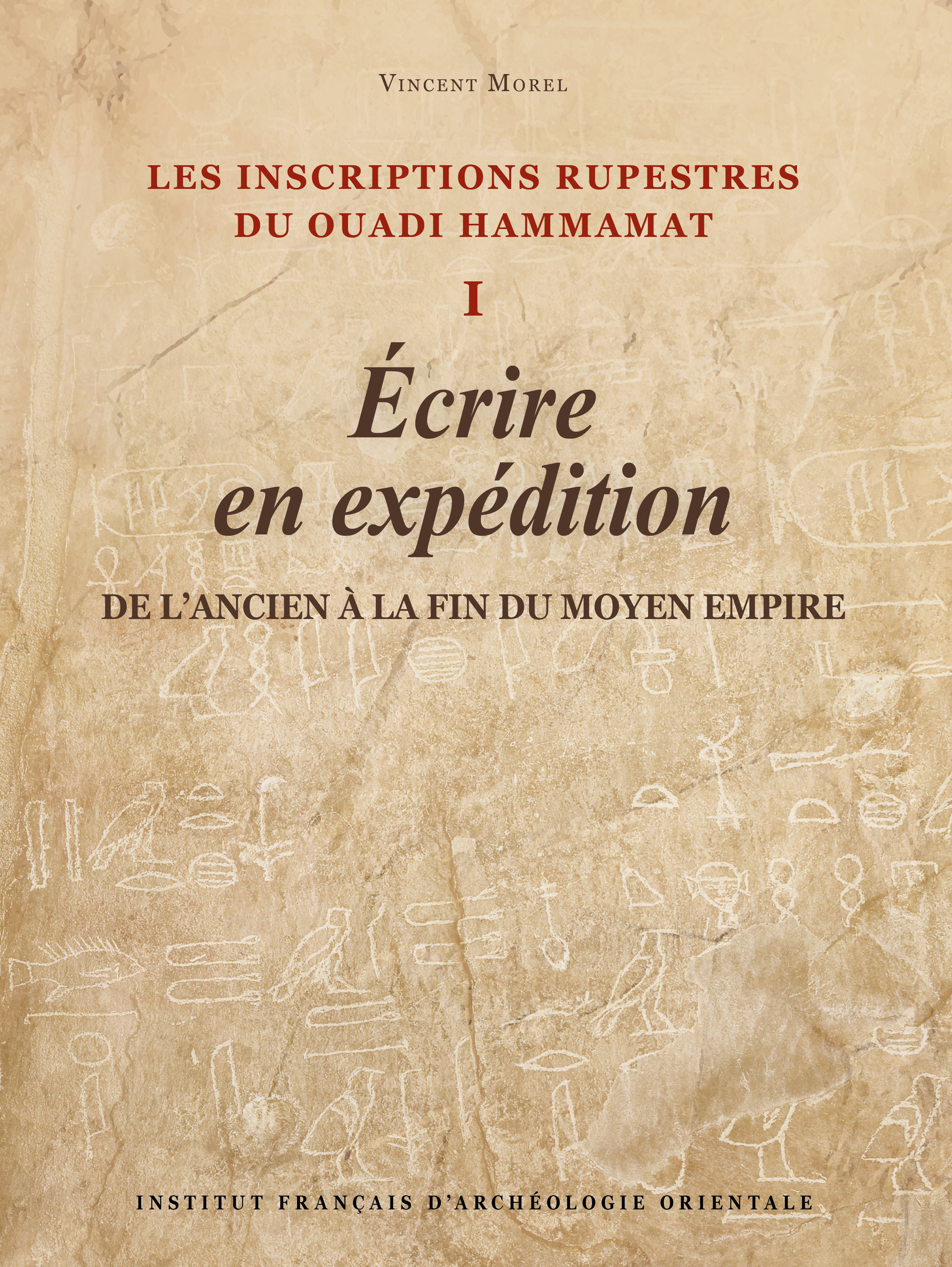
Vincent Morel
Les inscriptions rupestres du Ouadi Hammamat I
Écrire en expédition, de l’Ancien à la fin du Moyen Empire
Dans le désert Oriental d’Égypte, les carrières de grauwacke du Ouadi Hammamat conservent un vaste corpus d’inscriptions rupestres, documenté depuis les premiers explorateurs modernes et couvrant une histoire plurimillénaire. Fondé sur de récentes prospections de terrain, ce volume propose une enquête sur des textes majeurs de l’Ancien à la fin du Moyen Empire. Il adopte une approche croisée – matérielle, visuelle et textuelle – qui restitue aux inscriptions leur dynamique spatiale, leur déploiement graphique et les dialogues qu’elles entretiennent entre elles. En conjuguant archéologie du paysage et analyse littéraire, l’ouvrage offre une lecture renouvelée de ces inscriptions, attentive à l’univers social et intellectuel qui les a produites. L’étude montre que l’écrit en expédition, tout en relevant d’un geste de témoignage et d’appropriation de l’espace, s’inscrit dans un environnement que l’acte d’écriture lui-même contribue à façonner et à sacraliser.
In Egypt’s Eastern Desert, the greywacke quarries of Wadi Hammamat preserve a vast corpus of rock inscriptions spanning several millennia. Drawing on recent field surveys, this volume examines key inscriptions from the Old Kingdom through to the end of the Middle Kingdom. It adopts a combined material, visual, and textual perspective that brings to light the spatial dynamics of these carvings, their graphic arrangement, and the intertextual dialogues they establish with each other. Combining landscape archaeology and literary analysis, the book offers a renewed interpretation of these inscriptions, elucidating the social and intellectual worlds that shaped them. The study shows that inscriptions produced during expeditions, while serving as a means of marking presence and asserting control over space, are also embedded within an environment which the act of inscribing itself helps to construct and to sacralize.
يُركز هذا الكتاب على المواد الكتابية الموجودة في محاجر وادي الحمامات. ويقدم تاريخًا لممارسات الكتابة الخاصة بهذا الموقع الاستكشافي، على مدى فترة تمتد من الدولة القديمة إلى نهاية الدولة الوسطى. تقدم الدراسة منهجية مبتكرة للتعامل مع النقوش الصخرية التي اعتُبرت لفترة طويلة مجرد "تقارير" استكشافية بسيطة. فمن خلال الاعتبارات المادية والبصرية وارتباط النصوص فيما بينها أو ارتباط التصوير بالنصوص، يقترح هذا العمل إعادة صياغة سياق هذه الكتابات من أجل فهم أفضل للـ"كيف"، أي مسألة الممارسات، بهدف إلقاء الضوء على "لماذا"، التي تُمَثِّل مسألة إمكانية فَهْم فِعْل الكتابة في حد ذاته. إن تعدد الأشكال البصرية والنصية يقابله براغماتية معقدة للكتابة، والتي تتوافق بشكل أساسي مع الحاجة إلى تقديم شهادة من خلال تطبيق البصمة. ويصبح إذن وَضْع علامات على دعامة طبيعية، تبدو كأثر بحكم الأمر الواقع، بمثابة مَعْلَم بارز في الصحراء الشاسعة، وإِحياء ذِكْرَى أمام الأجيال القادمة، وإشارة موجهة إلى ما هو إلهي؛ في مكان يُمْكِن أن يشارك فيه بشرٌ عاديون في مهمة كونية.
- Vincent Morel ( : 257066802)
Docteur en égyptologie de l’Université de Genève et de l’École Pratique des Hautes Études - PSL, Vincent Morel est actuellement Postdoctoral Associate and Lecturer à Yale University. Philologue et historien, il étudie les productions écrites de l’Égypte des IIIe et IIe millénaires av. n. è., avec un intérêt particulier pour les inscriptions rupestres du désert Oriental. Ses recherches articulent archéologie du paysage, anthropologie, sémiologie et philologie.
- Vous pouvez acquérir ce(s) fichier(s) PDF issu(s) de cet ouvrage en cliquant sur le nom du fichier puis 'Ajouter au panier'.
- You can buy theses PDF files extracted from this book by clicking on the file name then 'Add to cart'.
ISBN 9782724711523
2026 IFAO
Collection: BCE 34
Langue(s): français
1 vol. 386 p.
54 € (2842 EGP)
Sylvie Marchand (éd.)
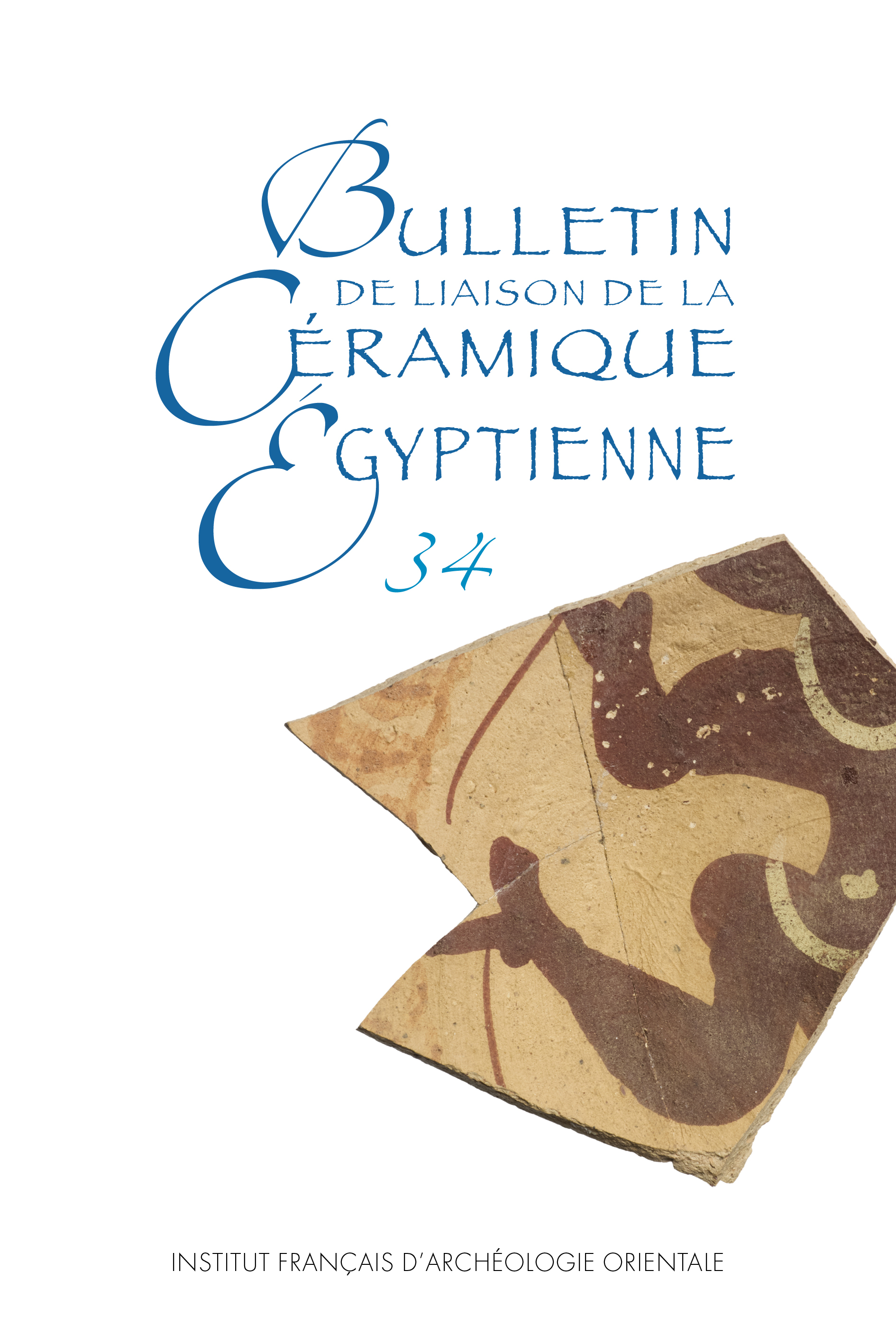
Bulletin de liaison de la céramique égyptienne 34
Cette nouvelle livraison du Bulletin de liaison de la céramique égyptienne (BCE 34) présente, dans une première partie, un « parcours régional » en lien avec d’importants travaux archéologiques. La première contribution concerne un ensemble de jarres de cuisine découvertes à Ayn Soukhna (fin XIe-début XIIe dynastie). La deuxième est consacrée au mobilier céramique des XIXe-XXe dynasties mis au jour à Zawyet Sultan, en Moyenne Égypte. Les deux contributions suivantes portent sur la céramique de Haute Égypte : la céramique oasienne importée à Abydos de la fin de la XVIIIe à la XXVe dynastie et les assemblages céramiques du Moyen Empire au Nouvel Empire provenant de la tombe QH33 de Qubbet el-Hawa, près d’Assouan. Deux autres articles proposent des synthèses sur le mobilier céramique provenant de Dakhla. Enfin, les trois dernières contributions du « parcours régional » mettent à l’honneur la Nubie et le Soudan actuel : la première répertorie les céramiques importées des oasis du désert occidental égyptien pendant le Nouvel Empire, et mises au jour lors des fouilles de la ville fortifiée de l’île de Saï ; la deuxième présente la céramique de la fin de la XIIe dynastie associée à des fours d’ateliers de poterie exhumés au fort d’Uronarti ; la troisième se consacre aux céramiques découvertes dans un bâtiment monumental du site de Sanam, dans des niveaux datant de 1070 à 850 av. J.-C.
La seconde partie « Études » du volume accueille deux contributions connexes se concentrant sur l’analyse d’une sélection de tessons inédits datés de la Basse Époque à l’époque romaine provenant d’anciennes fouilles belges d’un quartier d’habitation situé dans l’enceinte du téménos d’Elkab en Haute Égypte, et aujourd’hui conservés dans les réserves des Musées royaux d’art et d’histoire de Bruxelles.
This new issue of the Bulletin de liaison de la céramique égyptienne (BCE 34) presents, in its first part, a parcours régional linked to important archaeological field work. The first contribution covers a set of cooking jars discovered at Ayn Soukhna (late 11th-early 12th Dynasty). The second is devoted to ceramic assemblages from the 19th-20th Dynasties unearthed at Zawyet Sultan in Middle Egypt. The following two contributions focus on Upper Egyptian ceramics: oasis pottery imported to Abydos from the late 18th to the 25th Dynasty, and ceramic assemblages from the Middle Kingdom to the New Kingdom from tomb QH33 at Qubbet el-Hawa, near Aswan. Two other articles present reviews of ceramic assemblages from Dakhla. Finally, the last three contributions of the parcours régional highlight Nubia and present-day Sudan: the first catalogues ceramics imported from oases in the Egyptian Western Desert during the New Kingdom and unearthed during excavations of the fortified city on Sai Island; the second presents ceramics from the late 12th Dynasty associated with pottery kilns excavated at the fort of Uronarti; the third focuses on ceramics discovered in a monumental building at the site of Sanam, in levels dating from 1070 to 850 BC.
The second part of the volume, “Études”, includes two related contributions focusing on the analysis of a selection of unpublished pottery fragments dated from the Late Period to the Roman period, originating from old Belgian excavations of a residential area located within the temenos of Elkab in Upper Egypt, and now kept in the reserves of the Royal Museums of Art and History in Brussels.
يقدّم هذا العدد الجديد من النشرة الدورية للفخار المصري (BCE 34) في جزئه الأول « مسارًا إقليميًا » يرتبط بأعمال أثرية بارزة. تتناول المساهمة الأولى مجموعةً من الجرار الخاصة بالمطبخ التي عُثر عليها في منطقة العين السخنة والتي تؤرَّخ (إلى نهاية الأسرة الحادية عشرة وبداية الأسرة الثانية عشرة). أما المساهمة الثانية، فهي مخصّصة للمواد الفخارية التي تعود إلى الأسرتيْن التاسعة عشرة والعشرين، والتي تم الكشف عنها في زاوية السلطان في مصر الوسطى. وتتناول المساهمتان التاليتان فخار مصر العليا؛ إذ تبحث الأولى في الفخار الذي تم نقله من الواحات إلى أبيدوس خلال الفترة الممتدة من نهاية الأسرة الثامنة عشرة حتى الأسرة الخامسة والعشرين، بينما تتناول الثانية مجموعات الفخار التي تعود إلى الدولة الوسطى والدولة الحديثة، المستخرجة من المقبرة QH33 في قبة الهوا قرب أسوان. ويقدّم مقالان آخران تقارير موجزة لمواد الفخار المكتشفة في واحة الداخلة. أما المساهمات الثلاث الأخيرة من « المسار الإقليمي »، فتولي اهتمامًا خاصًا بالنوبة والسودان الحالي؛ إذ توثق المساهمة الأولى الفخار الذي تم نقله من واحات الصحراء الغربية المصرية خلال عصر الدولة الحديثة، والذي تم الكشف عنه أثناء الحفائر في المدينة المحصَّنة بجزيرة صاي. وتتناول المساهمة الثانية الفخار المؤرَّخ إلى نهاية الأسرة الثانية عشرة، المرتبط بأفران ورش فخارية كُشف عنها في حصن أورونارتي. أما المساهمة الثالثة، فتُخصَّص للفخار المكتشف في مبنى ضخم بموقع سنام، في طبقات تعود إلى الفترة ما بين ١٠٧٠ و٨٥٠ ق.م. يضمّ الجزء الثاني من هذا المجلد من « دراسات » مساهمتيْن مترابطتيْن تتمحوران حول تحليل مجموعة مختارة من كسر الفخار غير المنشورة، التي تؤرَّخ إلى الفترة الممتدة من العصر المتأخر حتى العصر الروماني؛ والتي جاءت من حفائر ﺑﻠﭽﯿﮑﯿﺔ قديمة في حيّ سكني يقع داخل سور التمنوس [الحرم المقدس] في .الكاب في مصر العليا، وهي محفوظة حاليًا في مخازن المتاحف الملكية للفن والتاريخ في بروكسل.
- Sylvie Marchand ( : 117052582)
Sylvie Marchand est responsable du laboratoire de céramologie de l’Ifao, céramologue, éditrice du périodique Bulletin de liaison de la Céramique Égyptienne et de la collection des Cahiers de la Céramique Égyptienne.