

Catalogue des publications
Les achats en ligne sont suspendus, sauf pour les fichiers. Veuillez noter que l'Ifao sera fermé du 31 juillet au 31 août inclus - Please note that the Ifao will be closed from 31st of July to 31st of August - برجاء العلم أن المعهد سيكون مغلقا من 31 يوليو إلى 31 أغسطس Veuillez contactez : ventes@ifao.egnet.net. J'ai un code promotionnel.
On line orders are suspended, except for files. Veuillez noter que l'Ifao sera fermé du 31 juillet au 31 août inclus - Please note that the Ifao will be closed from 31st of July to 31st of August - برجاء العلم أن المعهد سيكون مغلقا من 31 يوليو إلى 31 أغسطس Please contact : ventes@ifao.egnet.net. I have a promotional code.
IFBiGen080.pdf
ISBN 9782724711851
2027 IFAO
Collection: Fichiers
Langue(s): français
1 vol.
Helen Jacquet-Gordon, Dominique Valbelle
Tabo II
Blocs témoins des constructions successives sur le site de Tabo
Le site de Tabo, situé à une vingtaine de kilomètres au sud de Kerma (Soudan), conserve les vestiges d’un grand temple fouillé entre 1965 et 1975 par une mission archéologique de l’université de Genève. Réduit à ses fondations et à quelques fragments des assises inférieures des murs, le monument, construit sous la XXVe dynastie – probablement sous le règne de Taharqa – et poursuivi aux époques napatéenne et méroïtique, contient de nombreux blocs de remplois du Nouvel Empire. Ces derniers semblent provenir de deux temples distincts, l’un construit sous les règnes d’Amenhotep II et de Thoutmosis IV, l’autre sous celui d’Amenhotep III ; des colonnes ont été ajoutées sous Ramsès II, qui a également fait restaurer les figures d’Amon martelées pendant l’époque amarnienne. Il ne subsiste aucun élément de titulature contemporain du temple de la XXVe dynastie, et les éléments du décor qui ont été retrouvés se confondent avec ceux datant de la période napatéenne. En revanche, ceux qui ont été sculptés sur les pylônes et sur le kiosque bâti dans la première cour pendant l’époque méroïtique sont caractéristiques. Une église a été élevée aux viie-viiie siècles de notre ère dans la première cour du temple, recouvrant les vestiges du kiosque méroïtique. Cette documentation, bien que fragmentaire, comprend de nombreux éléments décoratifs originaux, aussi bien du Nouvel Empire que du royaume méroïtique. Elle constitue une contribution significative à notre connaissance de la religion soudanaise.
The Tabo site, some twenty kilometers south of Kerma (Sudan), contains the remains of a large temple excavated in 1965-1975 by an archaeological mission from the University of Geneva. Reduced to its foundations and a few shreds of the lower courses of the walls, the monument, built in Dynasty XXV – probably under the reign of Taharqa – and continued in the Napatan and Meroitic periods, contains many reused blocks of New Kingdom. Some columns were added under Ramesses II, who also had the figures of Amun hammered out during the Amarna period restored. There are no surviving titular elements from the temple of Dynasty XXV, and the decorative elements that have been found merge with those from the Napatan period. On the other hand, those sculpted on the pylons and on the kiosk built in the first courtyard during the Meroitic period are characteristic. A church was also built around the 7th-8th centuries AD in the first courtyard of the temple, where it covered the remains of the Meroitic kiosk. This documentation, although fragmentary, includes many original decorative elements from both the New Kingdom and the Meroitic Kingdom. It provides a significant contribution to our knowledge of the Sudanese religion.
- Helen Jacquet-Gordon (
 : 026933527)
 - Dominique Valbelle ( : 027174107)
Ancien membre scientifique de l’Ifao, professeur émérite de Sorbonne-Université, Dominique Valbelle a consacré de nombreuses années au site de Deir el-Médina. Elle a rédigé une synthèse sur l’institution et les hommes de « la Tombe » et publié plusieurs volumes sur les ouchebtis, les poids à inscriptions hiératiques, une tombe et les registres de recensement dans le Village.
IFDFIFAO055.pdf
ISBN 9782724711875
2027 IFAO
Collection: Fichiers
Langue(s): français
1 vol.
Laura Aguer
O.Sam. II 26-391
Ostraca grecs de Bi’r Samût
La station fortifiée de Bi’r Samût est située sur la route qui reliait Edfou à Bérénice, dans le désert Oriental d’Égypte. Fouillée entre 2014 et 2016 par la MAFDO, le site servait de halte où les voyageurs qui traversaient le désert, en particulier les membres des expéditions de chasses à l’éléphant envoyées sous Ptolémée III et Ptolémée IV, pouvaient être ravitaillés. Les 366 ostraca grecs publiés dans ce volume révèlent le fonctionnement de ce système. Chefs des chasses, militaires, administrateurs civils, mais aussi nomades des peuples du désert (Arabes et Trôgodytes), l’identité et le rôle des acteurs qui ont participé à la mise en œuvre des chasses et de la logistique qu’elles impliquaient sont mis en lumière à travers l’étude des textes. Ainsi, la documentation de Bi’r Samût est un témoin direct de ces activités à la haute époque ptolémaïque, jusqu’alors connues par la littérature, et montre comment les individus se sont adaptés au milieu désertique pour le bénéfice du pouvoir grec.
The fortified station of Bir Samut is located on the road that connected Edfu to Berenike, in Egypt's Eastern Desert. Excavated between 2014 and 2016 by the MAFDO, the site was a stopping place where travellers crossing the desert, in particular members of the elephant-hunting expeditions sent under Ptolemy III and Ptolemy IV, could be supplied. The 366 Greek ostraca published in this volume reveal how this system worked. Chiefs of the hunts, soldiers, civil administrators, as well as nomads of the desert peoples (Arabs and Trogodytes), the identities and roles of the actors involved in the organisation of the hunts and the logistics they implied are highlighted through the study of the texts. Bir Samut’s documentation is a direct witness to these activities in the early Ptolemaic period, which were previously only known from literature, and shows how individuals adapted to the desert environment for the benefit of the Greek rulers.
- Laura Aguer ( : 264437209)
ISBN 9782724711271
2026 IFAO
Collection: FIFAO 98
Langue(s): français
1 vol. 684 p.
149 € (7842 EGP)
Emmanuel Botte (éd.), Hélène Cuvigny (éd.), Michel Reddé (éd.)
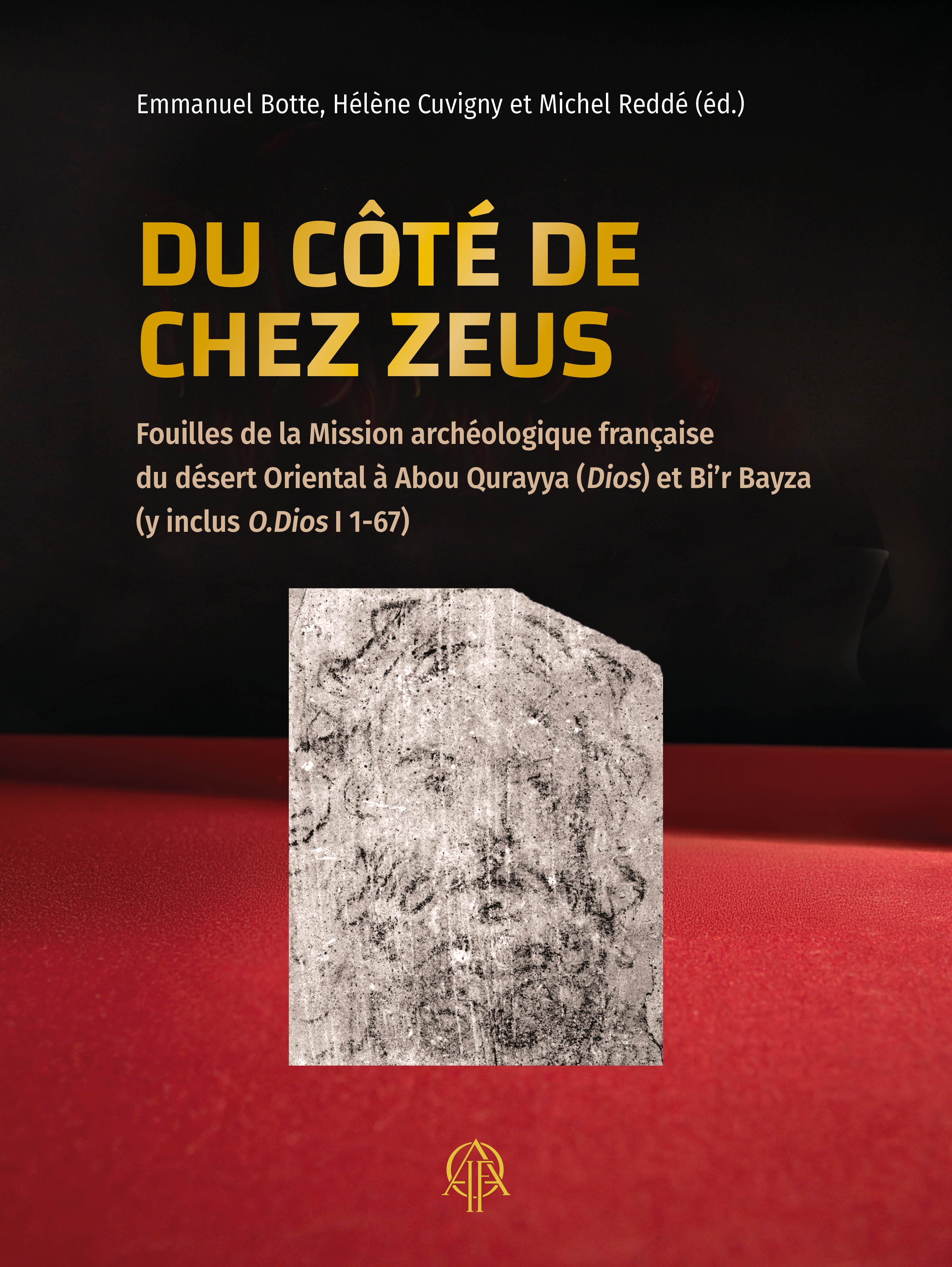
Du côté de chez Zeus
Fouilles de la Mission archéologique française du désert Oriental à Abû Qurayya (Dios) et Bi’r Bayza (y inclus O.Dios I 1-67)
« Du côté de chez Zeus » traduit l’expression grecque par laquelle les ostraca du poste caravanier d’Abû Qurayya désignaient ce lieu, situé sur la piste antique qui reliait Koptos, sur le Nil, à Bérénice, sur la mer Rouge. Le fortin, construit en 117 de notre ère, avait succédé à un précédent (Bi’r Bayza), situé à quelques kilomètres de là, et dont le puits s'était tari. Ce livre, consacré à l’archéologie de ces deux sites, explorés de 2006 à 2009, s’inscrit dans la suite des publications précédentes sur la route de Myos Hormos, le praesidium de Didymoi ou encore les carrières d’Umm Balad. Il contient aussi l’édition d’un certain nombre d’ostraca jugés importants pour la compréhension de l’histoire de ces postes. Enfin, il livre pour la première fois une étude raisonnée de la céramique découverte dans ces différents fortins du désert Oriental.
"Du côté de chez Zeus" is the translation of the Greek expression used on the ostraca of Abu Qurayya's caravan station to designate this place, which is located on the ancient route linking Koptos, on the Nile, to Berenice, on the Red Sea. The fort, built in 117 AD, had succeeded an earlier one (Bi’r Bayza), located a few kilometres away, whose well had run dry. This book, devoted to the archaeology of these two sites explored between 2006 and 2009, continues the previous publications on the Myos Hormos road, the Didymoi praesidium and the Umm Balad quarries. It includes editions of a number of ostraca deemed important for understanding the history of these posts. It also provides, for the first time, a reasoned study of the ceramics found in these various forts in the Eastern desert.
"في ديار زيوس" هو ترجمة للتعبير اليوناني الوارد في الشقفات المكتشفة في موقع قوافل أبو قُرَيَّة. وكان يُطلق على هذا الموضع الواقع على الطريق القديم الرابط بين قِفط على نهر النيل وبرنيس على ساحل البحر الأحمر. شُيّد الحصن في هذا الموقع سنة ١١٧م، ليخلف حصنًا سابقًا في"بئر بايظة" كان يقع على بُعد بضعة كيلومترات، عندما أصبحت بئره غير صالحة للاستعمال بعد نضوب مياهها. يُخصَّص هذا الكتاب لدراسة البقايا الأثرية في هذين الموقعين اللذين خضعا لأعمال استكشاف خلال الفترة ما بين عاميّ ٢٠٠٦ و ٢٠٠٩. ويأتي هذا العمل في سياق استكمال لإصدارات سابقة متعلقة بالطريق المؤدي إلى ميوس هورموس، وحامية ديديموي، وكذلك المحاجر الرومانية في أم بلد. يتضمّن الكتاب أيضًا نشرًا لمجموعة مختارة من الشقفات، التي اعتُبرت ذات أهمية خاصة لفهم تاريخ هذه المحطات الصحراوية. ويُخْتَتَم العمل لأول مرة بتقديم دراسة تحليلية منهجية للخَزَف المكتشف في هذه الحصون المختلفة بالصحراء الشرقية.
- Emmanuel Botte ( : 137387458)
Emmanuel Botte est chargé de recherches au CNRS et directeur adjoint du Centre Camille Jullian (UMR 7299). Archéologue, spécialiste de l’artisanat et du commerce à l’époque romaine, il a participé à plusieurs opérations en Méditerranée et il dirige depuis 2015 un programme de recherches sur la romanisation de la Dalmatie. - Hélène Cuvigny ( : 028856988)
Hélène Cuvigny est papyrologue. Ancienne élève de l’ENS Sèvres, agrégée de lettres classiques, ancien membre scientifique de l’Ifao et directrice de recherche émérite au CNRS, elle a dirigé de 1994 à 2013 le programme « Praesidia du désert Oriental ». - Michel Reddé ( : 028750349)
Michel Reddé est archéologue. Ancien élève de l’ENS Ulm, agrégé de lettres classiques, ancien membre de l’École française de Rome, directeur d’études émérite à l’École pratique des hautes études / Université Paris Sciences et Lettres, médaille d’argent du CNRS.
- Vous pouvez acquérir ce(s) fichier(s) PDF issu(s) de cet ouvrage en cliquant sur le nom du fichier puis 'Ajouter au panier'.
- You can buy theses PDF files extracted from this book by clicking on the file name then 'Add to cart'.

Version pdf de l’ouvrage :
Fouilles de l’Institut français d’archéologie orientale 98
ISBN 9782724711646
2026 IFAO
Langue(s): français
687 p.
104 € (5474 EGP)
Emmanuel Botte (éd.), Hélène Cuvigny (éd.), Michel Reddé (éd.)
Du côté de chez Zeus
Fouilles de la Mission archéologique française du désert Oriental à Abû Qurayya (Dios) et Bi’r Bayza (y inclus O.Dios I 1-67)
« Du côté de chez Zeus » traduit l’expression grecque par laquelle les ostraca du poste caravanier d’Abou Qurayya désignaient ce lieu, situé sur la piste antique qui reliait Koptos, sur le Nil, à Bérénice, sur la mer Rouge. Le fortin, construit en 117 de notre ère, avait succédé à un précédent (Bi’r Bayza), situé à quelques kilomètres de là, et dont le puits s'était tari. Ce livre, consacré à l’archéologie de ces deux sites, explorés de 2006 à 2009, s’inscrit dans la suite des publications précédentes sur la route de Myos Hormos, le praesidium de Didymoi ou encore les carrières d’Umm Balad. Il contient aussi l’édition d’un certain nombre d’ostraca jugés importants pour la compréhension de l’histoire de ces postes. Enfin, il livre pour la première fois une étude raisonnée de la céramique découverte dans ces différents fortins du désert Oriental.
"Du côté de chez Zeus" is the translation of the Greek expression used on the ostraca of Abu Qurayya's caravan station to designate this place, which is located on the ancient route linking Koptos, on the Nile, to Berenice, on the Red Sea. The fort, built in 117 AD, had succeeded an earlier one (Bi’r Bayza), located a few kilometres away, whose well had run dry. This book, devoted to the archaeology of these two sites explored between 2006 and 2009, continues the previous publications on the Myos Hormos road, the Didymoi praesidium and the Umm Balad quarries. It includes editions of a number of ostraca deemed important for understanding the history of these posts. It also provides, for the first time, a reasoned study of the ceramics found in these various forts in the Eastern desert.
"في ديار زيوس" هو ترجمة للتعبير اليوناني الوارد في الشقفات المكتشفة في موقع قوافل أبو قُرَيَّة. وكان يُطلق على هذا الموضع الواقع على الطريق القديم الرابط بين قِفط على نهر النيل وبرنيس على ساحل البحر الأحمر. شُيّد الحصن في هذا الموقع سنة ١١٧م، ليخلف حصنًا سابقًا في"بئر بايظة" كان يقع على بُعد بضعة كيلومترات، عندما أصبحت بئره غير صالحة للاستعمال بعد نضوب مياهها. يُخصَّص هذا الكتاب لدراسة البقايا الأثرية في هذين الموقعين اللذين خضعا لأعمال استكشاف خلال الفترة ما بين عاميّ ٢٠٠٦ و ٢٠٠٩. ويأتي هذا العمل في سياق استكمال لإصدارات سابقة متعلقة بالطريق المؤدي إلى ميوس هورموس، وحامية ديديموي، وكذلك المحاجر الرومانية في أم بلد. يتضمّن الكتاب أيضًا نشرًا لمجموعة مختارة من الشقفات، التي اعتُبرت ذات أهمية خاصة لفهم تاريخ هذه المحطات الصحراوية. ويُخْتَتَم العمل لأول مرة بتقديم دراسة تحليلية منهجية للخَزَف المكتشف في هذه الحصون المختلفة بالصحراء الشرقية.
- Emmanuel Botte ( : 137387458)
Emmanuel Botte est chargé de recherches au CNRS et directeur adjoint du Centre Camille Jullian (UMR 7299). Archéologue, spécialiste de l’artisanat et du commerce à l’époque romaine, il a participé à plusieurs opérations en Méditerranée et il dirige depuis 2015 un programme de recherches sur la romanisation de la Dalmatie. - Hélène Cuvigny ( : 028856988)
Hélène Cuvigny est papyrologue. Ancienne élève de l’ENS Sèvres, agrégée de lettres classiques, ancien membre scientifique de l’Ifao et directrice de recherche émérite au CNRS, elle a dirigé de 1994 à 2013 le programme « Praesidia du désert Oriental ». - Michel Reddé ( : 028750349)
Michel Reddé est archéologue. Ancien élève de l’ENS Ulm, agrégé de lettres classiques, ancien membre de l’École française de Rome, directeur d’études émérite à l’École pratique des hautes études / Université Paris Sciences et Lettres, médaille d’argent du CNRS.

ISBN 9782724711677
2026 IFAO
Collection: BiGen 79
Langue(s): français
1 vol. 512 p.
49 € (2579 EGP)
Paul-Marie Grinevald
La Description de l’Égypte
Une grande aventure éditoriale (1802-1830)
La célèbre expédition d’Égypte du général Bonaparte est particulièrement bien connue, tant sur le plan de l’aventure militaire que des travaux des savants de la Commission des sciences et des arts d’Égypte. L’échec du point de vue militaire est largement compensé par les résultats scientifiques qui sont dans leur majorité transcrits dans le monumental ouvrage de la Description de l’Égypte. La conséquence est un véritable engouement pour l’Égypte, favorisant une égyptomanie qui perdure, le décryptage des hiéroglyphes et toutes les découvertes qui s’ensuivirent. Il reste que les conditions qui ont entouré la réalisation de cet ouvrage sans équivalent pour l’époque, les difficultés éditoriales et techniques qu’il a fallu surmonter, les coûts faramineux que l’entreprise a suscités, les retards qui se sont accumulés, tout cela est largement méconnu dans le détail. Le présent ouvrage a précisément pour objet de retracer l’histoire de cette aventure éditoriale exceptionnelle, qui tient de l’odyssée.
À travers un fourmillement de données et d’archives qu’il a passé plusieurs décennies à rassembler et étudier scrupuleusement, Paul-Marie Grinevald nous fait revivre l’histoire d’un ouvrage hors-norme, depuis sa conception éditoriale jusqu’à sa diffusion, en passant par sa fabrication matérielle, qui a supposé de relever de nombreux défis et imposé, pour accompagner sa parution, la réalisation d’un meuble qui lui soit tout entier consacré.
Ce faisant, le lecteur est invité à entrer dans la vie des auteurs, des graveurs, des imprimeurs, des libraires, des relieurs et autres acteurs qui participèrent à la réalisation de cette grande collection de textes et d’estampes.
Napoleon’s famous expedition to Egypt is particularly well known, both in terms of the military adventure and the work of the scientists of the Commission des sciences et des arts d’Égypte. The military failure was largely offset by the scientific results, most of which were transcribed in the monumental Description de l’Égypte. The result was a veritable infatuation with Egypt, fostering a long-lasting Egyptomania, the deciphering of hieroglyphs and all the discoveries that followed. However, the conditions surrounding the production of this unparalleled work of its time, the editorial and technical difficulties that had to be overcome, the staggering costs involved and the delays that accumulated, are largely unknown in detail. The purpose of this book is precisely to retrace the history of this exceptional publishing adventure, which has the makings of an odyssey.
Through a wealth of data and archives that he has spent several decades gathering and scrupulously studying, Paul-Marie Grinevald brings to life the story of an extraordinary work, from its editorial conception to its distribution, via its material production, which involved meeting numerous challenges and, to accompany its publication, the creation of a piece of furniture entirely devoted to it.
In so doing, readers are invited into the lives of the authors, engravers, printers, booksellers, bookbinders and others involved in the creation of this great collection of texts and prints.
تشتهر حملة اﻟﭽﻨﺮال بونابرت على مصر بوجه خاص، سواء من حيث الجانب العسكري أو من حيث أعمال العلماء الذين شاركوا في هيئة العلوم والفنون في مصر. ورغم فشلها من الناحية العسكرية، فإن النتائج العلمية التي أفرزتها عوّضت ذلك بدرجة كبيرة، إذ جُمعت في معظمها في ذلك العمل الضخم الفريد « وصف مصر ». وقد تمخّض عن ذلك شغف حقيقي بمصر مهّد لظهور ما عُرف بالهوس بمصر القديمة كاتجاه فكري وفني ما زال مستمرًا، وأسهم في فك رموز الكتابة الهيروغليفية وجميع الاكتشافات التي تلت ذلك. ومع ذلك، فإن الظروف التي أحاطت بإنجاز هذا العمل الذي لا نظير له في عصره، والصعوبات التحريرية والتقنية التي كان لا بد من تجاوزها، والتكاليف الباهظة التي استلزمها المشروع، والتأخيرات التي تراكمت، كل ذلك لا يزال مجهولًا في تفاصيله. يهدف هذا العمل تحديدًا إلى إعادة رسم تاريخ هذه المغامرة التحريرية الاستثنائية التي ترقى إلى مستوى الملحمة. يُعيد بول-ماري جرينيفالد إحياء تاريخ عملٍ استثنائي، من خلال ثراء هائل من المعطيات والأرﺷﯿﭭﺎت التي أمضى عقودًا في جمعها ودراستها بدقة متناهية، متتبعًا مسيرته منذ تصوره التحريري إلى مرحلة توزيعه، مرورًا بعملية إنجازه المادي التي تطلّبت تجاوز تحديات عديدة، بلغت حدّ استحداث قطعة أثاث خُصصت بالكامل لاحتوائه وعرضه حين صدوره. وبذلك، سيُدعى القارئ إلى الولوج في حياة المؤلفين والنقّاشين والطابعين وأصحاب المكتبات والمجلدين وغيرهم من الفاعلين الذين ساهموا في إنجاز هذه المجموعة الكبيرة من النصوص والمطبوعات الفنية.
- Paul-Marie Grinevald ( : 02911456X)
Paul-Marie Grinevald, ancien conservateur de la bibliothèque de l’Imprimerie nationale, attaché d’administration centrale du ministère des Finances, docteur en histoire, spécialiste de l’histoire du livre, auteur de nombreux articles sur le sujet. Il a publié en 2014 aux éditions de L’Harmattan une biographie de Guillaume-André Villoteau (1759-1839) : ethnomusicographe de l’Égypte. Il est également l’auteur de plusieurs articles fondamentaux sur l’histoire de la Description de l’Égypte entre 1995 et 2024.
- Vous pouvez acquérir ce(s) fichier(s) PDF issu(s) de cet ouvrage en cliquant sur le nom du fichier puis 'Ajouter au panier'.
- You can buy theses PDF files extracted from this book by clicking on the file name then 'Add to cart'.
Version pdf de l’ouvrage :
Bibliothèque générale 79
ISBN 9782724711684
2026 IFAO
Langue(s): français
512 p.
34 € (1789 EGP)
Paul-Marie Grinevald
La Description de l’Égypte
Une grande aventure éditoriale (1802-1830)
La célèbre expédition d’Égypte du général Bonaparte est particulièrement bien connue, tant sur le plan de l’aventure militaire que des travaux des savants de la Commission des sciences et des arts d’Égypte. L’échec du point de vue militaire est largement compensé par les résultats scientifiques qui sont dans leur majorité transcrits dans le monumental ouvrage de la Description de l’Égypte. La conséquence est un véritable engouement pour l’Égypte, favorisant une égyptomanie qui perdure, le décryptage des hiéroglyphes et toutes les découvertes qui s’ensuivirent. Il reste que les conditions qui ont entouré la réalisation de cet ouvrage sans équivalent pour l’époque, les difficultés éditoriales et techniques qu’il a fallu surmonter, les coûts faramineux que l’entreprise a suscités, les retards qui se sont accumulés, tout cela est largement méconnu dans le détail. Le présent ouvrage a précisément pour objet de retracer l’histoire de cette aventure éditoriale exceptionnelle, qui tient de l’odyssée.
À travers un fourmillement de données et d’archives qu’il a passé plusieurs décennies à rassembler et étudier scrupuleusement, Paul-Marie Grinevald nous fait revivre l’histoire d’un ouvrage hors-norme, depuis sa conception éditoriale jusqu’à sa diffusion, en passant par sa fabrication matérielle, qui a supposé de relever de nombreux défis et imposé, pour accompagner sa parution, la réalisation d’un meuble qui lui soit tout entier consacré.
Ce faisant, le lecteur est invité à entrer dans la vie des auteurs, des graveurs, des imprimeurs, des libraires, des relieurs et autres acteurs qui participèrent à la réalisation de cette grande collection de textes et d’estampes.
Napoleon’s famous expedition to Egypt is particularly well known, both in terms of the military adventure and the work of the scientists of the Commission des sciences et des arts d’Égypte. The military failure was largely offset by the scientific results, most of which were transcribed in the monumental Description de l’Égypte. The result was a veritable infatuation with Egypt, fostering a long-lasting Egyptomania, the deciphering of hieroglyphs and all the discoveries that followed. However, the conditions surrounding the production of this unparalleled work of its time, the editorial and technical difficulties that had to be overcome, the staggering costs involved and the delays that accumulated, are largely unknown in detail. The purpose of this book is precisely to retrace the history of this exceptional publishing adventure, which has the makings of an odyssey.
Through a wealth of data and archives that he has spent several decades gathering and scrupulously studying, Paul-Marie Grinevald brings to life the story of an extraordinary work, from its editorial conception to its distribution, via its material production, which involved meeting numerous challenges and, to accompany its publication, the creation of a piece of furniture entirely devoted to it.
In so doing, readers are invited into the lives of the authors, engravers, printers, booksellers, bookbinders and others involved in the creation of this great collection of texts and prints.
تشتهر حملة اﻟﭽﻨﺮال بونابرت على مصر بوجه خاص، سواء من حيث الجانب العسكري أو من حيث أعمال العلماء الذين شاركوا في هيئة العلوم والفنون في مصر. ورغم فشلها من الناحية العسكرية، فإن النتائج العلمية التي أفرزتها عوّضت ذلك بدرجة كبيرة، إذ جُمعت في معظمها في ذلك العمل الضخم الفريد « وصف مصر ». وقد تمخّض عن ذلك شغف حقيقي بمصر مهّد لظهور ما عُرف بالهوس بمصر القديمة كاتجاه فكري وفني ما زال مستمرًا، وأسهم في فك رموز الكتابة الهيروغليفية وجميع الاكتشافات التي تلت ذلك. ومع ذلك، فإن الظروف التي أحاطت بإنجاز هذا العمل الذي لا نظير له في عصره، والصعوبات التحريرية والتقنية التي كان لا بد من تجاوزها، والتكاليف الباهظة التي استلزمها المشروع، والتأخيرات التي تراكمت، كل ذلك لا يزال مجهولًا في تفاصيله. يهدف هذا العمل تحديدًا إلى إعادة رسم تاريخ هذه المغامرة التحريرية الاستثنائية التي ترقى إلى مستوى الملحمة. يُعيد بول-ماري جرينيفالد إحياء تاريخ عملٍ استثنائي، من خلال ثراء هائل من المعطيات والأرﺷﯿﭭﺎت التي أمضى عقودًا في جمعها ودراستها بدقة متناهية، متتبعًا مسيرته منذ تصوره التحريري إلى مرحلة توزيعه، مرورًا بعملية إنجازه المادي التي تطلّبت تجاوز تحديات عديدة، بلغت حدّ استحداث قطعة أثاث خُصصت بالكامل لاحتوائه وعرضه حين صدوره. وبذلك، سيُدعى القارئ إلى الولوج في حياة المؤلفين والنقّاشين والطابعين وأصحاب المكتبات والمجلدين وغيرهم من الفاعلين الذين ساهموا في إنجاز هذه المجموعة الكبيرة من النصوص والمطبوعات الفنية.
- Paul-Marie Grinevald ( : 02911456X)
Paul-Marie Grinevald, ancien conservateur de la bibliothèque de l’Imprimerie nationale, attaché d’administration centrale du ministère des Finances, docteur en histoire, spécialiste de l’histoire du livre, auteur de nombreux articles sur le sujet. Il a publié en 2014 aux éditions de L’Harmattan une biographie de Guillaume-André Villoteau (1759-1839) : ethnomusicographe de l’Égypte. Il est également l’auteur de plusieurs articles fondamentaux sur l’histoire de la Description de l’Égypte entre 1995 et 2024.
ISBN 9782724711714
2026 IFAO
Collection: RAPH 51
Langue(s): français
1 vol. 302 p.
40 € (2105 EGP)
Sylvie Ayari
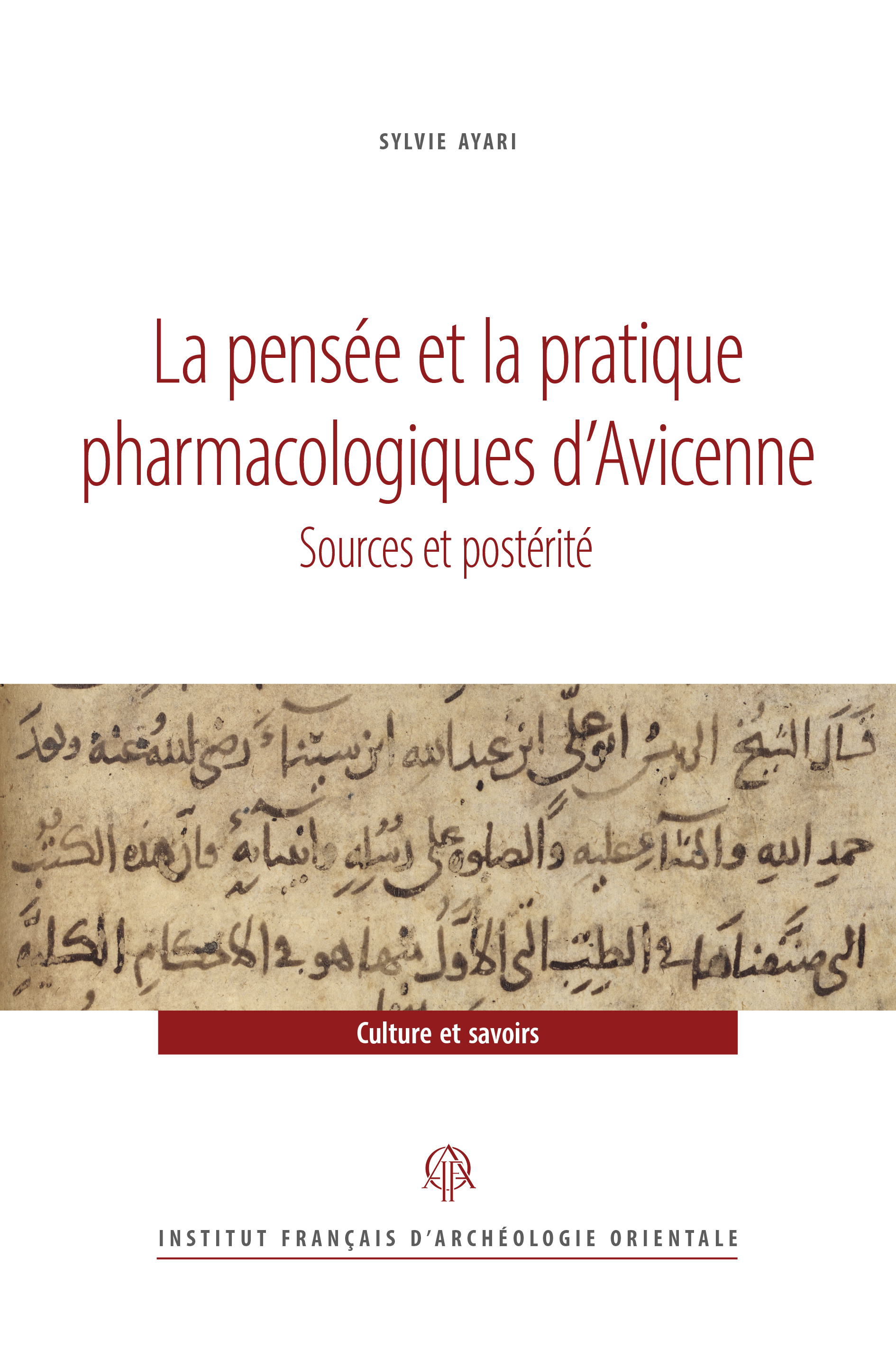
La pensée et la pratique pharmacologiques d’Avicenne
Sources et postérité
Ibn Sīnā (m. 1037), plus connu en Occident sous le nom d’Avicenne, est célèbre dans l’histoire médicale pour son Canonde la médecine (al-Qānūn fī al-ṭibb), une œuvre majeure qui a été rédigée entre 1012 et 1024 et dans laquelle se mêlent théorie et observations pratiques. Mais que sait-on de la pharmacologie avicennienne ? Quel était son soubassement philosophique et quelles sont les influences qu’ont exercées sur son auteur les traités des médecins de l’Antiquité et les savoirs thérapeutiques au Moyen-Orient au xie siècle ? Comment ce grand médecin persan définissait-il les propriétés médicamenteuses et de quelle manière les employait-il dans sa pratique thérapeutique ? Ce livre répond à l’ensemble de ces questions et à d’autres, non sans donner au lecteur un aperçu de la vie d’Avicenne, de l’époque mouvementée à laquelle il a vécu, des diverses sources de son savoir encyclopédique, de l’état de l’art médical dans le monde islamique médiéval et de la grande fortune du Canon de la médecine au Moyen-Âge et jusqu’à nos jours.
Ibn Sīnā (d. 1037), better known in the West as Avicenna, is famous in medical history for his Canon of Medicine (al-Qānūn fī al-ṭibb), a major work written between 1012 and 1024 that blends theory and practical observations. But what do we know about Avicennian pharmacology? What was its philosophical foundation, and what influences did the treatises of ancient physicians and the therapeutic knowledge of the 11th-century Middle East exert on its author? How did this great Persian physician define medicinal properties, and how did he use them in his therapeutic practice? This book answers all these questions and others, while also giving the reader an overview of Avicenna’s life, the turbulent times in which he lived, the various sources of his encyclopedic knowledge, the state of medical art in the medieval Islamic world, and the great fortune of the Canon of Medicine in the Middle Ages and to the present day.
يُعد ابن سينا (ت. ١٠٣٧م)، المعروف في الغرب باسم أﭬﯿﺴّﯿﻦ، من أبرز الشخصيات في تاريخ الطب بفضل كتابه الشهير « القانون في الطب »، الذي ألفه بين عاميّ ١٠١٢ و١٠٢٤، وجمع فيه بين النظرية والملاحظات العملية. لكن، ما الذي نعرفه عن الفكر الدوائي عند ابن سينا؟ ما الأساس الفلسفي الذي استند إليه؟ ما هي التأثيرات التي مارستها عليه كتب الأطباء القدامى والمعارف العلاجية في الشرق الأوسط خلال القرن الحادي عشر؟ كيف حدّد هذا الطبيب الفارسي الكبير الخصائص العلاجية للأدوية؟ وبأي أسلوب استخدمها في ممارسته العلاجية؟ يقدّم هذا الكتاب إجابات شاملة عن هذه الأسئلة وغيرها، كما يمنح القارئ لمحة عن حياة ابن سينا، والحقبة المضطربة التي عاش فيها، والمصادر المتنوعة التي استقى منها معارفه الموسوعية، إضافة إلى الوضع العلمي للطب في العالم الإسلامي في العصور الوسطى، والمكانة الرفيعة التي حققها « القانون في الطب » منذ العصور الوسطى وحتى يومنا هذا.
- Sylvie Ayari
Sylvie Ayari est actuellement chercheuse indépendante. Elle a soutenu en 2020, à l’université de Lausanne, une thèse de doctorat sur la pharmacologie dans le Canon d’Avicenne dont est tiré cet ouvrage. Ses recherches portent sur l’histoire de la médecine médiévale et notamment sur la thérapeutique avicennienne.
- Vous pouvez acquérir ce(s) fichier(s) PDF issu(s) de cet ouvrage en cliquant sur le nom du fichier puis 'Ajouter au panier'.
- You can buy theses PDF files extracted from this book by clicking on the file name then 'Add to cart'.
Version pdf de l’ouvrage :
Recherches d’archéologie, de philologie et d’histoire 51
ISBN 9782724711776
2026 IFAO
Langue(s): français
302 p.
10 € (526 EGP)
Sylvie Ayari
La pensée et la pratique pharmacologiques d’Avicenne
Sources et postérité
Ibn Sīnā (m. 1037), plus connu en Occident sous le nom d’Avicenne, est célèbre dans l’histoire médicale pour son Canon de la médecine (al-Qānūn fī al-ṭibb), une œuvre majeure qui a été rédigée entre 1012 et 1024 et dans laquelle se mêlent théorie et observations pratiques. Mais que sait-on de la pharmacologie avicennienne ? Quel était son soubassement philosophique et quelles sont les influences qu’ont exercées sur son auteur les traités des médecins de l’Antiquité et les savoirs thérapeutiques au Moyen-Orient au xie siècle ? Comment ce grand médecin persan définissait-il les propriétés médicamenteuses et de quelle manière les employait-il dans sa pratique thérapeutique ? Ce livre répond à l’ensemble de ces questions et à d’autres, non sans donner au lecteur un aperçu de la vie d’Avicenne, de l’époque mouvementée à laquelle il a vécu, des diverses sources de son savoir encyclopédique, de l’état de l’art médical dans le monde islamique médiéval et de la grande fortune du Canon de la médecine au Moyen-Âge et jusqu’à nos jours.
Ibn Sīnā (d. 1037), better known in the West as Avicenna, is famous in medical history for his Canon of Medicine (al-Qānūn fī al-ṭibb), a major work written between 1012 and 1024 that blends theory and practical observations. But what do we know about Avicennian pharmacology? What was its philosophical foundation, and what influences did the treatises of ancient physicians and the therapeutic knowledge of the 11th-century Middle East exert on its author? How did this great Persian physician define medicinal properties, and how did he use them in his therapeutic practice? This book answers all these questions and others, while also giving the reader an overview of Avicenna’s life, the turbulent times in which he lived, the various sources of his encyclopedic knowledge, the state of medical art in the medieval Islamic world, and the great fortune of the Canon of Medicine in the Middle Ages and to the present day.
يُعد ابن سينا (ت. ١٠٣٧م)، المعروف في الغرب باسم أﭬﯿﺴّﯿﻦ، من أبرز الشخصيات في تاريخ الطب بفضل كتابه الشهير « القانون في الطب »، الذي ألفه بين عاميّ ١٠١٢ و١٠٢٤، وجمع فيه بين النظرية والملاحظات العملية. لكن، ما الذي نعرفه عن الفكر الدوائي عند ابن سينا؟ ما الأساس الفلسفي الذي استند إليه؟ ما هي التأثيرات التي مارستها عليه كتب الأطباء القدامى والمعارف العلاجية في الشرق الأوسط خلال القرن الحادي عشر؟ كيف حدّد هذا الطبيب الفارسي الكبير الخصائص العلاجية للأدوية؟ وبأي أسلوب استخدمها في ممارسته العلاجية؟ يقدّم هذا الكتاب إجابات شاملة عن هذه الأسئلة وغيرها، كما يمنح القارئ لمحة عن حياة ابن سينا، والحقبة المضطربة التي عاش فيها، والمصادر المتنوعة التي استقى منها معارفه الموسوعية، إضافة إلى الوضع العلمي للطب في العالم الإسلامي في العصور الوسطى، والمكانة الرفيعة التي حققها « القانون في الطب » منذ العصور الوسطى وحتى يومنا هذا.
- Sylvie Ayari
Sylvie Ayari est actuellement chercheuse indépendante. Elle a soutenu en 2020, à l’université de Lausanne, une thèse de doctorat sur la pharmacologie dans le Canon d’Avicenne dont est tiré cet ouvrage. Ses recherches portent sur l’histoire de la médecine médiévale et notamment sur la thérapeutique avicennienne.

ISBN 9782724711899
2026 IFAO
Collection: BCAI 40
Langue(s): français
1 vol.
gratuit - free of charge
Bulletin critique des Annales islamologiques 40
Ce nouveau numéro du Bulletin critique des Annales islamologiques (BCAI) publie en français, en anglais et en arabe des comptes rendus critiques d'ouvrages ayant trait aux études arabes et islamiques dans les domaines suivants : langue et littérature arabes, islamologie, philosophie, histoire, histoire des sciences et des techniques, anthropologie et sciences sociales, arts et archéologie. Les ouvrages recensés dans cette livraison ont paru entre 2021 et 2025.
La revue est désormais accessible sur la plateforme OpenEdition, en accès ouvert :
This new issue of the Bulletin critique des Annales islamologiques (BCAI) publishes in French, in English an in Arabic critical reviews of works relating to Arabic and Islamic studies in the following domains: Arabic language and literature, Islamic studies, philosophy, history, history of science and technology, anthropology and social sciences, arts and archaeology. The books listed in this issue were published between 2021 and 2025.
The journal is now available on the OpenEdition platform, in open access:
ينشر هذا العدد الجديد من "النشرة النقدية للحوليات الإسلامية" (BCAI)
مراجعات نقدية باللغات الفرنسية والإنجليزية والعربية لكتب في الدراسات العربية والإسلامية في المجالات التالية: اللغة العربية وآدابها، والدراسات الإسلامية، والفلسفة، والتاريخ، وتاريخ العلوم والتقنيات، والأنثروبولوجيا والعلوم الاجتماعية، والفنون والآثار. الكتب المدرجة في هذا العدد قد تم نشرها بين عام ٢٠٢١ وعام ٢٠٢٥.
والمجلة متاحة من الآن فصاعدًا على منصة OpenEdition حيث توجد على الإنترنت ويمكن الوصول إليها عن طريق الرابط التالي:
ISBN 9782724711288
2026 IFAO
Collection: FIFAO 99
Langue(s): anglais
1 vol. 344 p.
64 € (3368 EGP)
Colin Hope
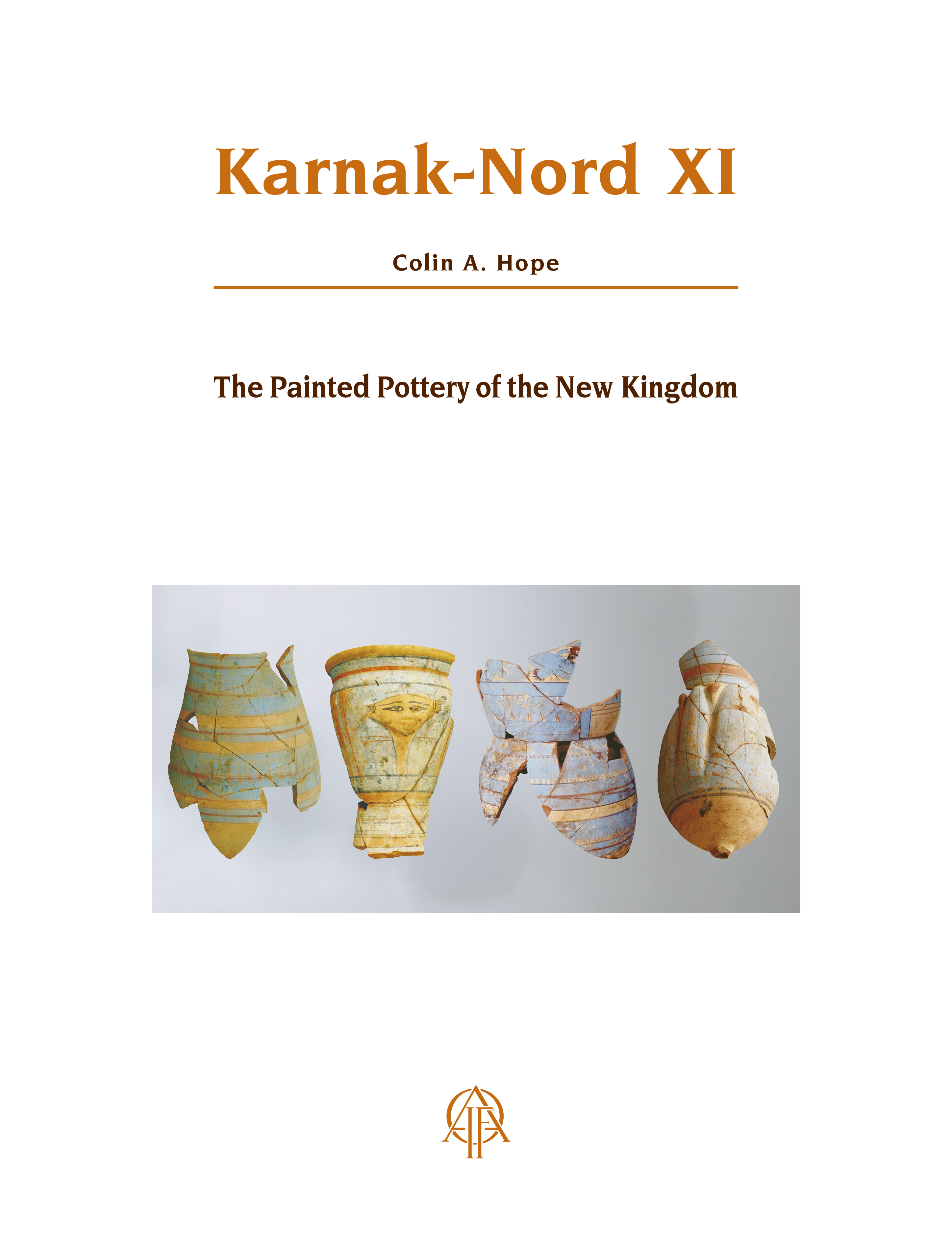
Karnak-Nord XI
The Painted Pottery of the New Kingdom
The volume publishes the painted pottery from the excavations at Karnak North by Jean and Helen Jacquet, and Philippe Brissaud. The material attests three categories: monochrome- and bichrome-painted, and blue-painted pottery, with the majority of the latter type. The forms occurring in each category are presented separately and the motifs employed upon each category are identified and presented in an extensive list. While the pottery derives from disturbed contexts, and the majority was dumped at the site and may have been moved several times, it is an important selection of material. This is especially the case with the blue-painted pottery. The collection enables a comparison of the categories to be made and their interconnections identified. The corpora of bichrome-painted pottery and blue-painted pottery are compared with those from elsewhere in Egypt and their evolution from the mid-18th to mid-20th Dynasties is analysed. The function of each category is reviewed and, in relation to the blue-painted pottery, the marks found upon certain forms are analysed to shed light upon this topic and its place/s of manufacture. Most of the blue-painted pottery is of the period covered by the reigns of Amenhotep III to Tutankhamun; its origin in the temples erected by Akhenaten at Karnak East is considered.
Ce volume est la publication de la céramique peinte provenant des fouilles de Karnak-Nord par Jean et Helen Jacquet, et Philippe Brissaud. Le matériel se divise en trois catégories : la céramique monochrome, la céramique bichrome et la céramique peinte en bleu, ce dernier type étant majoritaire. Les formes attestées dans chacune des catégories font l’objet d’une présentation individuelle, et les motifs employés dans le décor de chaque catégorie sont identifiés et présentés dans une liste exhaustive. Bien que la céramique provienne de contextes perturbés, que la majorité soit issue de dépotoirs et ait pu être déplacée à plusieurs reprises, il s’agit d’une importante sélection de mobilier. C’est particulièrement le cas pour ce qui concerne la céramique peinte en bleu. La collection permet en outre de comparer les catégories entre elles et de mettre en évidence leurs interconnexions. Les deux corpus de céramique peinte bichrome et de céramique peinte en bleu sont comparés à des corpus provenant d’autres régions d’Égypte, et une analyse de leur évolution entre le milieu de la XVIIIe et le milieu de la XXe dynastie est proposée. La fonction de chaque catégorie est examinée et, en ce qui concerne la céramique peinte en bleu, les marques mises en évidence sur certaines formes sont analysées, de manière à améliorer notre connaissance de cette pratique et de son ou ses lieux de fabrication. La plupart des céramiques peintes en bleu datent de la période comprise entre les règnes d’Amenhotep III et de Toutânkhamon et l’hypothèse de leur origine dans les temples érigés par Akhénaton à Karnak-Est est examinée.
ينشر هذا الكتاب أعمال الخَزَف الملون من حفائر موقع الكرنك الشمالي، التي أجراها ﭼﺎن وهيلين ﭼﺎكيه، وفيليب بريسو. وقد قُسِّمَت المواد إلى ثلاث فئات: الخَزَف أحادي اللون، الخَزَف ثنائي اللون، والخَزَف الملوَّن بالأزرق – وهو الفئة الغالبة عددًا. كما خُصِّص عرض وصفي تحليلي مستقل لكل نوع من الأشكال المثْبَتة ضمن هذه الفئات، وجرى توثيق الزخارف المستخدمة في تزيين كل فئة ضمن قائمة حصرية شاملة. ورغم أن هذا الخَزَف استُخرج من سياقات أثرية مضطربة، وأن غالبه يأتى من مكبات النفايات وربما نُقل عدة مرات، فإنه يُعدّ مجموعة مختارة وهامة من القطع الأثرية، وخصوصًا للخَزَف الملوَّن بالأزرق. بالإضافة إلى ذلك فإن هذه المجموعة تُتيح إمكانية إجراء مقارنة بين الفئات الثلاث، وإبراز العلاقات والتداخلات فيما بينها. كما يُقارن كل من الركامين ثنائي اللون وذو اللون الأزرق بمجموعات مماثلة في مناطق أخرى في مصر، وترصد دراسة تحليلية التغيّرات والتطورات التي طرأت على هذا الخَزَف ما بين منتصف الأسرة الثامنة عشرة ومنتصف الأسرة العشرين. وقد جرت مراجعة الوظيفة المفترضة لكل فئة، وبخاصة ما يتعلق بالخَزَف الأزرق؛ إذ خَضَعت العلامات المميَّزة المكتشفة على بعض القطع لتحليل دقيق يهدف إلى تعزيز فهمنا لهذه الممارسة ومواقع إنتاجها. يعود تاريخ معظم الخَزَف الملوَّن بالأزرق إلى الفترة الممتدة بين حكم أمنحتب الثالث وتوت عنخ آمون، وتتم دراسة فرضية أن أصله يعود إلى المعابد التي شيّدها أخناتون في موقع الكرنَك الشرقي.
- Colin Hope
Colin A. Hope is Adjunct Senior Research Fellow at Monash University. His current research focuses upon the archaeology of Egypt’s Western Desert, where he directs excavations at Ismant al-Kharab and Mut al-Kharab in Dakhla Oasis. He also has a specialisation in Egyptian ceramics, particularly of the New Kingdom.
- Vous pouvez acquérir ce(s) fichier(s) PDF issu(s) de cet ouvrage en cliquant sur le nom du fichier puis 'Ajouter au panier'.
- You can buy theses PDF files extracted from this book by clicking on the file name then 'Add to cart'.