

Manifestations scientifiques
Abonnez-vous à la … Subscribe to the Mailing list :
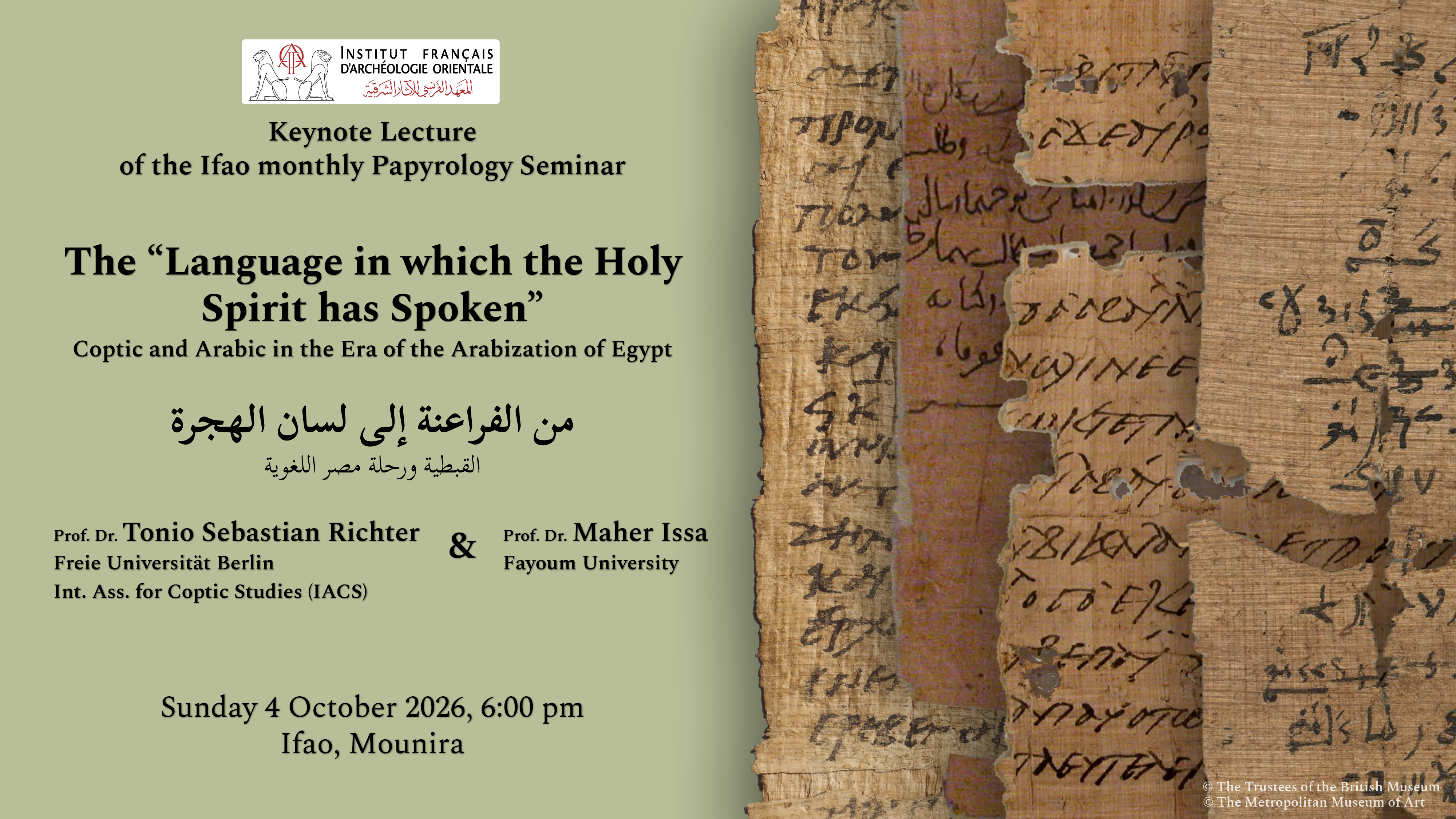
Keynote Lecture
Le dimanche 4 octobre 2026 à 18h00 (heure du Caire), IFAO 
The “Language in which the Holy Spirit has Spoken” versus the Language of Power, Economy and Science: Coptic and Arabic in the Era of the Arabization of Egypt
من الفراعنة إلى لسان الهجرة: القبطية ورحلة مصر اللغوية
Prof. Dr. Tonio Sebastian Richter & Prof. Dr. Maher Eissa
Langue : anglais.
تناول هذه المحاضرة حوارًا بين أستاذين بارزين حول رحلة مصر اللغوية عبر التاريخ، نتتبع خلالها مسار اللغة القبطية باعتبارها الجسر التاريخي الذي ربط بين مصر القديمة ومصر العربية. فالقبطية ليست لغة منفصلة، بل تمثل المرحلة الأخيرة من تطور اللغة المصرية القديمة، وإن كانت قد كُتبت بالحروف اليونانية. ومع دخول الإسلام واللغة العربية إلى مصر «لسان الهجرة»، لم يحدث التحول اللغوي بصورة مفاجئة، بل عاشت القبطية والعربية معًا لقرون طويلة في تعايش وتمازج تركا أثرًا عميقًا في اللغة والثقافة المصرية. تكشف المحاضرة كيف أسهمت هذه الرحلة اللغوية في انتقال مصر من القبطية إلى العربية، وما تركته القبطية من أثر في العربية والثقافة المصرية، وهو أثر ما زال حاضرًا حتى يومنا هذا في لهجتنا المصرية.
This lecture features a dialogue between two distinguished professors on Egypt’s linguistic journey through history, during which we will trace the development of the Coptic language as the historical bridge linking Ancient Egypt and Arab Egypt. Coptic is not a separate language, but rather represents the final stage in the evolution of the Ancient Egyptian language, even though it was written using the Greek alphabet. With the arrival of Islam and the Arabic language in Egypt—the ‘language of migration’—the linguistic transition did not occur suddenly; rather, Coptic and Arabic coexisted for many centuries, a period of coexistence and intermingling that left a profound mark on Egyptian language and culture.
The lecture explores how this linguistic journey contributed to Egypt’s transition from Coptic to Arabic, and the influence that Coptic has had on the Arabic language and Egyptian culture—an influence that remains evident to this day in our Egyptian dialect.