 ↓
↓Lettre d’information de l’Ifao
Décembre 2025
Rubriques : (-) À la une (-) Vie du Palais (-) Quelques questions à Khaled Younes... (-) Le carnet de l'Ifao (-) Manifestations scientifiques (-) Rencontres scientifiques (-) Sur la chaîne Youtube de l'Ifao (-) Publications

◼︎ Décoration de Pierre Tallet à l'ambassade de France. ©A.Bahgat/Ifao
À la Une
Pierre Tallet reçoit la Légion d'honneurLe 21 octobre 2025, Pierre Tallet s'est vu remettre les insignes de chevalier de la Légion d'honneur lors d'une cérémonie qui s'est tenue à l'ambassade de France. Entouré de sa famille, de nombreux agents de l'Ifao, de collègues et de personnalités scientifiques, le directeur de l'Ifao a reçu cette distinction des mains de l'ambassadeur de France en Egypte, M. Éric Chevallier, du fait de ‘son parcours scientifique remarquable, une contribution majeure au développement de la recherche archéologique française en Égypte, ainsi que le rôle central qu’il joue dans le renforcement du dialogue scientifique et culturel entre la France et l’Égypte’. بيير تاليه يحصل على وسام جوقة الشرف في ٢١ أكتوبر ٢٠٢٥، تم منح بيير تاليه وسام فارس جوقة الشرف خلال حفل أقيم في السفارة الفرنسية. محاطًا بأسرته وموظفي المعهد الفرنسي للآثار الشرقية والعديد من الشخصيات البارزة، تلقى بيير تاليه هذا التكريم على يد سفير فرنسا في مصر، السيد إريك شوفالييه، تقديرًا لـ "مسيرته العلمية الرائعة، ومساهمته الكبيرة في تطوير البحث الأثري الفرنسي في مصر، فضلاً عن الدور المركزي الذي يلعبه في تعزيز الحوار العلمي والثقافي بين فرنسا ومصر". |
||
L'Ifao en travaux : rénovation du palais et lancement de la construction de la bibliothèque SauneronLes travaux de restauration et de mise en valeur du palais de Mounira se sont poursuivis au cours du deuxième semestre. Après celle du grand hall durant l'été 2024, la restauration du second niveau du grand hall de l’escalier d'honneur a été achevée. Les travaux d’étanchéité du palais se sont aussi poursuivis. Parallèlement, la construction de la bibliothèque Serge Sauneron a débuté au début du mois de septembre. Il est à noter que l'Ifao a prévu la transplantation et l'intégration dans le nouveau bâtiment des arbres remarquables qui constituent un élément fort de l'identité du site. أعمال ترميم القصر وإطلاق مشروع بناء مكتبة سونيرون تواصلت أعمال ترميم وتجديد التراث المعماري في قصر المنيرة طوال العام، حيث أن بعد ترميم البهو الكبير خلال صيف ٢٠٢٤، تم هذا الصيف ترميم الطابق العلوي لبهو الدرج الشرفي، مما سمح باستعادة التناسق المعماري والزخرفي لهذا الفضاء المركزي في القصر، كما تواصلت أعمال عزل الرطوبة ومعالجة تسربات المياه. كما بدأ مشروع بناء مبنى «سيرج سونيرون» الذي سيضم المكتبة الجديدة. وحرصًا على الحفاظ على هوية الموقع وبخاصة الأشجار المميّزة التي تشكّل عنصرًا أساسيًا فيه، وضع المعهد خطة لنقل هذه الأشجار وإعادة دمجها في المبنى الجديد بعد الإنتهاء منه. Signature du contrat pluriannuel de l’Ifao et du ResEFE avec le MESRELe lundi 15 septembre 2025, s’est tenue au ministère de l’Enseignement supérieur, de la Recherche et de l'Espace, à Paris, une journée consacrée aux cinq Écoles françaises à l’étranger. Cette rencontre a été ouverte par le Secrétaire perpétuel de l'AIBL, Nicolas Grimal. Elle a donné lieu à la signature, par les cinq directeurs de ces écoles et le MESRE, du contrat pluriannuel qui les associe. توقيع العقد متعدد السنوات بين المعهد الفرنسي للآثار الشرقية وشبكة المعاهد الفرنسية في الخارج من جانب، ووزارة التعليم العالي والبحث العلمي والفضاء الفرنسية من جانب آخر عُقدت في وزارة التعليم العالي والبحث العلمي والفضاء في باريس يوم الاثنين ١٥ سبتمبر ٢٠٢٥ فعالية مخصصة للمعاهد الفرنسية الخمس في الخارج. تم تنظيم هذا اللقاء بمناسبة توقيع العقود متعددة السنوات بين هذه المعاهد وبين شبكة المعاهد الفرنسية في الخارج مع الوزارة . افتتح اللقاء الأمين الدائم لأكاديمية النقوش والآداب، نيكولا جريمال. وخلال هذا اليوم، وقّع مديرو المعاهد الخمسة، إلى جانب الوزارة، العقد متعدد السنوات الذي يربط المؤسّسات ببعضها. |
◼︎ Restauration du second niveau du grand hall de l’escalier d'honneur ©A.Bahgat/Ifao
◼︎ Les écoles françaises à l'étranger au MESRE. Discours inaugural de Nicolas Grimal, Secrétaire perpétuel de l'AIBL ©A.Bahgat/Ifao |
|
ENDeM : explorer en ligne les journaux de fouilles de Bernard BruyèreParmi les ressources numériques de l’Ifao, le projet ENDeM (Exploration numérique des journaux de fouilles de Deir el-Médina) franchit une nouvelle étape. Mené conjointement par le service des archives et collections, la mission archéologique de Deir el-Médina et la société TEKLIA, il offre un accès structuré aux exceptionnels journaux de fouilles de Bernard Bruyère, rédigés entre 1921 et 1955. Grâce à l’outil ArkIndex, chaque ligne de texte a été numérisée et indexée, et chaque illustration repérée, datée et localisée. L'ensemble constitue un corpus exceptionnel pour l’histoire des fouilles et des méthodes archéologiques. Cette plateforme permet aux chercheurs comme au grand public de plonger au cœur des premières campagnes menées sur le site de Deir el-Médina et d’explorer, en ligne, un ensemble documentaire jusque-là difficilement accessible.
مشروع ENDeM: استكشاف دفاتر حفائر برنار برويير على الإنترنت |
|
|
Nouvelles des chantiers et des programmesTreize missions archéologiques ont eu lieu au cours du second trimestre de l'année : celles de Tebtynis, de Kôm Abou Billou, de Plinthine, de Qal‘at Cheikh Hammâm, de Hatnoub, de l’Assassif, de Bahariya, de TT 33, de Tanis, de Kôm Ombo, de Tell el-Iswid, d’Ermant et de la Mission archéologique franco-suisse (MAFS) à Saqqara. Ces chantiers illustrent la diversité des terrains sur lesquels l’Ifao et ses partenaires interviennent. Parmi les découvertes à retenir, il faut signaler les résultats obtenus par la mission de Tanis (Ṣān el-Hagar), codirigée par Frédéric Payraudeau (Sorbonne Université) et Ahmed Nakshara (Université Ain Shams / Ifao). Lors du nettoyage du sol de la chambre nord du tombeau du roi Osorkon II (XXIIᵉ dynastie), l’équipe a mis au jour plus de deux cents figurines funéraires (ouchebtis) au nom du roi Sheshonq III, découvertes à proximité d’un grand sarcophage en granite non inscrit connu de longue date, mais dont le propriétaire restait inconnu. En visite sur le chantier, le secrétaire général du Conseil suprême des antiquités, Dr. Mohamed Ismail Khaled, a souligné le caractère exceptionnel de ce lot, le qualifiant de découverte la plus importante des tombes royales de Tanis depuis 1946 (Communiqué du MoTA publié sur Facebook).
شهد الفصل الأول من عام ٢٠٢٦/٢٠٢٥ تنفيذ ثلاث عشرة بعثة أثرية، هي بعثات: تبتينيس، كوم أبو بيلو، بلينثين، قلعة الشيخ همّام، حتنوب، العساسيف، الواحات البحرية، المقبرة ٣٣، تانيس، كوم أمبو، تلّ الإسود، أرمنت، والبعثة الأثرية الفرنسية-السويسرية في سقارة. وتعكس هذه القائمة تنوّع المواقع التي يعمل بها المعهد وشركاؤه في مختلف مناطق مصر. ومن بين الاكتشافات الجديرة بالذكر النتائج التي توصّلت إليها بعثة تانيس (صان الحجر)، التي يشترك في رئاستها فريدريك بيريدو (جامعة السوربون) وأحمد نقشارة (جامعة عين شمس / المعهد الفرنسي للآثار الشرقية). حيث أن أثناء تنظيف أرضية الغرفة الشمالية من مقبرة الملك أوسوركون الثاني (الأسرة الثانية والعشرون)، كشف الفريق عن أكثر من مئتي تمثال جنائزي (أوشبتي) يحمل اسم الملك شوشنق الثالث، وُجدت بالقرب من تابوت جرانيتي ضخم غير منقوش، معروف منذ زمن طويل، لكن هوية صاحبه كانت مجهولة. |
||


 ◼︎ Les ouchebtis découverts à Tanis
Vie du Palais
|
En septembre, l’ensemble du personnel de l'Ifao s'est réuni autour d’un déjeuner de rentrée dans les jardins du palais de Mounira. À cette occasion, le directeur, Pierre Tallet, a souhaité la bienvenue aux nouveaux arrivants, salué le travail des équipes et rappelé les grandes orientations scientifiques et institutionnelles de l’année. La vie du palais a été rythmée par les événements scientifiques organisés au palais Mounira. En particulier, le 23 septembre 2025, une soirée de conférences a été organisée avec l’ambassade de la République tchèque au Caire, consacrée à l’œuvre et le legs du Jaroslav Černý et à son apport à l’égyptologie. Les 20 et 21 octobre, le colloque international « SignEt : Signatures and Seals. Identification and Validation Marks in the Medieval Near East » a rassemblé à l’Ifao des chercheurs issus de différentes disciplines pour discuter, dans une perspective comparatiste, des marques de validation, d’identification et d’authentification dans le Proche-Orient médiéval. Le colloque a été ouvert par le directeur des études de l'Ifao, Abbès Zouache, et précédé d’une conférence sur les signatures d'artisans à l'époque mamelouke par le Prof. Doris Behrens-Abouseif.
◼︎ Colloque international "SignEt : Signatures and Seals". ©A.Bahgat/Ifao Avant la trêve hivernale, les 10 et 11 décembre 2025, l’Ifao a accueilli le colloque international « Exploring Reuse: Egypt, Mediterranea and the East », quatrième et dernier volet du programme « Destin d’objets » dirigé par Angelos Dalachanis (École française d'Athènes), Félix Relats-Montserrat (Sorbonne Université) et Mercedes Volait (CNRS, INHA, InVisu). Le programme s'inscrit dans le cadre d'une coopération entre quatre des écoles françaises à l'étranger : l’Ifao, l’EFA, l’EFR et l’EFEO. Cette rencontre a proposé une réflexion diachronique sur les pratiques de remploi d’objets et sur les dynamiques de sacralisation et de désacralisation, de l’Antiquité à l’époque contemporaine, entre Égypte, Méditerranée et Asie de l’Est. في شهر سبتمبر، اجتمع جميع موظفي المعهد الفرنسي للآثار الشرقية في حفل غداء بمناسبة بداية العام في حدائق قصر المنيرة. وقام مدير المعهد، بيير تاليه، أثناء هذه المناسبة بالترحيب بالموظفين الجدد، وشكر الأقسام المختلفة على جهودها، وقام بالتذكير بأهم التوجّهات العلمية والمؤسسية للعام الجديد. تضبط الفعاليات العلمية وتيرة الحياة في قصر المنيرة، ففي ٢٣ سبتمبر ٢٠٢٥، عُقدت أمسية من المحاضرات بالتعاون مع سفارة جمهورية التشيك في القاهرة، خُصّصت لأعمال وإرث ياروسلاف تشيرني وإسهاماته في علم المصريات. وفي ٢٠ و٢١ أكتوبر، استضاف المعهد المؤتمر الدولي «SignEt: التوقيعات والأختام. علامات التعريف والتحقق في الشرق الأدنى في العصور الوسطى»، الذي جمع باحثين من تخصّصات متعدّدة لمناقشة علامات التوثيق والملكية والتعريف في الشرق الأدنى في العصور الوسطى من منظور مقارن. وقد افتتح المؤتمر مدير الدراسات في المعهد، عباس زواش، وسبقته محاضرة ألقتها الأستاذة دوريس بهرِنس–أبوسيف حول توقيعات الحرفيين في العصر المملوكي. وقبيل العطلة الشتوية، في ١٠ و١١ ديسمبر ٢٠٢٥، استضاف المعهد المؤتمر الدولي «استكشاف إعادة الاستخدام: مصر والبحر المتوسط والشرق»، وهو الجزء الرابع والأخير من البرنامج البحثي « مصير القطع الأثرية » (Destin d’objet)، الذي يشترك في إدارته فيليكس ريلاتس مونتسيرات (جامعة السوربون)، أنجيلوس دالاتشانيس (المدرسة الفرنسية في أثينا)، ومرسيدس فوليه (CNRS، INHA، InVisu). ويأتي هذا البرنامج في إطار تعاون بين أربعة من المعاهد الفرنسية في الخارج: المعهد الفرنسي للآثار الشرقية، والمدرسة الفرنسية في أثينا، والمدرسة الفرنسية في روما، والمدرسة الفرنسية لدراسات الشرق الأدنى. وقد قدّم المؤتمر من خلال عروض قصيرة ونقاشات جماعية، قراءة لممارسات إعادة استخدام القطع الأثرية، وللديناميكيات المرتبطة بتقديس القطع أو إزالة طابع القداسة عنها، من العصور القديمة حتى العصر الحديث، بين مصر والبحر المتوسط وشرق آسيا. Enseignements et formationsNeuf sessions de formations et séries de cours ont été organisées au cours de ce trimestre (liste ci-après sous la rubrique formation). Signalons, en particulier, du 22 au 25 septembre 2025, l’atelier « Islamic Pottery in Egypt » organisé par le laboratoire de céramologie de l’Ifao et sa responsable, Sylvie Marchand. Il a offert une initiation à la céramique islamique, mêlant présentation chronologique des principales productions, exercices de dessin de la céramique, et visite d’un atelier de potiers à Fustat et au Musée d’art islamique du Caire. Dans la foulée, la neuvième édition de l’Académie hiératique a réuni à l’Ifao un groupe de jeunes hiératisants autour de l’édition de textes à partir d’ostraca, combinant séances de travail et conférences publiques. Les 5 et 6 octobre 2025, le séminaire de recherche « Papyrology in dialogue », organisé par Khaled Younes, Ahmad Nakshara, Laura Aguer & Jan Ciglenecki, a été suivi par un atelier pratique de formation de trois jours axé spécifiquement sur la papyrologie documentaire copte. En coopération avec le département du contrôle des ports du MoTA, l’Ifao a organisé le 18 octobre un atelier de formation à destination d'une vingtaine de conservateurs et douaniers. La formation a été animée par Axelle Brémont et Simon Connor. La deuxième édition de l’atelier de formation « Writing modern history » a commencé sa série de six séances le 3 décembre et se poursuivra jusqu’au printemps prochain. Destinée à de jeunes historiennes et historiens égyptiens travaillant sur l’histoire contemporaine de l’Égypte, la formation est portée par Dina Bakhoum, Antoinette Ferrand & Amr Khairy. Parallèlement, le cycle de formation en codicologie et en édition critique des textes arabes offert par le professeur Ayman Fouad Sayyid s'est étalé sur 5 séances au profit d’une trentaine de jeunes chercheurs et étudiants égyptiens. En fin d’année, du 15 au 19 décembre 2025, l’Ifao a également accueilli l'« Academy of Egyptian Images II: Approach, Analysis, Dissemination ». Axelle Brémont, Simon Connor et Gabriele Pieke ont proposé à un groupe de quinze participants, pour la deuxième année consécutive, une initiation approfondie aux méthodes d’analyse des images égyptiennes et aux outils de diffusion des résultats, en alternant études de cas et discussions collectives. Quant aux ‘Cours de l’Ifao’ consacrés à l’histoire de l’Égypte et ouverte au grand public, ils ont débuté fin septembre. Ils s'étaleront sur douze séances jusqu’au mois de mai 2026. Le thème de cette année est ‘La religion hors les murs. Religions et piété populaire en Égypte ancienne.’ |
Conférences autour de l’œuvre et le legs de Jaroslav Černý ©A.Bahgat/Ifao
◼︎ Workshop Islamic Pottery in Egypt ©A.Bahgat/Ifao
◼︎ Académie hiératique ©A.Bahgat/Ifao
◼︎ Séminaire "Papyrology in dialogue" ©A.Bahgat/Ifao
◼︎ Deuxième édition de l'Académie de l'image ©A.Bahgat/Ifao |
|
|
نُظّمت خلال هذا الفصل تسع دورات تدريبية، ومن بين أبرزها ورشة الفخار الإسلامي في مصر«Islamic Pottery in Egypt»، التي أُقيمت من ٢٢ إلى ٢٥ سبتمبر ٢٠٢٥ بتنظيمٍ مختبر الفخار بالمعهد ومديرته، سيلفي مارشان. وقد قدّمت الورشة مدخلا إلى دراسة الفخار الإسلامي، جمع بين عرض زمني لأهم الإنتاجات، وتمارين رسم الفخار، وزيارة لورشة فخار في الفسطاط وللمتحف الإسلامي في القاهرة. وتلاها مباشرة الدورة التاسعة من «الأكاديمية الهيراطيقية»، التي جمعت مجموعة من الباحثين الشباب المتخصصين في الهيراطيقية حول تحقيق نصوص من الأوستراكا، من خلال جلسات عمل ومحاضرات عامة. وفي ٥ و٦ أكتوبر ٢٠٢٥، انعقدت ندوة البحث «Papyrology in Dialogue»، التي نظمها كل من خالد يونس وأحمد نقشارة ولورا آجير ويان تسيغنتسكي، وتلتها ورشة تدريبية عملية لثلاثة أيام ركزت على البرديات الوثائقية القبطية. وبالتعاون مع إدارة رقابة الموانئ بوزارة السياحة والآثار، نظّم المعهد في ١٨ أكتوبر ورشة تدريبية لنحو عشرين من أمناء المتاحف وموظفي الجمارك، وقدمها كل من أكسيل بريمون وسيمون كونور. أما الدورة الثانية من ورشة كتابة التاريخ الحديث «Writing Modern History»، فقد بدأت سلسلة جلساتها الست في ٣ ديسمبر، وستستمر حتى ربيع العام المقبل. وتستهدف هذه الورشة مجموعة من المؤرخات والمؤرخين المصريين الشباب العاملين على تاريخ مصر الحديث، وتنسقها دينا بخوم، وأنطوانيت فيران، وعمرو خيري. وفي الوقت نفسه، عقدت دورة التدريب في علم المخطوطات والتحقيق النقدي للنصوص العربية، التي قدمها الأستاذ الدكتور أيمن فؤاد سيد، لمدة خمس جلسات، وحضرها نحو ثلاثين من الباحثين والطلبة المصريين. وفي نهاية العام، من ١٥ إلى ١٩ ديسمبر ٢٠٢٥، استضاف المعهد النسخة الثانية من أكاديمية الصور المصرية «Academy of Egyptian Images II: Approach, Analysis, Dissemination». وللسنة الثانية على التوالي، قدمت أكسيل بريمون وسيمون كونور وجابرييل بيكيه تدريبًا على مناهج تحليل الصور المصرية والأدوات المخصصة لنشر نتائج الأبحاث من خلال دراسات حالة ونقاشات جماعية، لمجموعة من خمسة عشر مشاركًا. أما «دروس المعهد الفرنسي للآثار الشرقية» المخصّصة لتاريخ مصر والمفتوحة للجمهور العام، فقد انطلقت في نهاية شهر سبتمبر، وستنعقد لمدة اثنتي عشرة جلسة حتى مايو ٢٠٢٦. وموضوع هذا العام هو: «الدين خارج الجدران: الديانات والتقوى الشعبية في مصر القديمة». |
||


Quelques questions à Khaled Younes...
|
Historien et papyrologue, professeur à l'université Sadat City, Khaled Younes a été nommé, en septembre, collaborateur scientifique de l’Ifao. Il nous fait le plaisir de répondre à quelques questions sur son parcours et ses travaux. |
||
Vous êtes devenu collaborateur scientifique de l’Ifao cette année, pourriez-vous vous présenter en quelques mots ?Je suis professeur d’histoire et de civilisation islamiques à la Faculté de tourisme et d’hôtellerie de l’Université Sadat City, en Égypte. Originaire de la région du Delta, à Menoufiya, j’ai grandi dans un village très attaché au savoir, ce qui a nourri très tôt mon goût pour l’histoire. Après des études en "guidance touristique", j’ai orienté ma carrière vers l’histoire islamique et les documents qui permettent de l'écrire, jusqu’à obtenir un doctorat à l’université de Leyde sur les "lettres en arabe sur papyrus dans l’Égypte des débuts de l’islam". J'ai ensuite obtenu mon habilitation au professorat, en poursuivant toujours le même fil conducteur : comprendre la vie quotidienne des sociétés médiévales à travers leurs écrits. Comment êtes-vous venu à la papyrologie arabe ?Mon intérêt pour la papyrologie est né de ma fascination pour les documents comme sources directes de l’histoire sociale. Au début de ma carrière universitaire, je me suis spécialisé dans l’histoire islamique, puis j’ai découvert les papyrus arabes lors de mon master, ce qui m’a ouvert un champ de recherche entièrement nouveau. Mon doctorat à Leyde, au sein du projet ERC « The Formation of Islam: The View from Below », sous la direction de la Professeure Petra Sijpesteijn, a été décisif : travailler sur des lettres privées et des documents administratifs m’a montré à quel point ces fragments pouvaient faire entendre la voix de personnes ordinaires, bien au-delà des grandes chroniques historiques. Depuis, la papyrologie est au cœur de mon activité scientifique. |
|

◼︎ Khaled Younes |
Dans votre travail sur les papyrus arabes, vous avez certainement croisé des cas singuliers, amusants peut-être. Pourriez-vous partager l’un de ces cas avec nos lecteurs ?Dans le cadre de mon projet de catalogage des papyrus arabes de l’Ifao, destiné à rendre cette collection plus accessible aux chercheurs, le service des archives m’a remis un jour une vieille boîte en fer, une ancienne boîte de confiseries, remplie d’enveloppes envoyées à l’Ifao par la poste depuis le site d’Edfou il y a près d’un siècle. À l’intérieur, des centaines de minuscules fragments de papyrus et de papier, dans un état si "chaotique" qu’on aurait presque eu envie d’une baguette magique pour les reconstituer. Parmi ces pièces, un petit rouleau de papyrus a retenu mon attention. Après l'avoir nettoyé et restauré, il s’est révélé être une amulette portant quelques versets du Coran, probablement portée autour du cou en guise de protection par un habitant d’Edfou il y a plus de mille ans. Nous ne saurons jamais à qui cette amulette appartenait, mais ce petit objet rappelle de manière très intime comment les croyances, les peurs et les espoirs du passé se matérialisent dans ces fragments. Pouvez-vous nous parler de vos projets de recherche à l’Institut ?À l’Ifao, je travaille actuellement sur plusieurs projets complémentaires autour de la documentation arabe médiévale. Avec mon collègue Sobhi Bouderbala, de l'université de Tunis et qui a été chercheur à l'Ifao, je prépare l’édition d’un corpus de papyrus arabes issus des fouilles de Istabl 'Antar (Fustat), centré sur les aspects sociaux, administratifs et économiques de l’Égypte des premiers siècles de l’islam, ainsi que d'un ensemble d’ostraca arabes provenant du même site. Je mène en parallèle un travail de catalogage systématique des papyrus arabes conservés à l’Ifao, afin d’en améliorer la description et de faciliter leur consultation pour de futures éditions. S’intégrer à l'équipe de l’Ifao m’ouvre aussi beaucoup de possibilités pour y organiser des rencontres scientifiques et des formations. Par exemple, j’ai eu le plaisir d’animer, entre 2023 et 2025, un séminaire mensuel de papyrologie arabe à l'Ifao. De même, avec Laura Aguer et Ahmad Nakshara, à la demande du directeur des études Abbès Zouache, j'ai tout récemment organisé le séminaire « Papyrology in Dialogue ». Il a réuni pour la première fois des spécialistes de papyrus grecs, coptes et arabes autour de problématiques communes. |
|
|
|
تم تعيين الأستاذ الدكتور خالد يونس، المؤرخ والمتخصص في علم المخطوطات العربية، في سبتمبر الماضي، خبيراً علمياً بالمعهد الفرنسي للآثار الشرقية. وقد تكرم بالإجابة على بعض الأسئلة حول مسيرته المهنية وأعماله. ١. لقد أصبحت هذا العام خبيراً علمياً في المعهد، هل يمكنك أن تقدم نفسك باختصار؟أنا أستاذ التاريخ والحضارة الإسلامية في كلية السياحة والفنادق بجامعة مدينة السادات في مصر. ولدت في محافظة المنوفية في الدلتا، وقد نشأت في قرية تولي أهمية كبيرة للعلم، وهو ما غذّى شغفي بالتاريخ منذ سن مبكرة. بعد دراستي في مجال «الإرشاد السياحي»، وجّهت دراستي نحو التاريخ الإسلامي والوثائق التي سمحت بتدوينه، إلى أن حصلت على درجة الدكتوراه من جامعة لايدن (هولندا) عن أطروحتي حول «الرسائل العربية على البردي في مصر في بدايات العصر الإسلامي». ثم نلتُ درجة التأهيل للأستاذية ، مع الحفاظ دائمًا على الموضوع نفسه: فهم الحياة اليومية للمجتمعات في العصور الوسطى من خلال كتاباتها. ٢. علم البرديات مجال دقيق ومتخصص جدًّا. كيف اخترت هذا التخصص؟بدأ اهتمامي بعلم البرديات بسبب اعجابي الشديد بالوثائق كمصادر مباشرة لكتابة التاريخ الاجتماعي. في بداية مسيرتي الجامعية، تخصّصت في التاريخ الإسلامي، ثم اكتشفت البرديات العربية خلال دراستي للماجستير، وهو ما فتح أمامي مجالًا جديدًا بالكامل للبحث. وكان لرسالة الدكتوراه خاصتي في جامعة لايدن، ضمن مشروع المجلس الأوروبي للبحث « ERC) The Formation of Islam: The View from Below) » وتحت إشراف الأستاذة بيترا سايبستين، أثر حاسم؛ حيث اتضح لي من خلال دراسة الرسائل الخاصة والوثائق الإدارية إلى أي حد يمكن لهذه القصاصات أن تنقل صوت أشخاص عاديين، بعيدًا عن السرديات الكبرى في كتب التاريخ. ومنذ ذلك الحين، أصبح علم البرديات هو أساس نشاطي العلمي. ٣. لا بد أنك صادفت حالات فريدة ومسلية أثناء عملك على البرديات العربية، . هل يمكنك أن تشارك قراءنا إحدى هذه المفاجآت؟في إطار مشروعي لفهرسة البرديات العربية في المعهد الفرنسي للآثار الشرقية، بهدف تسهيل وصول الباحثين إليها، سلّمني قسم الأرشيف ذات يوم صندوقًا قديمًا، هو في الأصل علبة حلويات، مليئًا بمظاريف أُرسلت إلى المعهد بالبريد من موقع إدفو قبل نحو قرن. في داخلها، مئات القطع الصغيرة من البردي والورق، في حالة «فوضوية» إلى درجة تدفع المرء تقريبًا لتمنّي امتلاك «عصا سحرية» لإعادة تجميعها. ومن بين هذه القطع، استرعى انتباهي لفافة صغيرة من البردي. وبعد تنظيفها وترميمها، تبيّن أنها حجاب (تميمة) يحمل عددًا من الآيات القرآنية، كان يُرجَّح أن تُعلّق حول عنق أحد سكّان إدفو قبل أكثر من ألف عام طلبًا للحماية. لن نعرف أبدًا لمن كانت هذه التميمة، لكن هذا الجسم الصغير يذكّرنا، بطريقة بالغة القرب، كيف تتجسّد معتقدات الناس ومخاوفهم وآمالهم الماضية في مثل هذه القصاصات. ٤. هل يمكنك أن تخبرنا عن مشاريعك البحثية في المعهد؟أعمل حاليًا في المعهد على عدة مشاريع متكاملة تتمحور حول الوثائق العربية القديمة. فمع زميلي صبحي بودربالة، أُعد لنشر مجموعة من البرديات العربية المستخرجة من حفائر إسطبل عنتر (الفسطاط)، تتركّز على الجوانب الاجتماعية والإدارية والاقتصادية لمصر في القرون الأولى من الإسلام، بالإضافة إلى مجموعة من الأوستراكا العربية من الموقع نفسه. وبالتوازي، أقوم بعملية فهرسة منهجية للبرديات العربية المحفوظة في المعهد، بهدف تحسين توصيفها وتسهيل استخدامها في الدراسات المستقبلية. |
||

Le carnet de l'Ifao
Arrivées- Mathilde Prévost, égyptologue, a été élue membre scientifique à partir de septembre 2025. - Robin Seignobos, enseignant-chercheur en délégation de l'université Lyon 2 pendant l'année scolaire 2025-2026. - Eman Ali a été recrutée comme restauratrice au pôle archéométrie en septembre. - Jounir Joseph a remplacé Mina Medhat en tant qu'opératrice PAO à partir d'octobre 2025. - Ragab Sayed a rejoint l'équipe des chauffeurs de l'Ifao à partir de septembre 2025. - انضمت عالمة المصريات ماتيلد بريفو كعضو علمي في المعهد ابتداءً من سبتمبر ٢٠٢٥. - روبان سينيوبوس، باحث مقيم منتدب من جامعة ليون ٢ خلال العام الدراسي ٢٠٢٥-٢٠٢٦. - انضمت إيمان علي إلى فريق قسم الأركيومتري في المعهد بوظيفة مرممة في سبتمبر ٢٠٢٥. - حلت جونير جوزيف محل مينا مدحت بوظيفة مشغّل النشر المكتبي (PAO) اعتبارًا من أكتوبر ٢٠٢٥. - انضمّ رجب سيد إلى فريق سائقي المعهد اعتبارًا من سبتمبر ٢٠٢٥. Départs- Hassaan El Amir, restaurateur, a pris sa retraite en août 2025. - Mina Medhat, opérateur PAO, a démissionné en octobre 2025. - أحيل المرّمم حسان الأمير للتقاعد في أغسطس ٢٠٢٥. |
|
|


Manifestations scientifiques
 |
Cycle de conférences : Les conférences de l'Ifao |
|
|
|
|
Cycle de conférences : Égyptologie bi-l-ʿarabīOrganisé en partenariat avec "Al-Makân wa-l-Nâs" |
|
|

|
|
Exploring Egypt Seminar: Histories and HistoriographiesEn partenariat avec les instituts de recherche suivants : DAIK, NVIC, CAI, PCMA, ARCE |
|
|

 |
Les rendez-vous de l’archéologieEn partenariat avec l’IFE |
|
|

Formations
 |
Du 22 au 24 septembre 2025, Formation par Abbès Zouache, Sylvie Marchand, Delphine Dixneuf, Ayman Hussein, Mohamed Ibrahim & Yahya el-Shahat: Islamic Pottery in Egypt, en partenariat avec le Faculty of Archaeology - Aïn Shams University & Fayoum University [en savoir plus] |
|
 |
Du 28 septembre au 2 octobre 2025, Les académies de l'Ifao pour jeunes chercheurs par Annie Gasse et Nathalie Sojic: 9e Académie hiératique : L’éphémère et le sacré. , en partenariat avec l’ENiM, UMR 5140 – ASM, Université Montpellier 3 [en savoir plus] |
|
 |
Du 5 au 6 octobre 2025, Atelier de recherche par Khaled Younes, Ahmad Nakshara, Laura Aguer & Jan Ciglenecki: Papyrology in Dialogue [en savoir plus] |
|
 |
Le 30 septembre 2025, Les cours de l’Ifao par Axelle Brémont, Pierre Tallet, Simon Connor, Laura Aguer, Abbès Zouache, Marion Claude, Anna Lagaron, Valentina Gasperini, Cedric Larcher, Mathilde Prévost, Séverine Marchi et Antoinette Ferrand: La religion hors les murs [en savoir plus] |
|
 |
Le 28 octobre 2025, Formation par Axelle Brémont & Simon Connor: Identifying forgeries… a few tips for a methodology, en partenariat avec le MoTA [en savoir plus] |
|
 |
Le 10 novembre 2025, Formation par الأستاذ الدكتور أيمن فؤاد سيد: دورة تدريبية في علم المخطوطات والنشر النقدي للنصوص ( نوفمبر- ديسمبر ٢٠٢٥) [en savoir plus] |
|
 |
Le 3 décembre 2025, Formation par Dina Bakhoum, Antoinette Ferrand & Amr Khairy: Writing Modern History 2nd edition [en savoir plus] |
|
 |
Du 15 au 19 décembre 2025, Les académies de l'Ifao pour jeunes chercheurs par Axelle Brémont, Simon Connor & Gabriele Pieke: Academy of Egyptian images II [en savoir plus] |
Conférence keynote

Présentation d’ouvrage

Rencontres scientifiques
 |
Du 11 au 12 septembre 2025, Colloque international organisé par Giuseppina Lenzo & Enrico Pozzi: The Book of Amduat in Ancient Egypt:, en partenariat avec l’UNIL (Université de Lausanne- Institut romand des sciences bibliques & Centre interdisciplinaire en histoire et sciences des religions) & Fonds national suisse [en savoir plus] | |
|
|
Le 23 septembre 2025, Conférence par Pierre Tallet, Hanna Navratilova, Kathrin Gabler, Daniela Rosenow: The man who unlocked voices of ancient artists, en partenariat avec le Czech Embassy [en savoir plus] | |
 |
Du 2 au 3 octobre 2025, Journées d’études par Chloé Ragazzoli, Nathalie Favry, Felix Relats Montserrat, Adeline Bats : Lieux de métier et de savoirs-experts, en partenariat avec l’ECRITURES 2 – EHESS – ANHIMA – ARSCAN – CNRS [en savoir plus] |
|
  |
Du 20 au 21 octobre 2025, Colloque international organisé par Jean-Charles Ducène (EPHE-PSL) & Julie Marchand (ULB & Musées Royaux d’Art et d’Histoire, Bruxelles): SignEt : signatures et estampilles, en partenariat avec l’EPHE-PSL, ULB & KMKG-MRAH, IISMM, IFI [en savoir plus] |
|
|
|
Du 30 au 31 octobre 2025, Colloque international organisé par : CALL FOR PAPERS: Bast from the Past, en partenariat avec l’Université Bretagne Sud, IRDL - UMR CNRS 6027/UBS/ENSTA-Bretagne/ENIB/UBO,le Laboratoire des Sciences du Climat et de l'Environnement, University of Cambridge, Universitetet i Bergen (UiB). [en savoir plus] | |
|
|
Du 10 au 11 décembre 2025, Colloque international organisé par Simon Connor and Félix Relats Montserrat : Exploring Reuse, en partenariat avec l’EfA, EFEO, EFR [en savoir plus] |


Sur la chaîne Youtube de l'Ifao


Publications
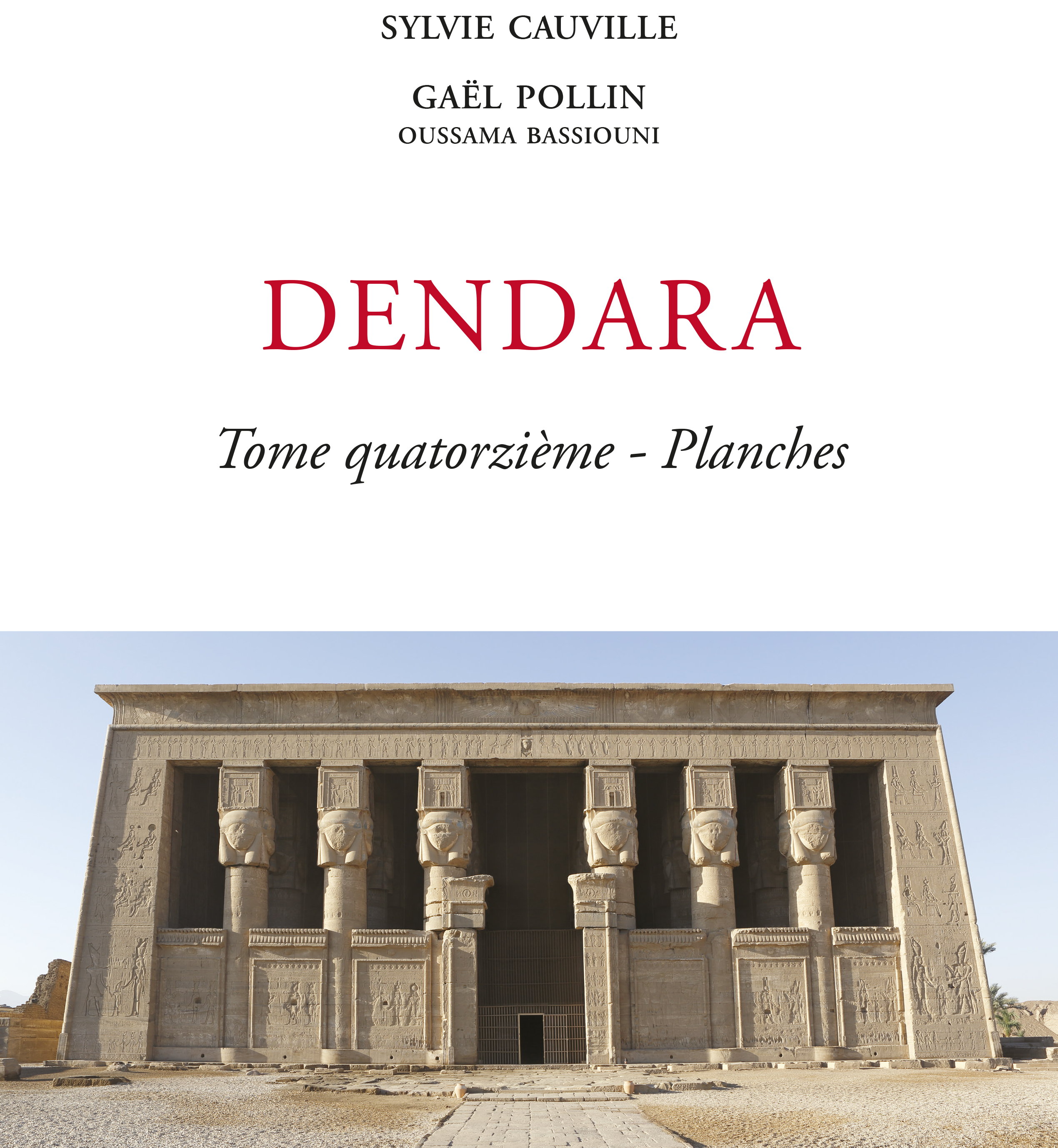
Sylvie Cauville, Gaël Pollin, Oussama Bassiouni
Le temple de Dendara XIV Planches Temples, Dendara 14.1; 181 p. Le temple d’Hathor à Dendara, admirablement conservé, est probablement la plus aboutie des réalisations architecturales de l’Égypte ptolémaïque et romaine et la richesse des compositions théologiques qui ornent ses murs est incomparable. Ses inscriptions hiéroglyphiques ont été éditées sous l’égide de l’Institut français d’archéologie orientale, d’abord par É. Chassinat puis par Fr. Daumas, et enfin par S. Cauville. Ce volume présente les planches photographiquees … [en savoir plus] 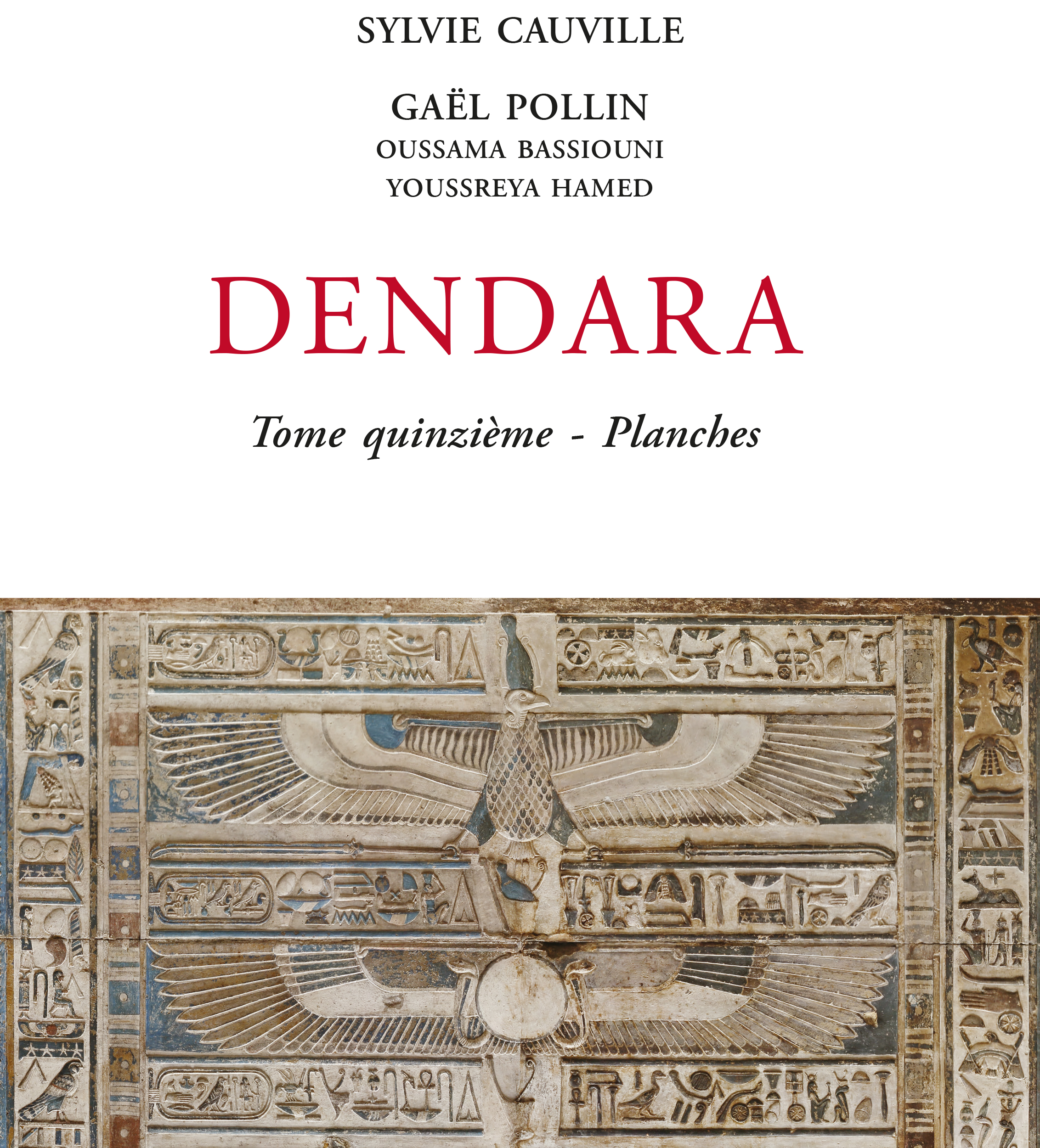
Sylvie Cauville, Gaël Pollin, Oussama Bassiouni, Youssreya Hamed
Le temple de Dendara XV Planches Temples, Dendara 15.1; 406 p. Le temple d’Hathor à Dendara, admirablement conservé, est probablement la plus aboutie des réalisations architecturales de l’Égypte ptolémaïque et romaine et la richesse des compositions théologiques qui ornent ses murs est incomparable. Ses inscriptions hiéroglyphiques ont été éditées sous l’égide de l’Institut français d’archéologie orientale, d’abord par É. Chassinat puis par Fr. Daumas, et enfin par S. Cauville. Ce volume présente les planches photographiques des … [en savoir plus] 
Dominique Bénazeth
Catalogue général du Musée copte du Caire Objets en métal 2 MIFAO 155; 394 p. Il aura fallu attendre une vingtaine d’années ce deuxième volume du Catalogue général du Musée copte. Objets en métal. Cette longue période a permis à l’auteur d’approfondir ses connaissances dans les domaines concernés par une collection extrêmement diverse et d’améliorer le contenu des 326 notices, qui présentent en tout 449 pièces. L’édition des textes portés par certains objets n’avait pas été systématique dans le premier volume. Grâce à la … [en savoir plus] 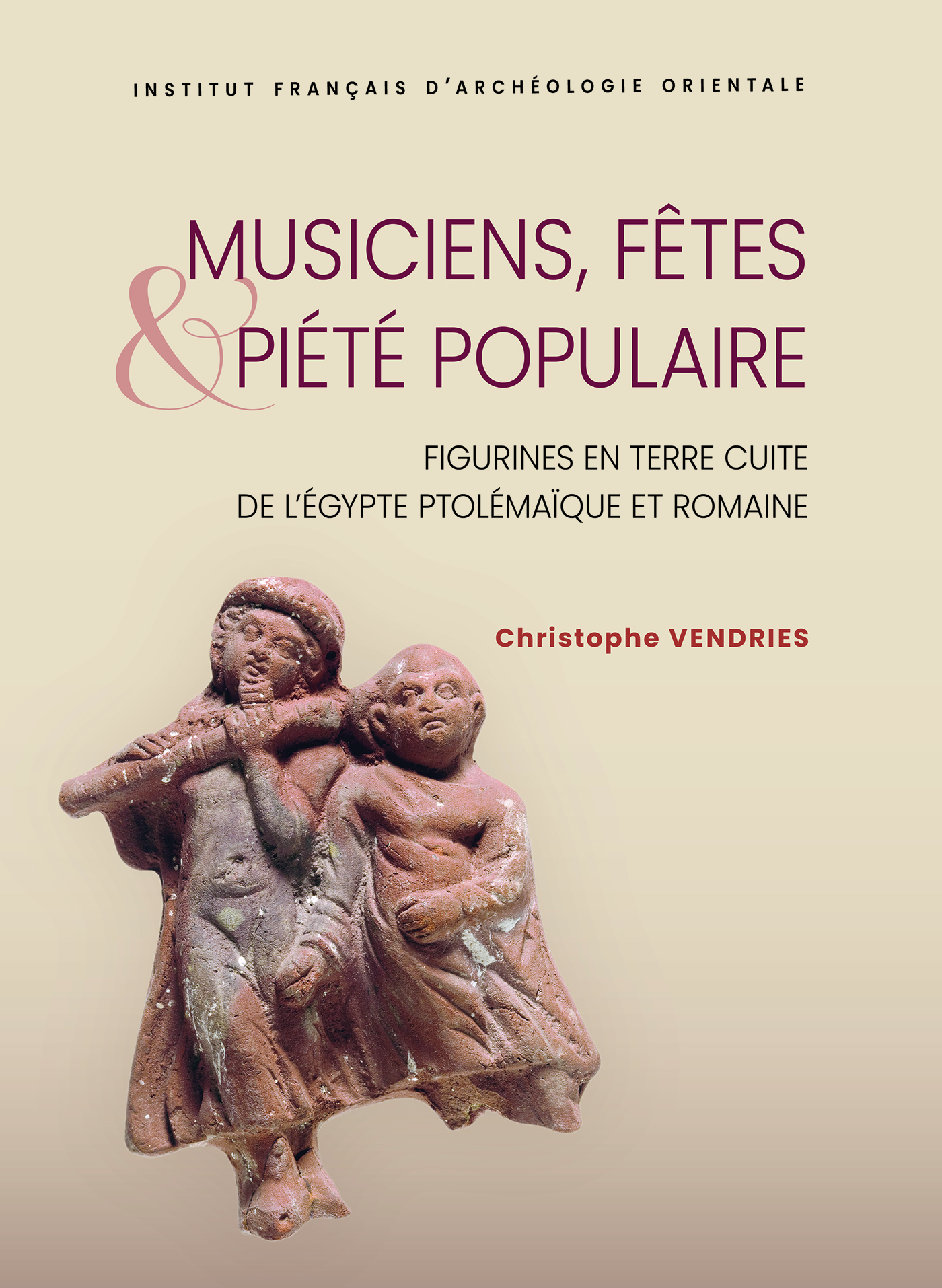
Christophe Vendries
Musiciens, fêtes et piété populaire Figurines en terre cuite de l’Égypte ptolémaïque et romaine BiEtud 191; 522 p. La singularité des représentations de musiciens et danseurs dans le corpus des terres cuites d’Égypte, du IIIe s. av. J.-C. au IIIe s. apr. J.-C., ne laisse pas d’étonner. Il importe de replacer ces figurines dans leur contexte, d’appréhender le langage spécifique de la coroplathie et d’inscrire cette production artisanale dans la culture visuelle de l’époque. L’auteur questionne le poids respectif des influences gréco-romaines et des traditions … [en savoir plus] 
Bulletin archéologique des Écoles françaises à l'étranger (BAEFE) Opérations de terrain Ifao-CEAlex 2024 BAEFE Le Bulletin archéologique des Écoles françaises à l’étranger propose les contributions de l’École française d’Athènes, de l’École française de Rome, de l’Institut français d’archéologie orientale, du Centre d'études alexandrines, de l’École française d’Extrême-Orient et de la Casa de Velázquez réunis au sein du Réseau des Écoles françaises à l’étranger. C’est ainsi toute l’actualité des recherches archéologiques menées par le réseau des … [en savoir plus] 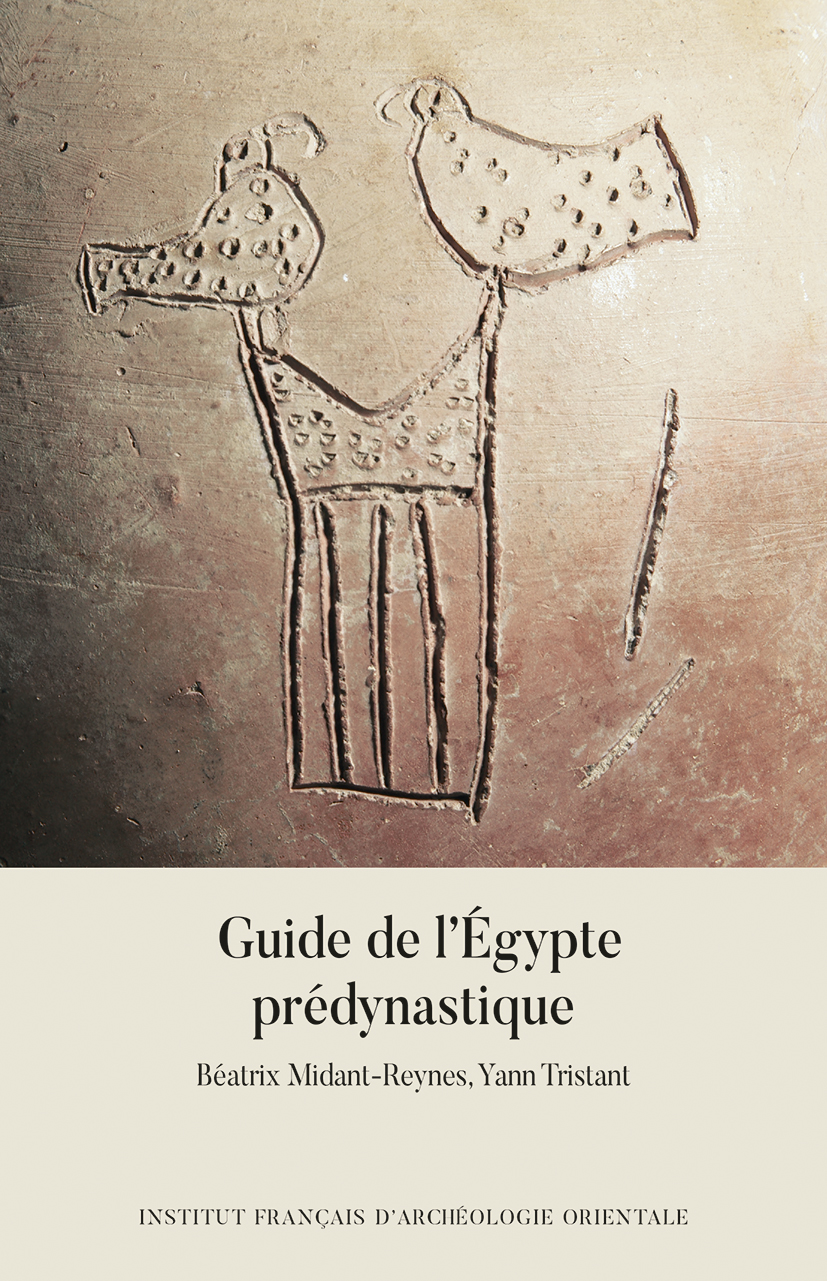
Béatrix Midant-Reynes, Yann Tristant
Guide de l'Égypte prédynastique GIFAO 6; 260 p. Le guide de l'Égypte prédynastique s’adresse à tous les passionnés des origines. La période prédynastique est la dernière de la Préhistoire de l’Égypte et couvre la totalité du IVe millénaire. Elle précède et prépare l’émergence de la royauté pharaonique au début du IIIe millénaire. Longtemps méconnue, elle tire aujourd’hui profit d’un demi-siècle de recherches archéologiques approfondies, conformes aux standards exigés pour cette discipline, et elle bénéficie … [en savoir plus] 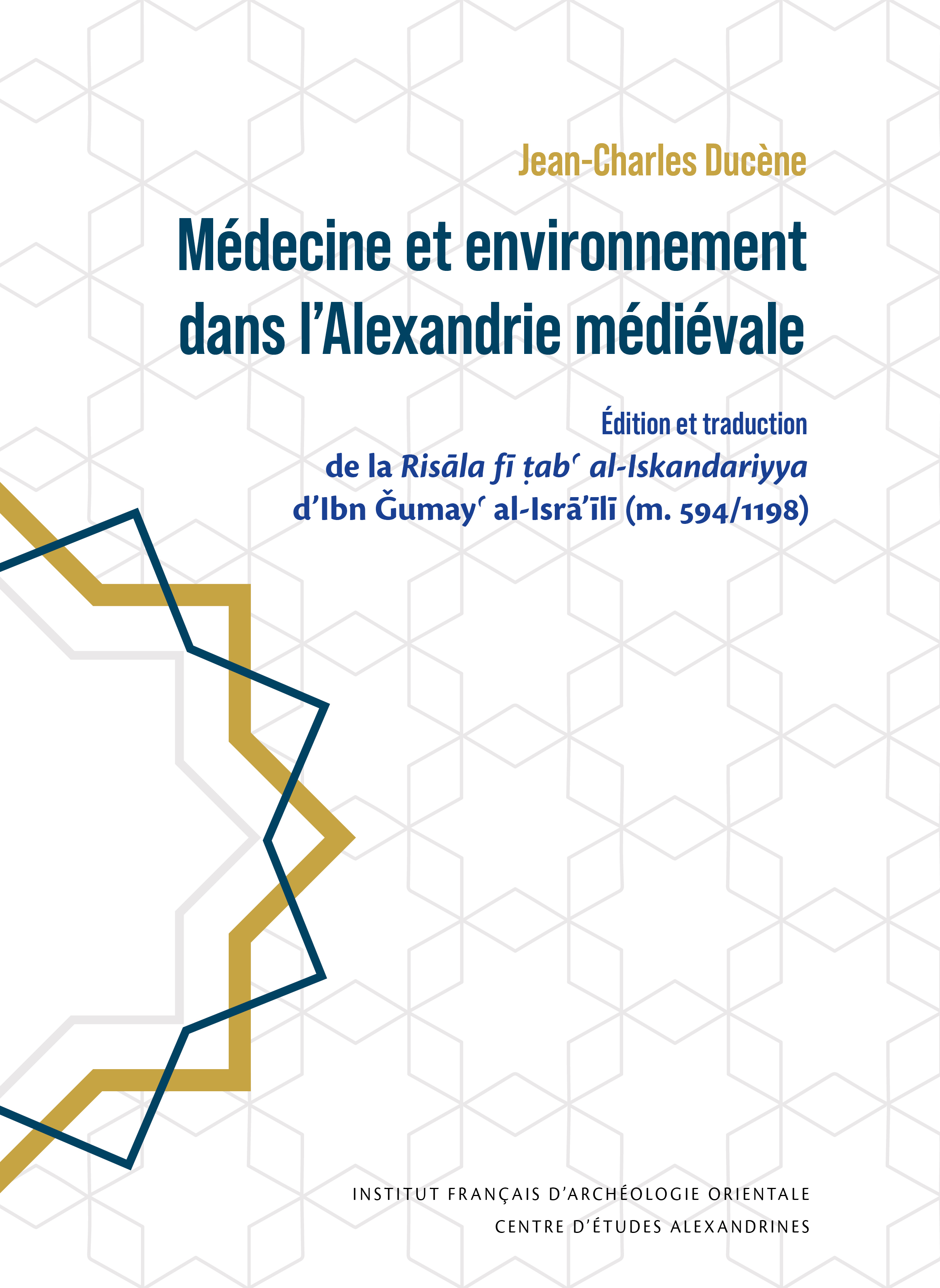
Jean-Charles Ducène
Médecine et environnement dans l'Alexandrie médiévale Édition et traduction de la Risāla fī ṭabʿ al-Iskandariyya d’Ibn Ǧumayʿ al-Isrā’īlī (m. 594/1198) CAI 37; 148 p. Alors que tout au long de l’époque médiévale, Alexandrie a joué, grâce à son port, un rôle prépondérant dans l’ouverture de l’Égypte sur la Méditerranée, peu de monographies lui ont été consacrées par des auteurs égyptiens. À côté du Kitāb al-ilmām d’al-Nuwayrī al-Iskandarānī (viiie/xive siècle), il y a cette Épître sur la nature d’Alexandrie du médecin juif Hibat Allāh ibn Ǧumayʿ (m. … [en savoir plus] 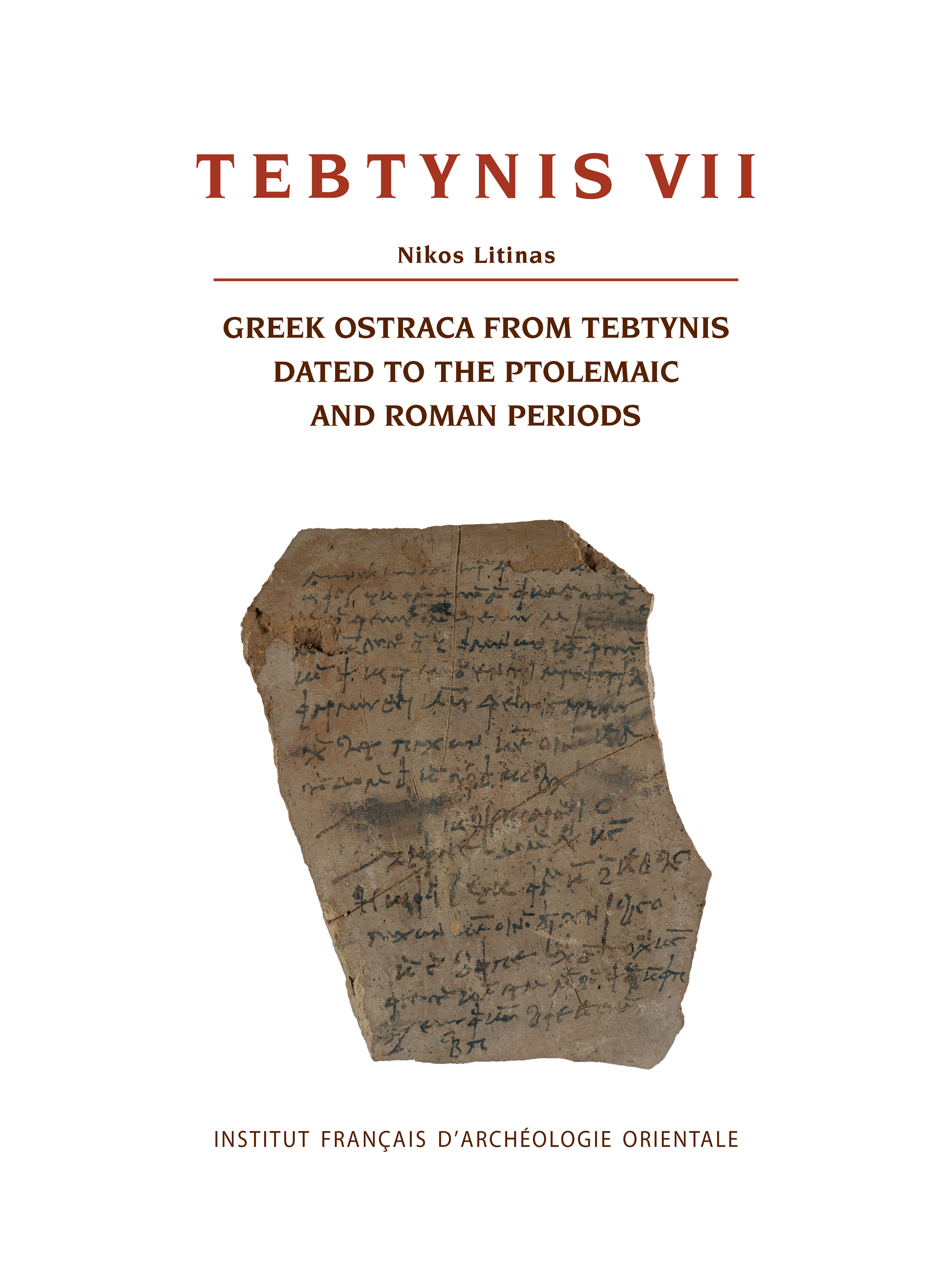
Nikos Litinas
Tebtynis VII Greek Ostraca from Tebtynis dated to the Ptolemaic and Roman Periods DFIFAO 54; 359 p. Les ostraca grecs édités dans ce volume sont datés des périodes ptolémaïque et romaine. Ils ont été découverts au cours de quatorze saisons (2005-2018) de fouilles de la mission conjointe de l’Università degli Studi di Milano et de l’Ifao dirigée par le professeur Claudio Gallazzi. Ils présentent une variété de textes, par exemple un nouveau texte littéraire avec des mots composés particuliers, divers exercices scolaires, deux groupes d’ostraca ou d’archives … [en savoir plus] 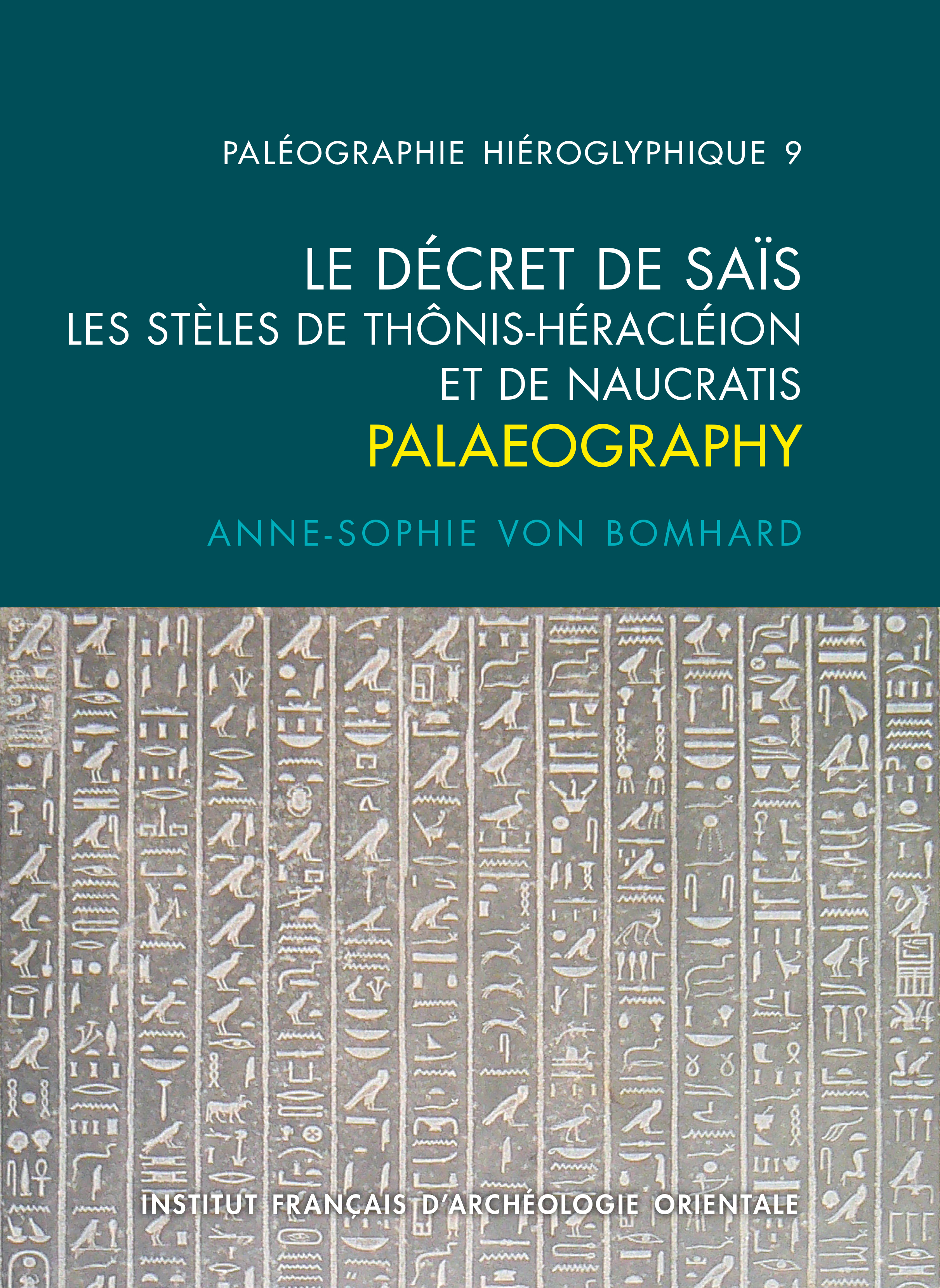
Anne-Sophie von Bomhard
Le décret de Saïs Les stèles de Thônis-Héracléion et de Naucratis PalHiero 9; 254 p. Remontée en 2001 du fond de la mer Méditerranée où elle gisait depuis plus de 2000 ans, une grande stèle de granodiorite noire a été mise au jour sur le site de Thônis-Héracléion, l’ancien port de la bouche canopique entièrement submergée aujourd’hui. Les représentations et le texte du « décret de Saïs » qu’elle porte nous sont connus par un monument similaire trouvé un siècle auparavant : la stèle de Naucratis. La stèle de Thônis-Héracléion présente … [en savoir plus] 
Sandra Lippert
Athribis X Les graffiti et dipinti du spéos de Hout-Répit Temples, Athribis 10; 392 p. Le présent ouvrage contient l’editio princeps et l’analyse des graffiti et dipinti d’un spéos datant du début de l’époque romaine situé dans la nécropole de Hout-Répit/Athribis de Haute Égypte. Ce temple a jusqu’à récemment été considéré comme un sanctuaire d’Asclépios-Imhotep. Les inscriptions, dont le nombre avoisine la centaine, sont majoritairement démotiques, et consistent essentiellement en des proscynèmes et des formules votives ; à cela … [en savoir plus] |

 ↑
↑IFAO Newsletter
December 2025
Sections: (-) Headlines (-)Life at the palace (-) Some questions for Khaled Younes (-) IFAO notebook (-) Scientific Events (-) Scientific Meetings (-) On the Ifao YouTube channel (-) Publications
◼︎ Pierre Tallet awarded the order of the legion of honour at the French Embassy. ©A.Bahgat/Ifao
Headlines
Pierre Tallet awarded the Order of the Legion of HonourOn 21 October 2025, Pierre Tallet was awarded the insignia of Knight of the Legion of Honour during a ceremony held at the French Embassy. Surrounded by his family, IFAO colleagues and numerous dignitaries, Pierre Tallet received this distinction from the French Ambassador to Egypt, Mr Éric Chevallier, for his "remarkable scientific career, his major contribution to the development of French archaeological research in Egypt, and the central role he plays in strengthening scientific and cultural dialogue between France and Egypt". |
||
The IFAO under renovation: refurbishment of the palace and launch of the Sauneron Library constructionRestoration and enhancement works on the built heritage of the Mounira Palace have continued throughout the year. After the renovation of the great hall in the summer of 2024, the restoration of the second level of the grand ceremonial staircase was completed this summer, restoring the architectural and decorative coherence of this central space of the palace. Waterproofing work on the palace has also continued. Signature of the IFAO and ResEFE multi-year contract with the Ministry of Higher Education, Research and Space.On Monday, 15 September 2025, a day dedicated to the five French schools abroad was held at the Ministry of Higher Education, Research and Space in Paris. This meeting was organised on the occasion of the signing of multi-year contracts between the French schools and ResEFE. It was inaugurated by the Permanent Secretary of the AIBL, Nicolas Grimal. The event ended with the signing of the multi-year contract between the five directors of these schools and the Ministry. |
◼︎ Restoration of the second level of the grand hall of the grand staircase ©A.Bahgat/Ifao
◼︎ Signing of the multi-year contract between the Ifao and ResEFE with the MESR. Inaugural speech by Nicolas Grimal, Permanent Secretary of the AIBL. ©A.Bahgat/Ifao |
|
ENDeM: exploring Bernard Bruyère’s excavation journals onlineAmong the IFAO's digital resources, the ENDeM project (Digital Exploration of the Deir el-Medina Excavation Journals) has reached a new milestone. Jointly conducted by the archives and collections department, the Deir el-Medina archaeological mission and the TEKLIA company, it now offers structured access to Bernard Bruyère's exceptional excavation journals, written between 1921 and 1955. Using the ArkIndex tool, each line of text has been digitised and indexed, and each illustration identified, dated and located, constituting an exceptional corpus for the history of excavations and archaeological methods. This platform allows researchers and the general public alike to delve into the heart of the first campaigns carried out at the Deir el-Medina site and explore, online, a collection of documents that was previously difficult to access. |
|
|
News from archaeological sites and programmesThirteen archaeological missions were carried out during the first quarter of the year 2025/2026: those of Tebtynis, Kôm Abou Billou, Plinthine, Qal‘at Cheikh Hammâm, Hatnoub, Assassif, Bahariya, TT 33, Tanis, Kôm Ombo, Tell el-Iswid, Ermant and the Franco-Swiss Archaeological Mission (MAFS) in Saqqara. These sites illustrate the diversity of the fields in which the IFAO and its partners are involved. Among the discoveries worth noting are the results obtained by the Tanis (Ṣān el-Hagar) mission, co-directed by Frédéric Payraudeau (Sorbonne University) and Ahmed Nakshara (Ain Shams University / IFAO). While cleaning the floor of the north chamber of the tomb of King Osorkon II (22nd Dynasty), the team unearthed more than two hundred funerary figurines (oshabtis) bearing the name of King Sheshonq III, discovered near a large, uninscribed granite sarcophagus that had long been known but whose owner remained unknown. During a visit to the site, the Secretary General of the Supreme Council of Antiquities, Dr Mohamed Ismail Khaled, highlighted the exceptional nature of this find, describing it as the most important discovery in the royal tombs of Tanis since 1946 (MoTA press release published on Facebook).
|
||
Life at the palace
Some questions for Khaled Younes..
|
A historian and specialist in Arabic papyrology, Prof. Dr Khaled Younes was appointed scientific collaborator of the IFAO in September. He kindly agreed to answer a few questions about his background and his work. |
||
You became a scientific collaborator of the IFAO this year. Could you introduce yourself in a few words?I am Professor of Islamic History and Civilisation at the Faculty of Tourism and Hotel Management at Sadat City University in Egypt, and a scientific collaborator at the IFAO. Originally from the Delta region, from Menoufiya, I grew up in a village with a strong attachment to learning, which very early on nurtured my interest in history. After studying “tourist guidance”, I steered my career towards Islamic history and the documents that enable us to write it, eventually completing a PhD at Leiden University on “Letters in Arabic on papyrus in early Islamic Egypt”. Then I obtained my professorial habilitation, while always pursuing the same guiding thread: understanding the everyday life of medieval societies through their writings. Papyrology is a highly specialised discipline. How did you happen to specialise in it?My interest in papyrology grew out of my fascination for documents as direct sources for social history. At the beginning of my academic career, I specialised in Islamic history, and then I discovered Arabic papyri during my master’s studies, which opened up an entirely new field of research. My PhD at Leiden, within the ERC project “The Formation of Islam: The View from Below”, under the supervision of Prof. Petra Sijpesteijn, was decisive: working on private letters and administrative documents showed me how powerfully these fragments can give voice to ordinary people, far beyond the major historical chronicles. Since then, papyrology has been at the heart of my scholarly activity. |
|
◼︎ Khaled Younis |
In your work on Arabic papyri, you must have come across some unusual or perhaps amusing cases. Could you share one of these surprises with our readers?As part of my project to catalogue the Arabic papyri at the IFAO, aimed at making this collection more accessible to researchers, the Archives Department once handed me an old box, a former sweets tin, filled with envelopes sent by post from the site of Edfu to the IFAO nearly a century ago. Inside were hundreds of tiny fragments of papyrus and paper, in such a “chaotic” state that one almost wished for a magic wand to piece them together. Among these fragments, a small rolled piece of papyrus caught my eye. After cleaning and restoring it, it turned out to be an amulet bearing a few Qur’anic verses, probably worn around the neck as a protective charm by an inhabitant of Edfu more than a thousand years ago. We will never know to whom this amulet belonged, but this small object is a powerful reminder of how the beliefs, fears and hopes of the past are embodied in such fragments. Could you tell us about your research projects at the Institute?At the IFAO, I am currently working on several projects focusing on early Arabic documentation. Together with my colleague Sobhi Bouderbala, I am preparing the edition of a corpus of Arabic papyri from the excavations at Istabl ‘Antar (Fustat), centred on the social, administrative and economic aspects of Egypt in the first centuries of Islam, as well as a set of Arabic ostraca from the same site. In parallel, I am carrying out a systematic cataloguing of the Arabic papyri held at the IFAO, in order to improve their description and facilitate their consultation for future editions. |
|
|
IFAO notebook
Arrivals- Mathilde Prévost, Egyptologist, was elected as scientific member from September 2025. - Robin Seignobos, lecturer and researcher, is on secondment from Lyon 2 University during the 2025–2026 academic year. - Eman Ali was recruited as a conservator in the archaeometry department in September 2025. - Jounir Joseph replaced Mina Medhat as publishing operator (PAO) from October 2025. - Ragab Sayed joined the IFAO drivers’ team from September 2025. Departures- Hassaan El Amir, Conservator, retired in August 2025. - Mina Medhat, publishing operator, resigned in October 2025.
|
|
|
Scientific events
|
Les conférences de l'Ifao lectures Series |
|
|
|
Lecture series: Egyptology Bi-L-ʿarabīOrganised in partnership with "Al-Makân wa-l-Nâs" |
|
|
|
|
Exploring Egypt Seminar: Histories and HistoriographiesOrganised in partnership with DAIK, NVIC, CAI, PCMA, ARCE |
|
|
|
Les rendez-vous de l'archéologie lectures SeriesOrganised in partnership with l’IFE |
|
|
Workshops
| |
From 22nd to September 24th 2025, Training by Abbès Zouache, Sylvie Marchand, Delphine Dixneuf, Ayman Hussein, Mohamed Ibrahim & Yahya el-Shahat: Islamic Pottery in Egypt, in partnership with Faculty of Archaeology - Aïn Shams University & Fayoum University [more] |
|
|
From September 28th to October 2nd 2025, IFAO Academies for Young Researchers by Annie Gasse et Nathalie Sojic: 9e Académie hiératique : L’éphémère et le sacré. , in partnership with ENiM, UMR 5140 – ASM, Université Montpellier 3 [more] |
|
|
From 5th to October 6th 2025, Research Workshop by Khaled Younes, Ahmad Nakshara, Laura Aguer & Jan Ciglenecki: Papyrology in Dialogue [more] |
|
|
On September 30th 2025, Les cours de l’Ifao by Axelle Brémont, Pierre Tallet, Simon Connor, Laura Aguer, Abbès Zouache, Marion Claude, Anna Lagaron, Valentina Gasperini, Cedric Larcher, Mathilde Prévost, Séverine Marchi et Antoinette Ferrand: La religion hors les murs [more] |
|
|
On October 28th 2025, Training by Axelle Brémont & Simon Connor: Identifying forgeries… a few tips for a methodology, in partnership with MoTA [more] |
|
|
On November 10th 2025, Training by الأستاذ الدكتور أيمن فؤاد سيد: دورة تدريبية في علم المخطوطات والنشر النقدي للنصوص ( نوفمبر- ديسمبر ٢٠٢٥) [more] |
|
|
On December 3rd 2025, Training by Dina Bakhoum, Antoinette Ferrand & Amr Khairy: Writing Modern History 2nd edition [more] |
|
|
15 19, Les académies de l'Ifao pour jeunes chercheurs Axelle Brémont, Simon Connor & Gabriele Pieke: Academy of Egyptian images II [] |
Keynote Lecture
Book presentation
Scientific meetings
|
From 11th to September 12th 2025, International conference organized by Giuseppina Lenzo & Enrico Pozzi: The Book of Amduat in Ancient Egypt:, in partnership with UNIL (Université de Lausanne- Institut romand des sciences bibliques & Centre interdisciplinaire en histoire et sciences des religions) & Fonds national suisse [more] | |
|
|
On September 23rd 2025, Lecture by Pierre Tallet, Hanna Navratilova, Kathrin Gabler, Daniela Rosenow: The man who unlocked voices of ancient artists, in partnership with Czech Embassy [more] | |
|
From 2nd to October 3rd 2025, Study days by Chloé Ragazzoli, Nathalie Favry, Felix Relats Montserrat, Adeline Bats : Lieux de métier et de savoirs-experts, in partnership with ECRITURES 2 – EHESS – ANHIMA – ARSCAN – CNRS [more] |
|
|
From 20th to October 21st 2025, International conference organized by Jean-Charles Ducène (EPHE-PSL) & Julie Marchand (ULB & Musées Royaux d’Art et d’Histoire, Bruxelles): SignEt : signatures et estampilles, in partnership with EPHE-PSL, ULB & KMKG-MRAH, IISMM, IFI [more] |
|
|
|
From 30th to October 31st 2025, International conference organized by : CALL FOR PAPERS: Bast from the Past, in partnership with Université Bretagne Sud, IRDL - UMR CNRS 6027/UBS/ENSTA-Bretagne/ENIB/UBO,le Laboratoire des Sciences du Climat et de l'Environnement, University of Cambridge, Universitetet i Bergen (UiB). [more] | |
|
|
From 10th to December 11th 2025, International conference organized by Simon Connor and Félix Relats Montserrat : Exploring Reuse, in partnership with EfA, EFEO, EFR [more] |
On the YouTube channel
Publications
|
Sylvie Cauville, Gaël Pollin, Oussama Bassiouni
Le temple de Dendara XIV Planches Temples, Dendara 14.1; 181 p. [more]
Sylvie Cauville, Gaël Pollin, Oussama Bassiouni, Youssreya Hamed
Le temple de Dendara XV Planches Temples, Dendara 15.1; 406 p. [more]
Dominique Bénazeth
Catalogue général du Musée copte du Caire Objets en métal 2 MIFAO 155; 394 p. The second volume of the Catalogue général du Musée copte. Objets en métal, has been finally completed after twenty years. This long period allowed the author to deepen her knowledge in the fields concerned by an extremely diverse collection and to improve the content of the 326 entries, introducing 449 items. The edition of the texts on certain objects was not systematically included in the first volume. Thanks to the collaboration of eminent specialists, a new heading … [more]
Christophe Vendries
Musiciens, fêtes et piété populaire Figurines en terre cuite de l’Égypte ptolémaïque et romaine BiEtud 191; 522 p. Depictions of musicians and dancers in the corpus of Egyptian terracottas (from the 3rd century BCE to the 3rd century CE), are often singular. To understand the language of coroplastic art and situate this handicraft production within the period’s visual culture, it is important to contextualize these figurines. The author discusses the respective influence of Greco-Roman and indigenous traditions, the boundaries between the sacred and the profane, and the definition of popular art. To … [more]
Bulletin archéologique des Écoles françaises à l'étranger (BAEFE) Opérations de terrain Ifao-CEAlex 2024 BAEFE [more]
Béatrix Midant-Reynes, Yann Tristant
Guide de l'Égypte prédynastique GIFAO 6; 260 p. The guide to Predynastic Egypt is designed for all those passionate about the origins of this civilization. This last period of Egyptian Prehistory – covering the entire 4th millennium BC – directly precedes and lays the groundwork for the emergence of Pharaonic kingship in the early 3rd millennium BC. Long unknown, it now benefits from half a century of in-depth archeological research that adheres to the required standards of this discipline, as well as the advances in modern … [more]
Jean-Charles Ducène
Médecine et environnement dans l'Alexandrie médiévale Édition et traduction de la Risāla fī ṭabʿ al-Iskandariyya d’Ibn Ǧumayʿ al-Isrā’īlī (m. 594/1198) CAI 37; 148 p. Although Alexandria, thanks to its port, played a leading role throughout the Middle Ages in opening up Egypt to the Mediterranean, few monographs by Egyptian authors have been devoted to it. Besides the Kitāb al-ilmām by al-Nuwayrī al-Iskandarānī (fl. 770/1360), there is this Epistle on the Nature of Alexandria by the Jewish physician Hibat Allāh ibn Ǧumayʿ (d. 594/1198), who worked in Cairo in Saladin's entourage. Using the criteria of Hippocratic medicine as his paradigms, and after a … [more]
Nikos Litinas
Tebtynis VII Greek Ostraca from Tebtynis dated to the Ptolemaic and Roman Periods DFIFAO 54; 359 p. The Greek ostraca in this edition are dated to the Ptolemaic and Roman periods. They were found during fourteen seasons (2005-2018) of the excavations of the joint Mission of the Università degli Studi di Milano and IFAO under the direction of Prof. Claudio Gallazzi. There is a variety of texts, e.g., a new literary text with peculiar compound words, various school exercises, two groups of ostraca or archives (of Akousilaos and of Papontos), reports, private letters, accounts, receipts, lists, … [more]
Anne-Sophie von Bomhard
Le décret de Saïs Les stèles de Thônis-Héracléion et de Naucratis PalHiero 9; 254 p. In 2001, a large black granodiorite stele was recovered from the bottom of the Mediterranean Sea, where it had lain for over 2,000 years. It was found at the site of Thonis-Heracleion, the ancient port at the mouth of the Canopic River, which is now completely submerged. The representations and text of the “Decree of Sais” it bears are known to us from a similar monument found a century earlier: the Naucratis stele. The Thônis-Héracléion stele, however, has the … [more]
Sandra Lippert
Athribis X Les graffiti et dipinti du spéos de Hout-Répit Temples, Athribis 10; 392 p. This book contains the first edition and analysis of graffiti and dipinti from a speos dating from the early Roman period located in the necropolis of Hut-Repit/Athribis in Upper Egypt. Until recently, this temple was believed to be a sanctuary dedicated to Asklepios-Imhotep. The inscriptions, numbering around a hundred, are mainly Demotic and consist of proskynemata and votive formulas, alongside various figurative drawings. These texts offer a precise … [more] |


