 ↓
↓Lettre d’information de l’Ifao
Mars 2026
Rubriques : (-) À la une (-) Vie du Palais (-) Quelques questions à Yassin Temlali... (-) Le carnet de l'Ifao (-) Manifestations scientifiques (-) Sur la chaîne Youtube de l'Ifao (-) Publications

◼︎ Visites des directeurs de l'Ifao sur différents chantiers archéologiques ©Ifao
À la Une
Visites des chantiers de l’IfaoLes premiers mois de l'année 2026 ont été marqués par une série de visites de terrain effectuées par la direction de l'Ifao auprès des missions archéologiques actives dans cette période de l’année. Ces déplacements témoignent de l'engagement de l'Institut et le suivi rapproché de ses chantiers de fouilles. En janvier, Pierre Tallet, directeur de l'Ifao, et Abbès Zouache, directeur des études, ont entamé cette série de déplacements dès mi-janvier par la visite de la mission archéologique d'Ayn Soukhna, au bord de la mer Rouge, suivie par celle de Qal'at Cheikh Hammâm, près de Qena, où il y a eu d’importantes découvertes qui ont étaient largement reliées par la presse égyptienne (voir plus bas). Puis, ils ont effectué une tournée dans les oasis du désert occidental. Les 22 et 23 janvier, ils ont visité le site de Douch dans l'oasis de Kharga, avant de se rendre les 24 et 25 janvier dans l'oasis de Dakhla pour examiner le progrès des travaux de la mission de Balat/Ayn Asil, dirigée par Georges Soukiassian. Cette mission se consacre à la fouille des vestiges du palais des gouverneurs de l'oasis, datés de la VIe dynastie. Toujours en janvier, M. Tallet et M. Zouache ont également visité la mission archéologique franco-égyptienne des colosses de Biahmu au Fayoum. Une des plus jeunes missions de l’Ifao qui effectue sa deuxième campagne cette année sous la direction de Simon Connor et………. زيارات المعهد الفرنسي للآثار الشرقية إلى بعثات الحفائر الأثرية اتسمت الأشهر الأولى من عام ٢٠٢٦ بسلسلة من الزيارات الميدانية التي قامت بها إدارة المعهد الفرنسي للآثار الشرقية إلى بعثات الحفائر الأثرية النشطة. وشهدت هذه الزيارات على التزام المعهد ومتابعته عن كثب لمواقع الحفائر التابعة له. في يناير، بدأ بيير تاليه، مدير المعهد، وعباس زواش، مدير الدراسات، هذه السلسلة من الزيارات يوم الخميس ١٥ يناير بزيارة بعثة حفائر العين السخنة، على شاطئ البحر الأحمر، تلاها في اليوم التالي ١٦ يناير زيارة قلعة الشيخ حمام، بالقرب من قنا، حيث تم تحقيق اكتشافات كبيرة حظيت بتغطية واسعة في الصحافة المصرية (انظر أدناه). ثم قاموا بجولة في واحات الصحراء الغربية. في ٢٢ و٢٣ يناير، زاروا موقع دوش في واحة الخارجة، قبل أن يتوجهوا في ٢٤ و٢٥ يناير إلى واحة الداخلة لتفقد سير أعمال البعثة في بلاط/عين أصيل، التي يقودها جورج سوكياسيان. تكرس هذه البعثة جهودها لتنقيب آثار قصر حكام الواحة، التي يعود تاريخها إلى الأسرة السادسة. وفي شهر يناير أيضًا، زار السيد تاليه والسيد زواش البعثة الأثرية الفرنسية-المصرية لتمثال بياهمو العملاق في الفيوم. وهي واحدة من أحدث البعثات التابعة للمعهد التي تجري حملتها الثانية هذا العام تحت إشراف سيمون كونور و………. |
||
|
Le mois de février a vu se poursuivre ces visites de terrain avec plusieurs déplacements sur des sites majeurs de la vallée du Nil. Au début du mois, Pierre Tallet et Abbès Zouache se sont rendus à Deir el-Médina, célèbre village des artisans des tombes royales, puis à Dendera le dimanche 1er février 2026 et la tombe du prêtre-lecteur Padiaménopé (TT 33), le 2 février 2026, où ils ont été accueillis par Silvia Einaudi (Université de Cagliari), la codirectrice de la mission avec Isabelle Régen (Université Paul Valéry Montpellier 3). Les visites se sont poursuites en mars avec la visite de la mission archéologique de la Citadelle du Caire. Un chantier très prometteur dans sa troisième saison de fouilles, et qui a vu l’ouverture de nouveaux secteurs de fouilles sur le site. Ces visites régulières permettent à la direction de l'Ifao d'évaluer l'avancement des fouilles, des recherches et des travaux de restauration des sites, mais également d'identifier les besoins des équipes sur le terrain et de renforcer les liens avec les partenaires égyptiens et internationaux impliqués dans ces projets archéologiques. وشهد شهر فبراير استمرار هذه الزيارات الميدانية مع عدة رحلات إلى مواقع رئيسية في وادي النيل. في بداية الشهر، توجه بيير تاليه وعباس زواش إلى دير المدينة، القرية الشهيرة بحرفيي المقابر الملكية، ثم إلى دندرة يوم الأحد ١ فبراير ٢٠٢٦ ومقبرة الكاهن القارئ باديامينوبي (المقبرة ٣٣)، في ٢ فبراير ٢٠٢٦، حيث استقبلتهما سيلفيا إينودي (جامعة كالياري)، المديرة المشاركة للبعثة مع إيزابيل ريجين (جامعة بول فاليري مونبلييه ٣). واستمرت هذه الزيارات في مارس بزيارة البعثة الأثرية في قلعة القاهرة. وهو موقع واعد للغاية في موسمه الثالث من الحفائر، والذي شهد افتتاح قطاعات جديدة للحفائر في الموقع. تسمح هذه الزيارات المنتظمة لإدارة المعهد بتقييم تقدم أعمال الحفائر والبحوث وأعمال ترميم المواقع، وكذلك بتحديد احتياجات الفرق الميدانية وتعزيز الروابط مع الشركاء المصريين والدوليين المشاركين في هذه المشاريع الأثرية. |
◼︎ Visite de la tombe du prêtre-lecteur Padiaménopé (TT 33) ©Ifao |
|
Nouvelles des chantiers et des programmesDouze missions archéologiques ont eu lieu au cours du premier trimestre de l'année : celles de Qal‘at Cheikh Hammâm, Ayn Soukhna, Balat, Deir el-Medina, TT 33, Biahmu (Fayoum), Sanctuaires osiriens (Karnak), Dendara, Ouadi Sannour, Stèles funéraires islamiques, Coptos et la Citadelle du Caire. Ces chantiers illustrent la diversité des terrains sur lesquels l’Ifao et ses partenaires interviennent. Parmi les découvertes à retenir celle sur le site de Cheikh al-Arab Hammam, dans le village d'Al-Arki, dans la province de Qena. La mission archéologique franco-égyptienne dirigée par Prof. Ahmad Al-Shoky, collaborateur scientifique de l'Ifao et vice-doyen de la faculté d'archéologie de l'université d'Ain Shams a réussi à mettre au jour des vestiges d'une ville résidentielle construite en briques crues datant du XVIIIe siècle après J.-C., pendant le règne de Cheikh al-Arab Hammam. Les fouilles ont également mis au jour un cimetière copte de l'époque byzantine situé sous la ville découverte. (Communiqué du cabinet du Premier ministre d'Égypte). تم تنظيم اثنتي عشرة بعثة حفائر أثرية خلال الربع الأول من العام: في قلعة الشيخ حمام، والعين السخنة، وبلاط، ودير المدينة، والمقبرة الطيبية رقم ٣٣، وبيهمو (الفيوم)، المقاصير الأوزيرية بالكرنك، معبد دندرة، وادي سنور، شواهد القبور الإسلامية، كبتوس وقلعة القاهرة. وتُظهر هذه المواقع التنوع الكبير في المواقع التي يعمل فيها المعهد الفرنسي للآثار في مصر وشركاؤه. ومن بين الاكتشافات الجديرة بالذكر تلك التي تمت في موقع شيخ العرب همام، في قرية العركي، بمحافظة قنا. فقد نجحت البعثة الأثرية الفرنسية-المصرية بقيادة الأستاذ الدكتور أحمد الشوكي، الخبير العلمي بالمعهد الفرنسي للآثار الشرقية ونائب عميد كلية الآثار بجامعة عين شمس، في الكشف عن بقايا مدينة سكنية مبنية من الطوب اللبن تعود إلى القرن الثامن عشر الميلادي، خلال عهد الشيخ العربي حمام. كما كشفت الحفريات عن مقبرة قبطية من العصر البيزنطي تقع تحت المدينة المكتشفة. (بيان صادر عن مكتب رئيس الوزراء المصري).
|
||

 ◼︎ La ville résidentielle construite en briques crues au site de Cheikh al-Arab Hammam.
Vie du Palais
|
Deux moments forts de partage et de convivialité ont réuni les membres de l’équipe de l’Ifao et nos partenaires. Les voeux de la direction pour la nouvelle année 2026 ont été présententés autour d’un déjeuner et des gallettes de rois traditionnelles le 18 janvier. L'Iftar du mois de ramadan, organisé le 18 mars, a été l’occasion d’échange et de détente. جمع حدثان بارزان اتسمتا بروح المشاركة والود بين أعضاء فريق المعهد وشركائنا. وقد تم تقديم تمنيات الإدارة بالعام الجديد خلال مأدبة غداء تخللتها كعكات الملك التقليدية في ١٨ يناير. أما حفل الإفطار في شهر رمضان، الذي نُظم في ١٨ مارس، فقد شكّل فرصة للتواصل والاسترخاء. Enseignements et formationsUne équipe de trois formatrices de l’Institut national du patrimoine : Charlotte Rerolle , Anne-Marie Geffroy et Marie Petit se sont déplacées au Caire début janvier afin d’animer une formation à destination des restaurateurs du pôle archéométrie de l’Ifao autour de la restauration des métaux et des briques. La formation d’une semaine comprenait des cours théoriques et de méthodologie, des démonstrations pratiques au laboratoire de restauration de l’Ifao, une visite du musée du Caire et du site de Saqqara. Anita Quiles, responsable des projets scientifiques du pôle archéométrie de l’Ifao, s’est déplacée également au Caire pour encadrer la formation. Le 16 février 2026 s’est tenu à l’Ifao l’Atelier de recherche et de formation : Stèles funéraires islamiques II. Étude de la matérialité des stèles dans le cadre du projet n°23121 sur les stèles funéraires islamiques. Le matin, un vingtaine de chercheurs accompagnée des directeurs de l’Institut a visité le complexe de l’émir Qurqumas où sont entreposées quelque 4500 stèles. Après avoir présenté les collections, Anna Lagaron, membre scientifique de l’Ifao en charge de l’étude des stèles, a guidé les visiteurs pour leur faire découvrir la chaîne opératoire et rencontrer les équipes impliquées dans le projet : nettoyage et restauration des stèles, cotation, analyse, description individuelle, photographie puis conditionnement et rangement. L’après-midi s’est ouvert sur la présentation de l’ouvrage de Thierry Gregor et Bertrand Riba, intitulé De la trace à l’outil (Fedora, 2025). Thierry Gregor, chercheur associé au Centre d’études supérieures de civilisation médiévale (Poitiers, UMR 7302), a exposé comment lire les traces laissées par les outils sur la pierre et en tirer de précieuses informations. Cette présentation théorique a été suivie d’un atelier pratique dans les jardins de l’Ifao lors duquel les participants ont essayé de lire les traces sur une sélection de stèles funéraires issues des collections de l’Institut. Thierry Gregor, Philippe Bastide (professeur à l’Université française d’Égypte, membre du projet Stèles funéraires islamiques) et Nadim Jacquemond (tailleur de pierre) ont ensuite effectué une démonstration, du dégrossissage de la pierre à la gravure de l’inscription, offrant l’opportunité d’observer l’impact des outils sur différents matériaux (calcaire, grès, marbre). Les participants ont à leur tour pris en mains les outils et tenté de reproduire ces gestes afin de mieux réaliser les contraintes matérielles et techniques que représentent ces opérations. توجهت ثلاث مدربات من المعهد الوطني للتراث: شارلوت ريرول وآن ماري جيفروي وماري بيتي إلى القاهرة في مطلع شهر يناير لتقديم دورة تدريبية لمرممي قسم الترميم بالمعهد حول ترميم المعادن والطوب. تضمنت الدورة التدريبية التي استمرت أسبوعًا محاضرات نظرية ومنهجية، وعروضًا عملية في مختبر الترميم بالمعهد، وزيارة إلى المتحف المصري وموقع سقارة. كما شاركت أنيتا كيلس، مسؤولة المشاريع العلمية في قسم الأركيومتري في المعهد الفرنسي لآثار مصر، إلى القاهرة للمشاركة في الدورة التدريبية. استضاف المعهد الفرنسي للآثار الشرقية يوم ١٦ فبراير ٢٠٢٦ ورشة عمل للبحث والتدريب بعنوان: (شواهد القبور الإسلامية ٢، دراسة مادية للشواهد) في إطار المشروع رقم ٢٣١٢١ حول شواهد القبورالإسلامية. في الصباح، زار حوالي عشرين باحثًا برفقة مديري المعهد مجمع الأمير قرقماس، حيث يتم تخزين حوالي ٤٥٠٠ شاهد. بعد عرض المجموعات، قامت آنا لاجارون، العضو العلمي بالمعهد والمسؤولة عن دراسة الشواهد، بتوجيه الباحثين و تعريفهم بتسلسل عمليات الدراسة والتعرف على الفرق المشاركة في المشروع: التنظيف والترميم، الفهرسة، التحليل، الوصف الفردي، التصوير الفوتوغرافي، ثم التغليف والتخزين. استمر اليوم بعرض للكتاب الذي ألفه تيري جريجور وبرتراند ريبا بعنوان De la trace à l’outil، شرح تيري جريجور، الباحث المشارك في مركز الدراسات العليا لحضارة القرون الوسطى، كيفية قراءة الآثار التي تخلفها الأدوات على الحجر واستخلاص المعلومات القيمة منها. تلا هذا العرض النظري ورشة عملية في حدائق المعهد، حاول خلالها المشاركون قراءة الآثار الموجودة على نماذج من شواهد القبور من مجموعات المعهد. ثم قدم تييري جريجور وفيليب باستيد (أستاذ في الجامعة الفرنسية بمصر، عضو في مشروع شواهد القبورالإسلامية) ونديم جاكيموند عرضًا توضيحيًا، بدءًا من تشذيب الحجر وحتى عمل النقوش، مما أتاح الفرصة لمراقبة تأثير الأدوات على المواد المختلفة (الحجر الجيري والحجر الرملي والرخام). ثم تناوب المشاركون استخدام الأدوات ومحاولة إعادة إنتاج هذه الحركات من أجل فهم أفضل للقيود المادية والتقنية لهذه العمليات. |
◼︎ Iftar 2026 ©A.Bahgat/Ifao
◼︎ Atelier de recherche et de formation : Stèles funéraires islamiques II. Étude de la matérialité des stèles ©A.Bahgat/Ifao
◼︎ formation autour de la restauration des métaux et des briques ©A.Bahgat/Ifao |
|
TravauxLes travaux de construction de la nouvelle bibliothèque se poursuivent. Ce trimestre, les travaux se concentrent sur la réalisation des pieux qui porteront le bâtiment. Avec la foreuse de pieux sur site depuis janvier, un nombre important ont déjà été réalisés des 186 pieux de fondation du futur bâtiment. Dans le palais, les travaux de restauration et de rénovation du grand escalier d'honneur ont redonné à cet élément structurant du Palais Mounira tout son éclat. Après une réfection complète des bois, les garde-corps ornés en fer forgé ont été nettoyés et peints et les tapis ont été remplacés à l'identique . Cette opération vient compléter donc les travaux de rénovation du hall conduits l'année dernière. Ils ont été couronnés par le nettoyage de la verrière après les travaux d'étanchéité des toitures.
◼︎ Battage pieux et le rénovation du grand escalier d'honneur ©Ifao تستمر أعمال بناء المكتبة الجديدة.، وتركز الأعمال هذا الفصل على إنجاز الأساسات التي ستحمل المبنى. وبفضل آلة حفر الأساسات الموجودة في الموقع منذ يناير، تم بالفعل إنجاز عدد كبير من الأساسات الـ ١٨٦ التي ستشكل أساسات المبنى المستقبلي. داخل القصر، أعادت أعمال الترميم والتجديد التي أجريت على الدرج الكبير الفخمة إلى هذا العنصر الأساسي في قصر منيرة كل بريقه. وبعد إصلاح كامل للأخشاب، تم تنظيف الدرابزينات المزخرفة من الحديد المطاوع وطلائها، كما تم استبدال السجاد بنسخة مطابقة للأصل. وتأتي هذه العملية لتكمل أعمال تجديد القاعة التي أجريت العام الماضي. وقد توجت هذه الأعمال بتنظيف السقف الزجاجي بعد أعمال عزل الأسقف. |
||


Quelques questions à Yassin Temlali...
|
Historien et papyrologue, professeur à l'université Sadat City, Khaled Younes a été nommé, en septembre, collaborateur scientifique de l’Ifao. Il nous fait le plaisir de répondre à quelques questions sur son parcours et ses travaux. |
||
Vous êtes devenu collaborateur scientifique de l’Ifao cette année, pourriez-vous vous présenter en quelques mots ?Je suis professeur d’histoire et de civilisation islamiques à la Faculté de tourisme et d’hôtellerie de l’Université Sadat City, en Égypte. Originaire de la région du Delta, à Menoufiya, j’ai grandi dans un village très attaché au savoir, ce qui a nourri très tôt mon goût pour l’histoire. Après des études en "guidance touristique", j’ai orienté ma carrière vers l’histoire islamique et les documents qui permettent de l'écrire, jusqu’à obtenir un doctorat à l’université de Leyde sur les "lettres en arabe sur papyrus dans l’Égypte des débuts de l’islam". J'ai ensuite obtenu mon habilitation au professorat, en poursuivant toujours le même fil conducteur : comprendre la vie quotidienne des sociétés médiévales à travers leurs écrits. Comment êtes-vous venu à la papyrologie arabe ?Mon intérêt pour la papyrologie est né de ma fascination pour les documents comme sources directes de l’histoire sociale. Au début de ma carrière universitaire, je me suis spécialisé dans l’histoire islamique, puis j’ai découvert les papyrus arabes lors de mon master, ce qui m’a ouvert un champ de recherche entièrement nouveau. Mon doctorat à Leyde, au sein du projet ERC « The Formation of Islam: The View from Below », sous la direction de la Professeure Petra Sijpesteijn, a été décisif : travailler sur des lettres privées et des documents administratifs m’a montré à quel point ces fragments pouvaient faire entendre la voix de personnes ordinaires, bien au-delà des grandes chroniques historiques. Depuis, la papyrologie est au cœur de mon activité scientifique. |
|

◼︎ Khaled Younes |
Dans votre travail sur les papyrus arabes, vous avez certainement croisé des cas singuliers, amusants peut-être. Pourriez-vous partager l’un de ces cas avec nos lecteurs ?Dans le cadre de mon projet de catalogage des papyrus arabes de l’Ifao, destiné à rendre cette collection plus accessible aux chercheurs, le service des archives m’a remis un jour une vieille boîte en fer, une ancienne boîte de confiseries, remplie d’enveloppes envoyées à l’Ifao par la poste depuis le site d’Edfou il y a près d’un siècle. À l’intérieur, des centaines de minuscules fragments de papyrus et de papier, dans un état si "chaotique" qu’on aurait presque eu envie d’une baguette magique pour les reconstituer. Parmi ces pièces, un petit rouleau de papyrus a retenu mon attention. Après l'avoir nettoyé et restauré, il s’est révélé être une amulette portant quelques versets du Coran, probablement portée autour du cou en guise de protection par un habitant d’Edfou il y a plus de mille ans. Nous ne saurons jamais à qui cette amulette appartenait, mais ce petit objet rappelle de manière très intime comment les croyances, les peurs et les espoirs du passé se matérialisent dans ces fragments. Pouvez-vous nous parler de vos projets de recherche à l’Institut ?À l’Ifao, je travaille actuellement sur plusieurs projets complémentaires autour de la documentation arabe médiévale. Avec mon collègue Sobhi Bouderbala, de l'université de Tunis et qui a été chercheur à l'Ifao, je prépare l’édition d’un corpus de papyrus arabes issus des fouilles de Istabl 'Antar (Fustat), centré sur les aspects sociaux, administratifs et économiques de l’Égypte des premiers siècles de l’islam, ainsi que d'un ensemble d’ostraca arabes provenant du même site. Je mène en parallèle un travail de catalogage systématique des papyrus arabes conservés à l’Ifao, afin d’en améliorer la description et de faciliter leur consultation pour de futures éditions. S’intégrer à l'équipe de l’Ifao m’ouvre aussi beaucoup de possibilités pour y organiser des rencontres scientifiques et des formations. Par exemple, j’ai eu le plaisir d’animer, entre 2023 et 2025, un séminaire mensuel de papyrologie arabe à l'Ifao. De même, avec Laura Aguer et Ahmad Nakshara, à la demande du directeur des études Abbès Zouache, j'ai tout récemment organisé le séminaire « Papyrology in Dialogue ». Il a réuni pour la première fois des spécialistes de papyrus grecs, coptes et arabes autour de problématiques communes. |
|
|
|
تم تعيين الأستاذ الدكتور خالد يونس، المؤرخ والمتخصص في علم المخطوطات العربية، في سبتمبر الماضي، خبيراً علمياً بالمعهد الفرنسي للآثار الشرقية. وقد تكرم بالإجابة على بعض الأسئلة حول مسيرته المهنية وأعماله. ١. لقد أصبحت هذا العام خبيراً علمياً في المعهد، هل يمكنك أن تقدم نفسك باختصار؟أنا أستاذ التاريخ والحضارة الإسلامية في كلية السياحة والفنادق بجامعة مدينة السادات في مصر. ولدت في محافظة المنوفية في الدلتا، وقد نشأت في قرية تولي أهمية كبيرة للعلم، وهو ما غذّى شغفي بالتاريخ منذ سن مبكرة. بعد دراستي في مجال «الإرشاد السياحي»، وجّهت دراستي نحو التاريخ الإسلامي والوثائق التي سمحت بتدوينه، إلى أن حصلت على درجة الدكتوراه من جامعة لايدن (هولندا) عن أطروحتي حول «الرسائل العربية على البردي في مصر في بدايات العصر الإسلامي». ثم نلتُ درجة التأهيل للأستاذية ، مع الحفاظ دائمًا على الموضوع نفسه: فهم الحياة اليومية للمجتمعات في العصور الوسطى من خلال كتاباتها. ٢. علم البرديات مجال دقيق ومتخصص جدًّا. كيف اخترت هذا التخصص؟بدأ اهتمامي بعلم البرديات بسبب اعجابي الشديد بالوثائق كمصادر مباشرة لكتابة التاريخ الاجتماعي. في بداية مسيرتي الجامعية، تخصّصت في التاريخ الإسلامي، ثم اكتشفت البرديات العربية خلال دراستي للماجستير، وهو ما فتح أمامي مجالًا جديدًا بالكامل للبحث. وكان لرسالة الدكتوراه خاصتي في جامعة لايدن، ضمن مشروع المجلس الأوروبي للبحث « ERC) The Formation of Islam: The View from Below) » وتحت إشراف الأستاذة بيترا سايبستين، أثر حاسم؛ حيث اتضح لي من خلال دراسة الرسائل الخاصة والوثائق الإدارية إلى أي حد يمكن لهذه القصاصات أن تنقل صوت أشخاص عاديين، بعيدًا عن السرديات الكبرى في كتب التاريخ. ومنذ ذلك الحين، أصبح علم البرديات هو أساس نشاطي العلمي. ٣. لا بد أنك صادفت حالات فريدة ومسلية أثناء عملك على البرديات العربية، . هل يمكنك أن تشارك قراءنا إحدى هذه المفاجآت؟في إطار مشروعي لفهرسة البرديات العربية في المعهد الفرنسي للآثار الشرقية، بهدف تسهيل وصول الباحثين إليها، سلّمني قسم الأرشيف ذات يوم صندوقًا قديمًا، هو في الأصل علبة حلويات، مليئًا بمظاريف أُرسلت إلى المعهد بالبريد من موقع إدفو قبل نحو قرن. في داخلها، مئات القطع الصغيرة من البردي والورق، في حالة «فوضوية» إلى درجة تدفع المرء تقريبًا لتمنّي امتلاك «عصا سحرية» لإعادة تجميعها. ومن بين هذه القطع، استرعى انتباهي لفافة صغيرة من البردي. وبعد تنظيفها وترميمها، تبيّن أنها حجاب (تميمة) يحمل عددًا من الآيات القرآنية، كان يُرجَّح أن تُعلّق حول عنق أحد سكّان إدفو قبل أكثر من ألف عام طلبًا للحماية. لن نعرف أبدًا لمن كانت هذه التميمة، لكن هذا الجسم الصغير يذكّرنا، بطريقة بالغة القرب، كيف تتجسّد معتقدات الناس ومخاوفهم وآمالهم الماضية في مثل هذه القصاصات. ٤. هل يمكنك أن تخبرنا عن مشاريعك البحثية في المعهد؟أعمل حاليًا في المعهد على عدة مشاريع متكاملة تتمحور حول الوثائق العربية القديمة. فمع زميلي صبحي بودربالة، أُعد لنشر مجموعة من البرديات العربية المستخرجة من حفائر إسطبل عنتر (الفسطاط)، تتركّز على الجوانب الاجتماعية والإدارية والاقتصادية لمصر في القرون الأولى من الإسلام، بالإضافة إلى مجموعة من الأوستراكا العربية من الموقع نفسه. وبالتوازي، أقوم بعملية فهرسة منهجية للبرديات العربية المحفوظة في المعهد، بهدف تحسين توصيفها وتسهيل استخدامها في الدراسات المستقبلية. |
||

Le carnet de l'Ifao
Arrivées- Aisha Mandour a remplacé Marianne Ramsis en tant que responsable de la diffusion en janvier 2026. - Marina Wagih a remplacé Mohamed Adel Farouk en tant qu'opératrice en numérisation au service archives et collections à partir d'janvier 2026. - Shrouk Khaled a été recrutée comme chargée de l’accueil à la bibliothèque en janvier 2026. - Verina Mamdouh a été recrutée comme traductrice Scientifique en janvier 2026. - حلت عائشة مندور محل ماريان رمسيس بوظيفة نائبة ومسؤولة توزيع المطبوعات اعتبارًا من يناير ٢٠٢٦. - حلت مارينا وجيه محل محمد عادل فاروق بوظيفة أخصائية توثيق رقمي بقسم الأرشيف والمجموعات الخاصة اعتبارًا من يناير ٢٠٢٦. - انضمت شروق خالد إلى فريق قسم المكتبة في المعهد بوظيفة مسؤولة الاستقبال بالمكتبة في يناير ٢٠٢٦. - انضمت فيرينا ممدوح إلى فريق قسم الترجمة العلمية في المعهد في يناير ٢٠٢٦. Départs- Nicolas Souchon, chargé d’étude et de recherche au service archives et collections, a démissionné en janvier 2026. - Mélanie Créssent, Éditrice, a démissionné en janvier 2026.
- قدّمت ميلاني كريسن، المحررة بقسم النشر، استقالتها في فبراير ٢٠٢٦. |
|
|


Manifestations scientifiques
 |
Cycle de conférences : Les conférences de l'Ifao |
|
|
|
|
Cycle de conférences : Égyptologie bi-l-ʿarabīOrganisé en partenariat avec "Al-Makân wa-l-Nâs" |
|
|

|
|
Exploring Egypt Seminar: Histories and HistoriographiesEn partenariat avec les instituts de recherche suivants : DAIK, NVIC, CAI, PCMA, ARCE |
|
|

 |
Séminaire de recherche de l'Ifao |
|
|
Formations
 |
Le 9 janvier 2026, Atelier de recherche par Maria Mossakowska, Valerie Schram & Pascale Ballet: Atelier Realia d’Égypte – Ergaleion 7, en partenariat avec l’UMR 8167 Orient Méditerranée, CNRS, Université Paris Nanterre, ARSCAN [en savoir plus] |
|
 |
Le 16 février 2026, Atelier de recherche par Anna Lagaron & Clément Dussart: Stèles funéraires islamiques II. Étude de la matérialité des stèles. [en savoir plus] |
|
 |
Du 29 mars au 2 avril 2026, Formation par : Life in the City: Everyday Practices, Gender, Class, Memories, en partenariat avec le CEDEJ [en savoir plus] |
Conférences hors cadres


Sur la chaîne Youtube de l'Ifao


Publications
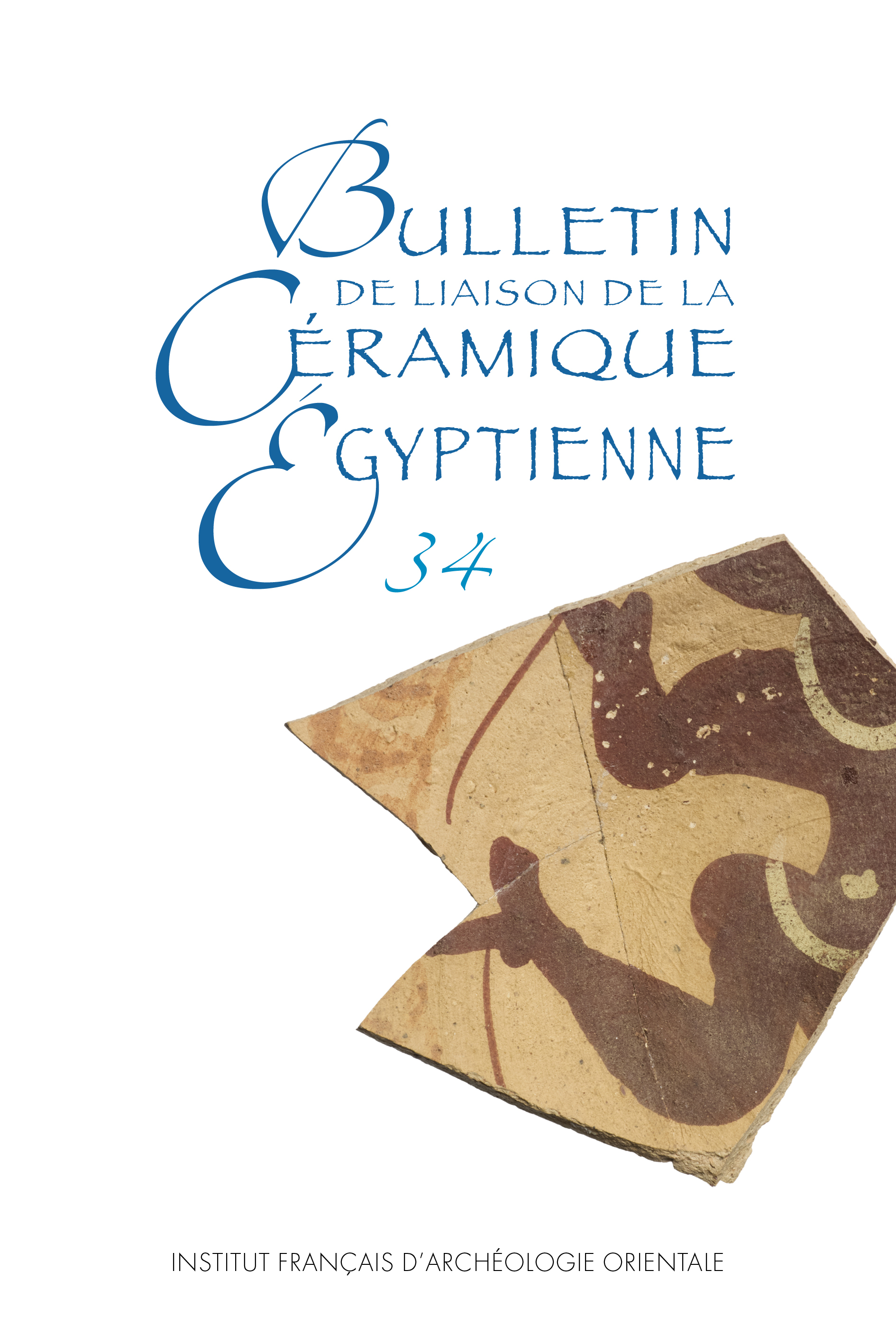
Sylvie Marchand (éd.)
Bulletin de liaison de la céramique égyptienne 34 BCE 34; 386 p. Cette nouvelle livraison du Bulletin de liaison de la céramique égyptienne (BCE 34) présente, dans une première partie, un « parcours régional » en lien avec d’importants travaux archéologiques. La première contribution concerne un ensemble de jarres de cuisine découvertes à Ayn Soukhna (fin XIe-début XIIe dynastie). La deuxième est consacrée au mobilier céramique des XIXe-XXe dynasties mis au jour à … [en savoir plus] 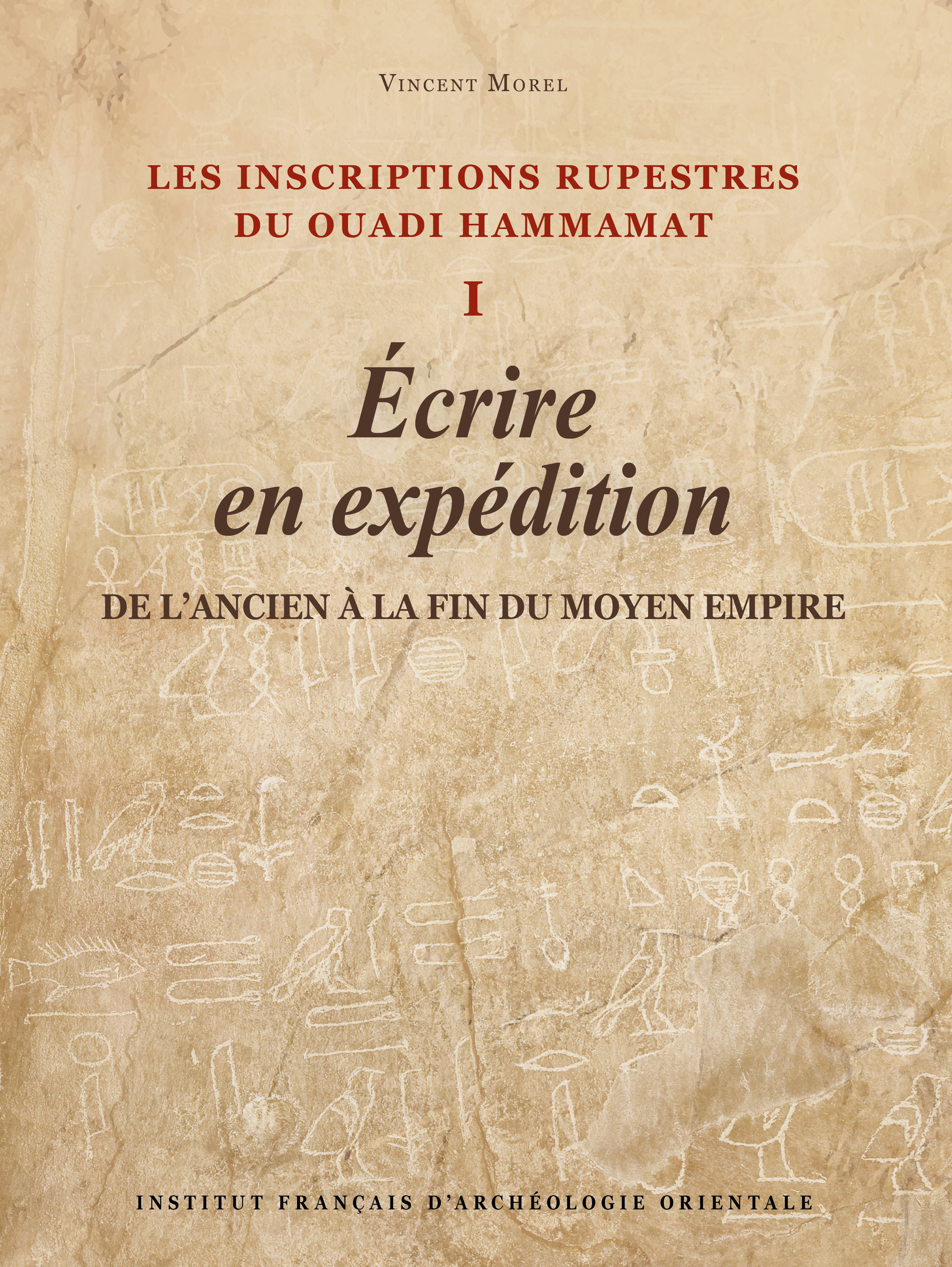
Vincent Morel
Les inscriptions rupestres du Ouadi Hammamat I Écrire en expédition, de l’Ancien à la fin du Moyen Empire MIFAO 157; 438 p. Dans le désert Oriental d’Égypte, les carrières de grauwacke du Ouadi Hammamat conservent un vaste corpus d’inscriptions rupestres, documenté depuis les premiers explorateurs modernes et couvrant une histoire plurimillénaire. Fondé sur de récentes prospections de terrain, ce volume propose une enquête sur des textes majeurs de l’Ancien à la fin du Moyen Empire. Il adopte une approche croisée – matérielle, visuelle et textuelle – qui restitue aux inscriptions leur dynamique … [en savoir plus] 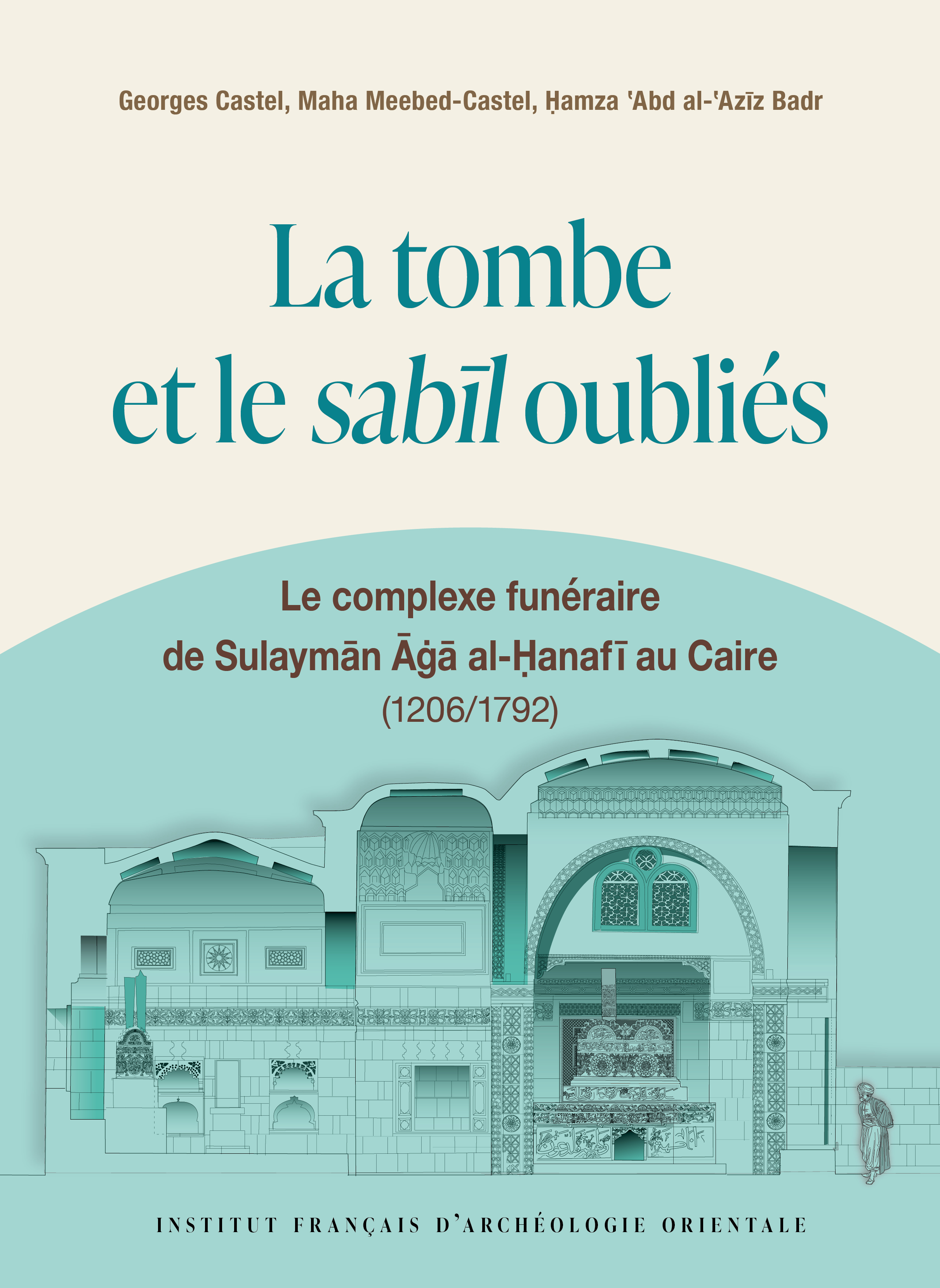
Georges Castel, Maha Meebed-Castel, Hamza Abdelaziz Badr
La tombe et le Sabīl oubliés Le complexe funéraire de Sulaymān Aġā al-Ḥanafī au Caire (1206/1792) BiEtud 194; 272 p. Cet ouvrage à plusieurs mains est le premier travail consacré à la tombe et au sabīl de l’émir Sulaymān Āġā al-Ḥanafī, un des lieutenants d’Ibrāhīm Bāy al-Kabīr (m. 1817), le gouverneur de l’Égypte avant l’expédition française de 1798. Outre qu’il fournit une description précise de l’architecture et de la décoration de ces deux bâtiments, construits à la fin du xviiie siècle dans le cimetière d’al-Abāǧiyya au Caire, … [en savoir plus] 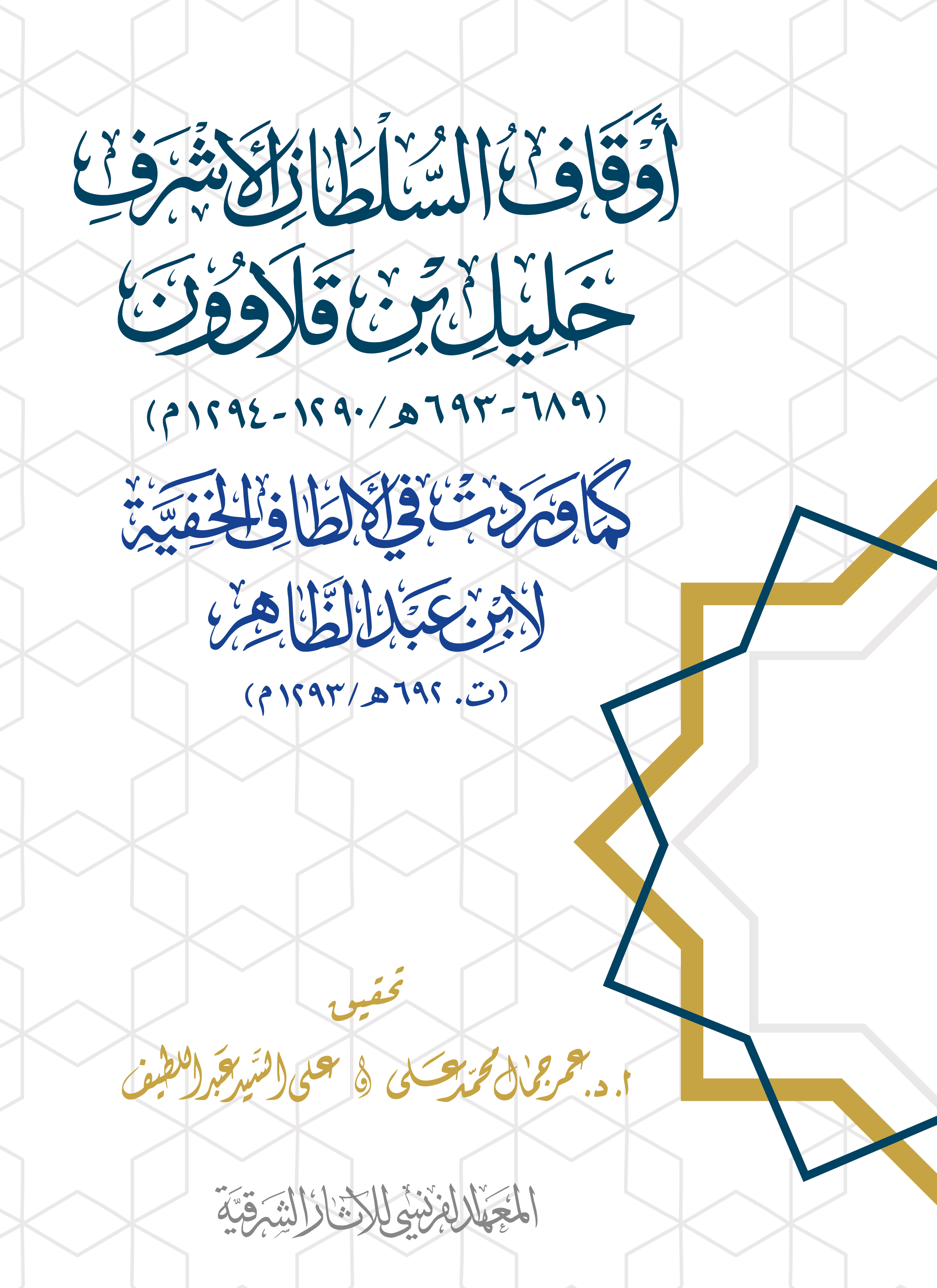
Omar Jamal Mohamed Ali, Ali al-Sayyid Abdelatif
أوقاف السُّلْطان الأشْرف خليل بن قَلاوون كما وردت في الألطاف الخفيّة من السِّيرة الشَريفة السُّلطانيّة المَلَكيّة الأشرفيّة لمُحيي الدّين بن عبد الظّاهر ويليه: النَّقش الكتابي للقُبّة الأَشْرفية مرسومان للسُّلْطان الأشرف إلى رُهبان دير سانت كاترين وثيقة ثبوت أوقاف السُّلْطان الأَشرف خليل في العَصر العثماني CAI 38; 126 p. Cet ouvrage présente les textes intégraux des waqf-s du sultan al-Ašraf Ḫalīl ibn Qalāwūn (689-693 H/1290-1294 J.-C.) au bénéfice de son école connue sous le nom d'al-Madrasa al-ašrafiyya, au Caire, et des services d’al-Qubba al-Manṣūriyya, fondée par son père, le sultan al-Manṣūr Qalāwūn. Ces textes ont été conservés par l'historien Muḥyī al-Dīn ʿAbdallāh ibn ʿAbd al-Zāhir (620-692 H/1223-1293 J.-C.) dans son ouvrage al-Alṭāf al-ḫafiyya … [en savoir plus] 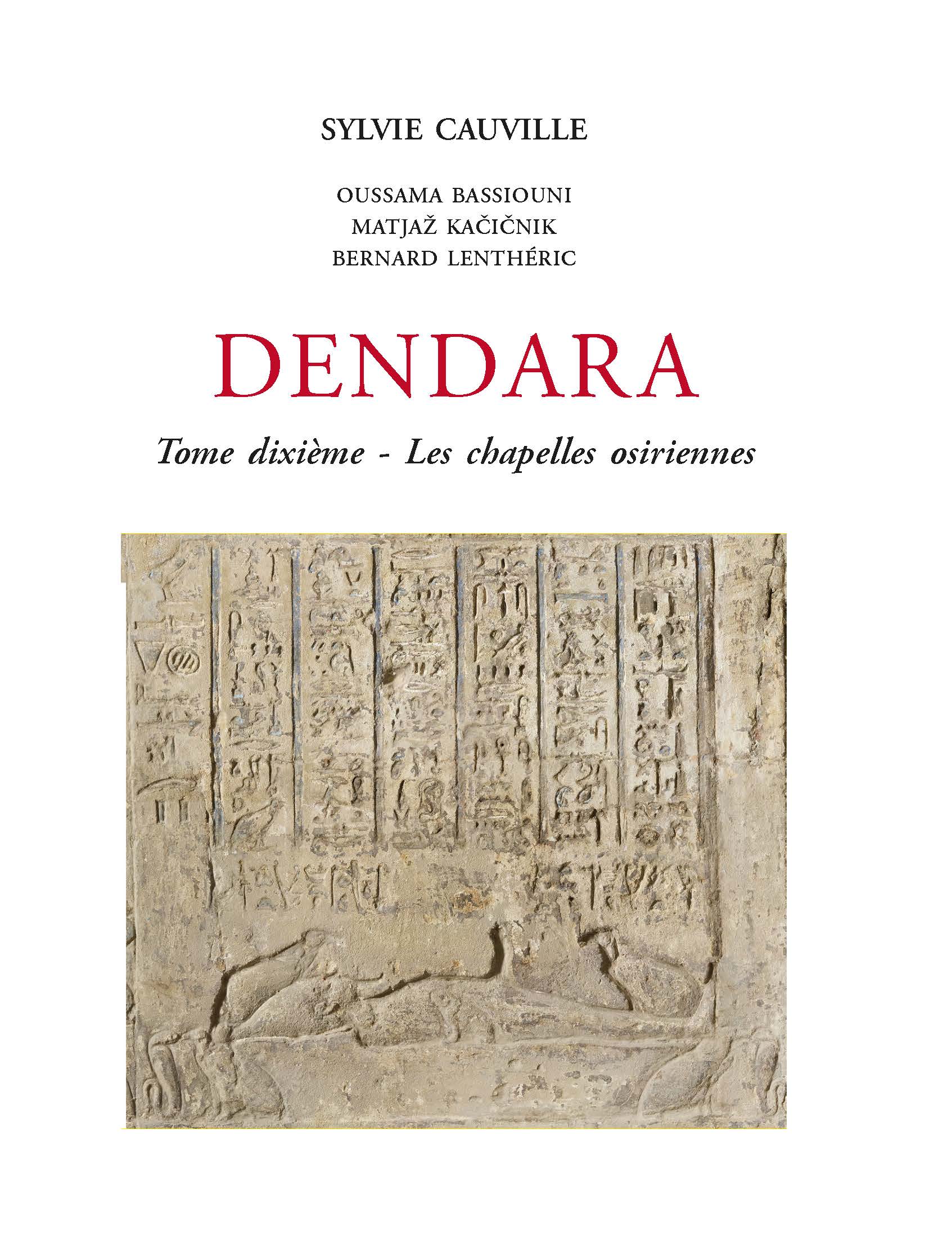
Sylvie Cauville, Oussama Bassiouni, Matjaž Kačičnik, Bernard Lenthéric
Le temple de Dendara X. Les chapelles osiriennes Planches en couleur Temples, Dendara 10.1; 572 p. Le temple d'Hathor à Dendera, admirablement conservé, est probablement la plus aboutie des réalisations architecturales de l'Égypte ptolémaïque et romaine et la richesse des compositions théologiques qui ornent ses murs est incomparable. Ses inscriptions hiéroglyphiques ont été éditées sous l’égide de l’Institut français d’archéologie orientale, d’abord par É. Chassinat puis par Fr. Daumas, et enfin par S. Cauville. Le dixième volume, paru en deux tomes en 1997, offre la … [en savoir plus] |

 ↑
↑IFAO Newsletter
March 2026
Sections: (-) Headlines (-)Life at the palace (-) Some questions for Yassin Temlali (-) IFAO notebook (-) Scientific Events (-) On the Ifao YouTube channel (-) Publications

◼︎ Pierre Tallet awarded the order of the legion of honour at the French Embassy. ©A.Bahgat/Ifao
Headlines
Pierre Tallet awarded the Order of the Legion of HonourOn 21 October 2025, Pierre Tallet was awarded the insignia of Knight of the Legion of Honour during a ceremony held at the French Embassy. Surrounded by his family, IFAO colleagues and numerous dignitaries, Pierre Tallet received this distinction from the French Ambassador to Egypt, Mr Éric Chevallier, for his "remarkable scientific career, his major contribution to the development of French archaeological research in Egypt, and the central role he plays in strengthening scientific and cultural dialogue between France and Egypt". |
||
The IFAO under renovation: refurbishment of the palace and launch of the Sauneron Library constructionRestoration and enhancement works on the built heritage of the Mounira Palace have continued throughout the year. After the renovation of the great hall in the summer of 2024, the restoration of the second level of the grand ceremonial staircase was completed this summer, restoring the architectural and decorative coherence of this central space of the palace. Waterproofing work on the palace has also continued. Signature of the IFAO and ResEFE multi-year contract with the Ministry of Higher Education, Research and Space.On Monday, 15 September 2025, a day dedicated to the five French schools abroad was held at the Ministry of Higher Education, Research and Space in Paris. This meeting was organised on the occasion of the signing of multi-year contracts between the French schools and ResEFE. It was inaugurated by the Permanent Secretary of the AIBL, Nicolas Grimal. The event ended with the signing of the multi-year contract between the five directors of these schools and the Ministry. |
◼︎ Restoration of the second level of the grand hall of the grand staircase ©A.Bahgat/Ifao
◼︎ Signing of the multi-year contract between the Ifao and ResEFE with the MESR. Inaugural speech by Nicolas Grimal, Permanent Secretary of the AIBL. ©A.Bahgat/Ifao |
|
ENDeM: exploring Bernard Bruyère’s excavation journals onlineAmong the IFAO's digital resources, the ENDeM project (Digital Exploration of the Deir el-Medina Excavation Journals) has reached a new milestone. Jointly conducted by the archives and collections department, the Deir el-Medina archaeological mission and the TEKLIA company, it now offers structured access to Bernard Bruyère's exceptional excavation journals, written between 1921 and 1955. Using the ArkIndex tool, each line of text has been digitised and indexed, and each illustration identified, dated and located, constituting an exceptional corpus for the history of excavations and archaeological methods. This platform allows researchers and the general public alike to delve into the heart of the first campaigns carried out at the Deir el-Medina site and explore, online, a collection of documents that was previously difficult to access. |
|
|
News from archaeological sites and programmesTwelve archaeological missions took place during the first quarter of the year: those at Qal‘at Sheikh Hammam, Ayn Soukhna, Balat, Deir el-Medina, TT 33, Biahmu (Fayoum), Osirian sanctuaries (Karnak), Dendara, Wadi Sannur, Islamic funerary stelae, Coptos and the Citadel of Cairo. These sites illustrate the diversity of the fields in which the Ifao and its partners are active.
|
||


 ◼︎ The oshabtis discovered at Tanis
Life at the palace


Some questions for Khaled Younes..
|
A historian and specialist in Arabic papyrology, Prof. Dr Khaled Younes was appointed scientific collaborator of the IFAO in September. He kindly agreed to answer a few questions about his background and his work. |
||
You became a scientific collaborator of the IFAO this year. Could you introduce yourself in a few words?I am Professor of Islamic History and Civilisation at the Faculty of Tourism and Hotel Management at Sadat City University in Egypt, and a scientific collaborator at the IFAO. Originally from the Delta region, from Menoufiya, I grew up in a village with a strong attachment to learning, which very early on nurtured my interest in history. After studying “tourist guidance”, I steered my career towards Islamic history and the documents that enable us to write it, eventually completing a PhD at Leiden University on “Letters in Arabic on papyrus in early Islamic Egypt”. Then I obtained my professorial habilitation, while always pursuing the same guiding thread: understanding the everyday life of medieval societies through their writings. Papyrology is a highly specialised discipline. How did you happen to specialise in it?My interest in papyrology grew out of my fascination for documents as direct sources for social history. At the beginning of my academic career, I specialised in Islamic history, and then I discovered Arabic papyri during my master’s studies, which opened up an entirely new field of research. My PhD at Leiden, within the ERC project “The Formation of Islam: The View from Below”, under the supervision of Prof. Petra Sijpesteijn, was decisive: working on private letters and administrative documents showed me how powerfully these fragments can give voice to ordinary people, far beyond the major historical chronicles. Since then, papyrology has been at the heart of my scholarly activity. |
|
◼︎ Khaled Younis |
In your work on Arabic papyri, you must have come across some unusual or perhaps amusing cases. Could you share one of these surprises with our readers?As part of my project to catalogue the Arabic papyri at the IFAO, aimed at making this collection more accessible to researchers, the Archives Department once handed me an old box, a former sweets tin, filled with envelopes sent by post from the site of Edfu to the IFAO nearly a century ago. Inside were hundreds of tiny fragments of papyrus and paper, in such a “chaotic” state that one almost wished for a magic wand to piece them together. Among these fragments, a small rolled piece of papyrus caught my eye. After cleaning and restoring it, it turned out to be an amulet bearing a few Qur’anic verses, probably worn around the neck as a protective charm by an inhabitant of Edfu more than a thousand years ago. We will never know to whom this amulet belonged, but this small object is a powerful reminder of how the beliefs, fears and hopes of the past are embodied in such fragments. Could you tell us about your research projects at the Institute?At the IFAO, I am currently working on several projects focusing on early Arabic documentation. Together with my colleague Sobhi Bouderbala, I am preparing the edition of a corpus of Arabic papyri from the excavations at Istabl ‘Antar (Fustat), centred on the social, administrative and economic aspects of Egypt in the first centuries of Islam, as well as a set of Arabic ostraca from the same site. In parallel, I am carrying out a systematic cataloguing of the Arabic papyri held at the IFAO, in order to improve their description and facilitate their consultation for future editions. |
|
|
IFAO notebook
Arrivals- Aisha Mandour replaced Marianne Ramsis as head of distribution department in January 2026. - Marina Wagih replaced Mohamed Adel Farouk as a digitisation operator in the Archives and Collections Department from January 2026. - Shrouk Khaled was appointed as a receptionist at the library in January 2026. - Verina Mamdouh was recruited as a scientific translator in January 2026. Departures- Nicolas Souchon, researcher and egyptologist in the Archives and Collections Department, resigned in January 2026. - Mélanie Créssent, Editor, resigned in January 2026.
|
|
|
Scientific events
|
Les conférences de l'Ifao lectures Series |
|
|
|
|
Lecture series: Egyptology Bi-L-ʿarabīOrganised in partnership with "Al-Makân wa-l-Nâs" |
|
|
|
|
Exploring Egypt Seminar: Histories and HistoriographiesOrganised in partnership with DAIK, NVIC, CAI, PCMA, ARCE |
|
|
|
Séminaire de recherche de l'Ifao lectures Series |
|
|
Workshops
| |
On January 9th 2026, Research Workshop by Maria Mossakowska, Valerie Schram & Pascale Ballet: Atelier Realia d’Égypte – Ergaleion 7, in partnership with UMR 8167 Orient Méditerranée, CNRS, Université Paris Nanterre, ARSCAN [more] |
|
|
On February 16th 2026, Research Workshop by Anna Lagaron & Clément Dussart: Stèles funéraires islamiques II. Étude de la matérialité des stèles. [more] |
|
|
From March 29th to April 2nd 2026, Training by : Life in the City: Everyday Practices, Gender, Class, Memories, in partnership with CEDEJ [more] |
Lectures
On the YouTube channel
Publications
|
Sylvie Marchand (éd.)
Bulletin de liaison de la céramique égyptienne 34 BCE 34; 386 p. This new issue of the Bulletin de liaison de la céramique égyptienne (BCE 34) presents, in its first part, a parcours régional linked to important archaeological field work. The first contribution covers a set of cooking jars discovered at Ayn Soukhna (late 11th-early 12th Dynasty). The second is devoted to ceramic assemblages from the 19th-20th Dynasties unearthed at Zawyet Sultan in Middle Egypt. The following two contributions focus on Upper Egyptian … [more]
Vincent Morel
Les inscriptions rupestres du Ouadi Hammamat I Écrire en expédition, de l’Ancien à la fin du Moyen Empire MIFAO 157; 438 p. In Egypt’s Eastern Desert, the greywacke quarries of Wadi Hammamat preserve a vast corpus of rock inscriptions spanning several millennia. Drawing on recent field surveys, this volume examines key inscriptions from the Old Kingdom through to the end of the Middle Kingdom. It adopts a combined material, visual, and textual perspective that brings to light the spatial dynamics of these carvings, their graphic arrangement, and the intertextual dialogues they establish with each other. … [more]
Georges Castel, Maha Meebed-Castel, Hamza Abdelaziz Badr
La tombe et le Sabīl oubliés Le complexe funéraire de Sulaymān Aġā al-Ḥanafī au Caire (1206/1792) BiEtud 194; 272 p. This multi-authored work is the first study devoted to the tomb and sabīl of Emir Sulaymān Āġā al-Ḥanafī, one of the lieutenants of Ibrāhīm Bāy al-Kabīr (d. 1817), the governor of Egypt before Napoleon Bonaparte’s expedition. In addition to providing a detailed description of the architecture and decoration of these two buildings, constructed at the end of the 18th century in the al-Abāǧiyya cemetery in Cairo, it presents all of their inscriptions, in Arabic and French … [more]
Omar Jamal Mohamed Ali, Ali al-Sayyid Abdelatif
أوقاف السُّلْطان الأشْرف خليل بن قَلاوون كما وردت في الألطاف الخفيّة من السِّيرة الشَريفة السُّلطانيّة المَلَكيّة الأشرفيّة لمُحيي الدّين بن عبد الظّاهر ويليه: النَّقش الكتابي للقُبّة الأَشْرفية مرسومان للسُّلْطان الأشرف إلى رُهبان دير سانت كاترين وثيقة ثبوت أوقاف السُّلْطان الأَشرف خليل في العَصر العثماني CAI 38; 126 p. This work presents the complete texts of the waqf-s of Sultan al-Ašraf Ḫalīl ibn Qalāwūn (689-693 AH/1290-1294 AD) for the benefit of his school known as al-Madrasa al-ašrafiyya, in Cairo, and of the services of al-Qubba al-Manṣūriyya, founded by his father, Sultan al-Manṣūr Qalāwūn. These texts were preserved by the historian Muḥyī al-Dīn ʿAbdallāh ibn ʿAbd al-Zāhir (620-692 AH/1223-1293 AD) in his work al-Alṭāf al-ḫafiyya min al-sīra al-šarīfa al … [more]
Sylvie Cauville, Oussama Bassiouni, Matjaž Kačičnik, Bernard Lenthéric
Le temple de Dendara X. Les chapelles osiriennes Planches en couleur Temples, Dendara 10.1; 572 p. [more] |


